BY Kerry Hastings, Program Coordinator, TFN’s Urban Water Funders
The Kresge Foundation is a longtime funder member and supporter of The Funders Network and its Urban Water Funders (UWF). As a grant recipient from their Climate Resilient and Equitable Water Systems (CREWS) portfolio, I’ve had the opportunity to attend their convening for the last five years.
This year, I gathered with grassroots organizers and national systems thinkers in New Orleans for three remarkable days of learning and connection. Below are highlights from my time in NOLA — including a memorable post-CREWS gathering with a local artist collective — and some reflections on what other funders can learn from Kresge’s approach to supporting their grantee cohorts.
Root ourselves in people and place.
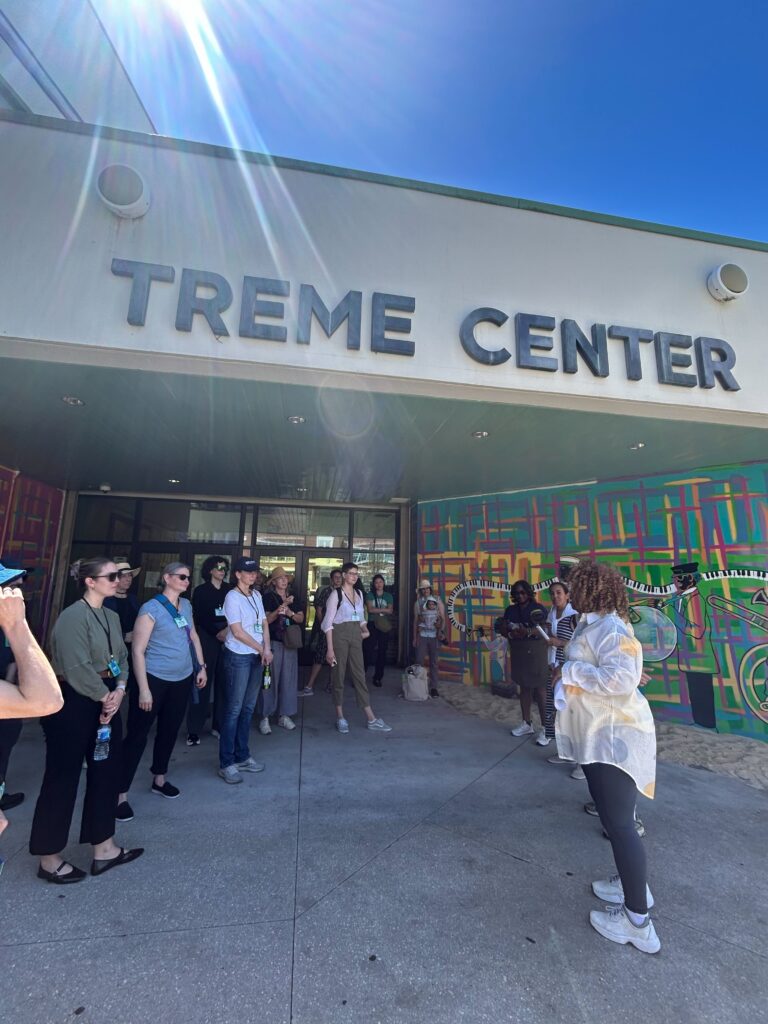
It’s easy for funders — and for a network weaver like me — to operate at the 30,000-foot level, asking big and important questions about the field as a whole. But our work ultimately serves real people living in diverse and complex places, and we need to stay in relationship with those people and those places. The site visit I attended in the Tremé neighborhood was rich with stories of leadership development, persistence in the face of inadequate responses to local flooding challenges, and the complexities of navigating funding landscapes. Being with community members in their neighborhood reignited my sense of purpose and kept their faces and stories with me as we returned to our collective work as funders. We need those reminders regularly.
Engage storytellers.
CREWS convenings have always invited artists and storytellers to ground the work. On the first evening, the Mardi Gras Indians joined us to share their music, dance and history — a powerful grounding in the stories of their people and place.
The following morning, local priestess and storyteller Queen Mother Sula reminded us that water has always been a source of healing. “Go to the water when you are stuck,” she said. “Let the shower be your healing chamber. Say to it, ‘cleanse me and purify me so I can be ready for the work.'”
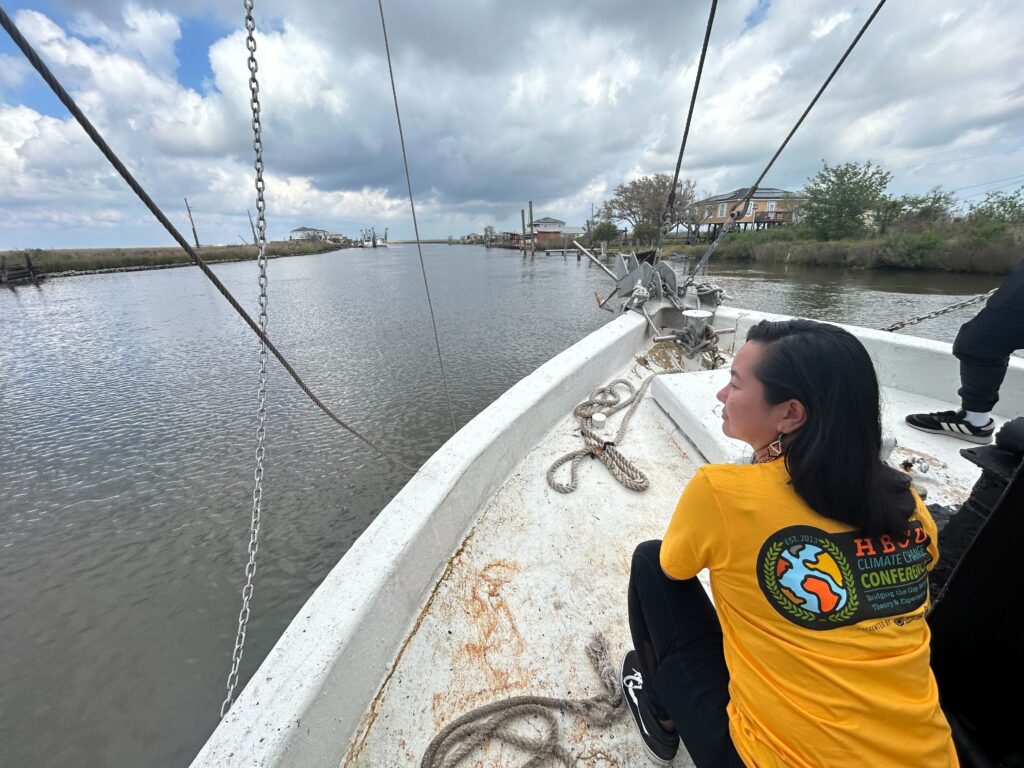 Kresge’s own staff offered their water wisdom as well. President Rip Rapson reminded us that water is the oldest story humanity tells — woven into every creation story, every immigration story. Program officer and UWF co-chair Yeou-Rong Jih shared a saying from her Chinese tradition: “May your mind be still like water, but your heart flow like water.”
Care for the full self.
The CREWS convening intentionally creates space for joy and rest. This year, organizers offered a Wellness Room for stepping away when needed, and closed the three days with an optional yoga session or dance class to help participants move through their energy. To no one’s surprise, I joined the dance class and it only deepened the joy I’d felt throughout the convening.
Participatory facilitation builds belonging.
As a facilitator, I believe deeply in participatory methods that invite all voices into the room, build relationships and surface solutions from across the spectrum. CREWS employs these same approaches, and it kept a room of roughly 100 people engaged and eager to learn from one another. Every person was both an expert and a learner. We were asked to show up meaningfully — and people did.
After the convening, current and former UWF co-chairs Yeou-Rong Jih and Maggie Rwakazina joined me for a tour organized by The Water Collaborative to a nearby indigenous village with a cohort of local artists. The model of their artist collective is both impactful and highly replicable.
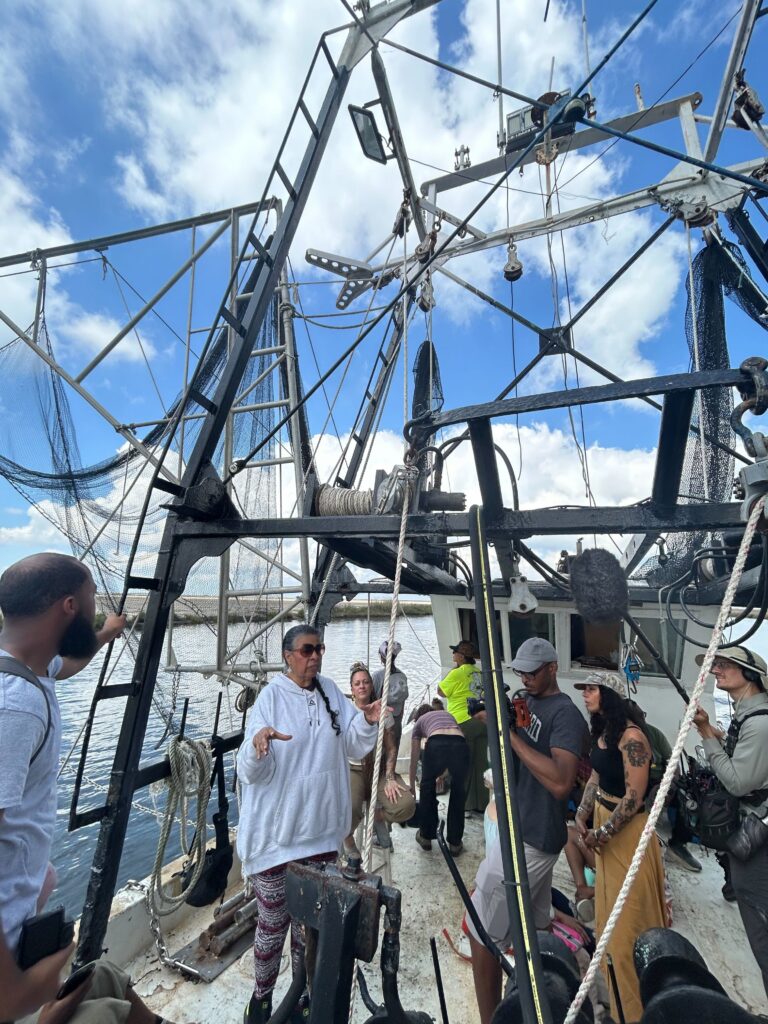
Over a five-week program, artists working across a range of mediums take field trips to sites across Louisiana, learning about local water issues0 firsthand. Weekly salons invite participants to share how they approach their work and explore how water fits into the stories they tell.
One participant was Edward Buckles Jr., filmmaker and director of Katrina Babies, a powerful documentary about the children whose lives were upended by Hurricane Katrina. Others included photographers, musicians, poets and visual artists — each deeply invested in their community and hungry to connect with an established organization, learn more about the issues, and find a creative peer network. It’s a model worth replicating in cities across the country.
Being in New Orleans didn’t just refuel me with Vitamin D — though this Pacific Northwesterner was pretty desperate for some Southern sunshine. It refueled me with relationships, with ideas, and with a renewed connection to the people and places that give our work in philanthropy its purpose.