
BY Hazel Paguaga, Senior Program Associate, The Funders Network
Each year, the Philanthropic Preparedness, Resiliency and Emergency Partnership (PPREP) cohort gathers in one participant’s city to learn from place. This year’s gathering in Rapid City, South Dakota — hosted by Black Hills Area Community Foundation and Partnership with Native Americans — was one of our best meetings to date.
PPREP is a group of community foundations and regional foundation associations across ten states along the Missouri River watershed (Arkansas, Oklahoma, Missouri, Kansas, Nebraska, Iowa, Minnesota, South Dakota, North Dakota and Montana). PPREP was created to provide resources and opportunities for community foundations to build up their skills and leadership capacity to be better informed and prepared when a disaster strikes their community. The communities in these regions often experience low attention disasters — events that receive limited national media coverage and often do not receive FEMA Individual Assistance declaration.
Grounded in this context, our gathering kicked off with a site visit to Pine Ridge Reservation, home to the Oglala Sioux Tribe, which spans 1.7 million acres and has been designated as one of the poorest areas in the country.
We had the privilege of being joined by S. Ramona White Plume and Percy White Plume who gave us some context and history on the Oglala Sioux Tribe. Born on the Pine Ridge Reservation, Mr. Percy spoke of his love of horse riding and how that passion motivated him to create the Horse Spirit Society — a horse riding program for both children and adults focused on traditional teachings and the importance of horses in Lakota culture. Mr. Percy is also involved in the 300-mile Chief Big Foot Memorial Ride to honor the lives lost at Wounded Knee Massacre in 1890, which you can learn more about here. After a brief pit stop at Pinky’s convenience store, we reached Wounded Knee Massacre site where Ms. Ramona led us in a prayer to honor and remember. It was a powerful moment to reflect on the history of the land we’re on.
Our next stop was the Oyate Teca Project, a Native nonprofit committed to the well-being of youth and families through programs rooted in culture, education, recreation and health. We heard from Jesse Big Crow, planning and coordinator specialist of the Oglala Sioux Tribe’s emergency management team. Spotty cellphone reception, limited internet access and the enormous scale of land to cover means it can take a long time for responders to assess damage and provide aid. Jesse shared the unique challenges reservations face when it comes to disasters and underscored the importance of keeping the community informed of disaster plans.
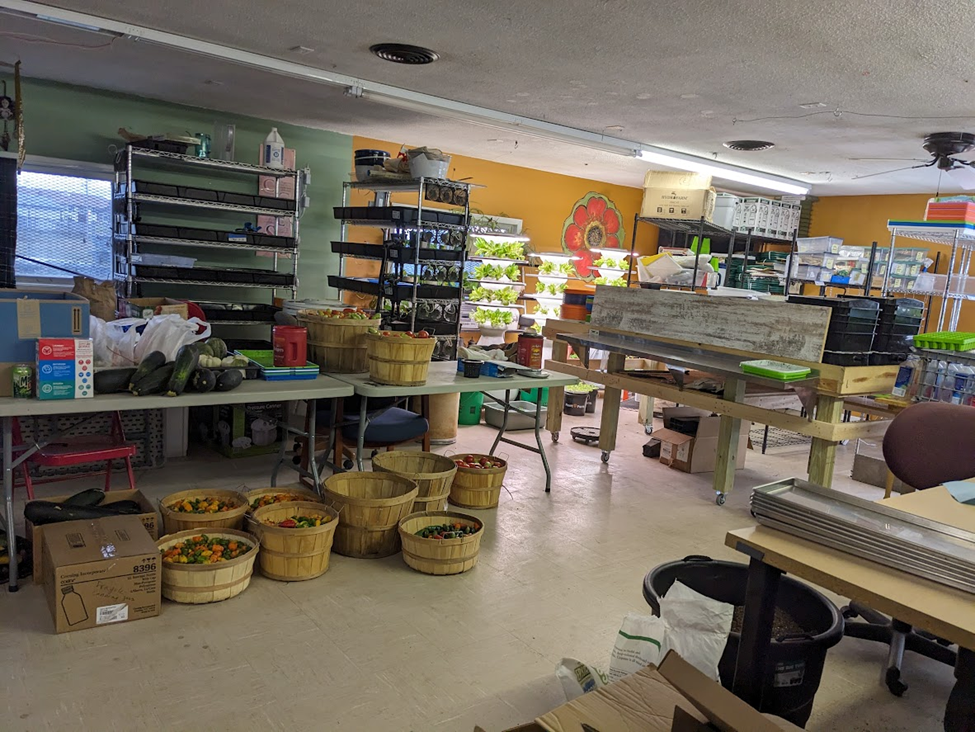
Jesse leads emergency management classes and encourages her participants to share the skills they’ve learned with their families. “Emergency preparedness work includes food sovereignty,” Jesse told us. “Being able to garden, grow and access healthy food all year long while learning traditional and modern methods.” These classes go beyond growing food — participants are immersed in everything from food safety to entrepreneurship.
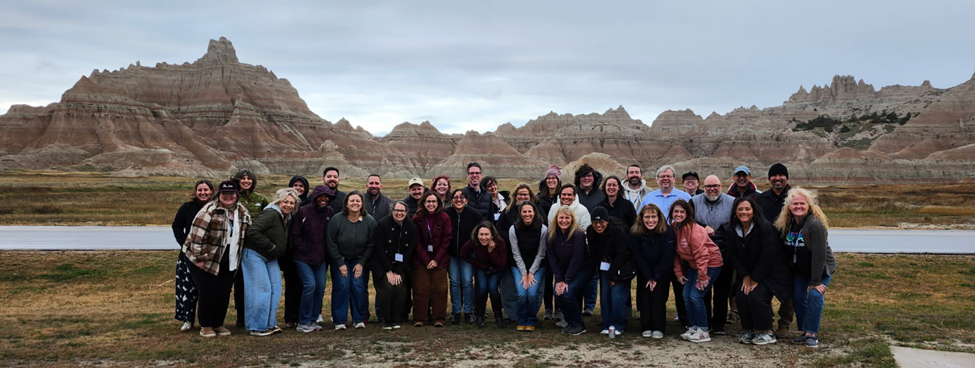
We then toured the Oyate Ta Kola Ku Community Center with program director, Rose Fraser, learning about the wide range of programs offered such as cultural education, food security programs, sports and recreation, financial literacy and sewing and beading classes. After the tour, we headed back to Rapid City — but not before stopping for a group photo at Badlands National Park!
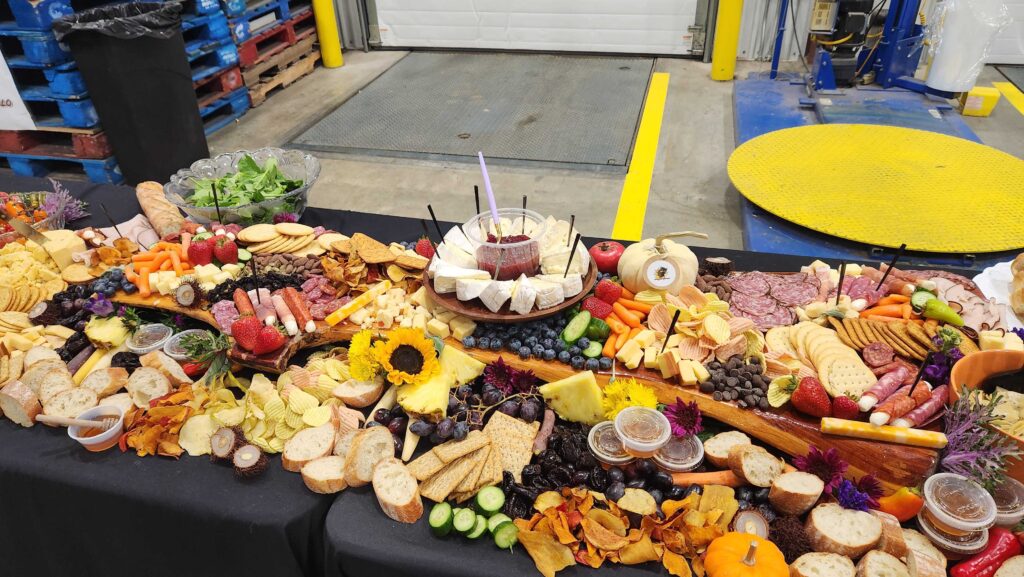
Our last stop of the site visit was PWNA’s warehouse, where we were treated to a beautiful graze board (the longest I’ve seen!). We heard from the PWNA team about the great work they’re doing and how they provide food, water, disaster relief, holiday support and so much more to Native communities. After covering so much ground in a single day, the experience underscored just how challenging it can be to reach Native communities in times of need and why this work is both essential and urgent.
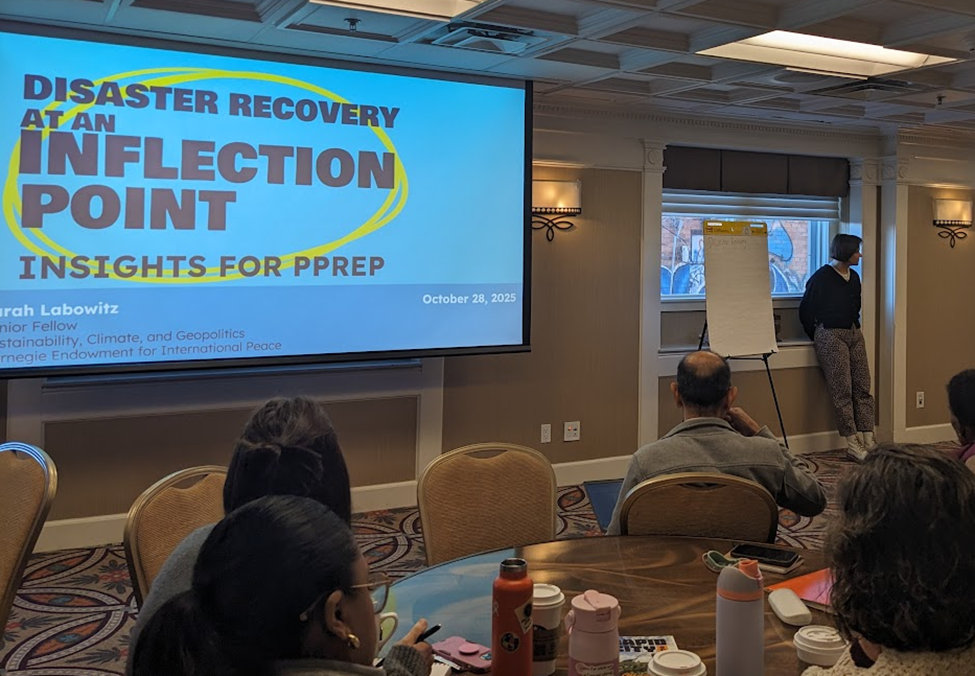
Our second day opened with insights from Sarah Labowitz, Senior Fellow at Carnegie Endowment for International Peace. Sarah introduced the group to the Disaster Dollar Database — a digital tool that tracks the major sources of federal funding for disaster recovery in the United States — and led us through a hands-on exercise to explore specific disaster events that impacted PPREP participants’ communities.
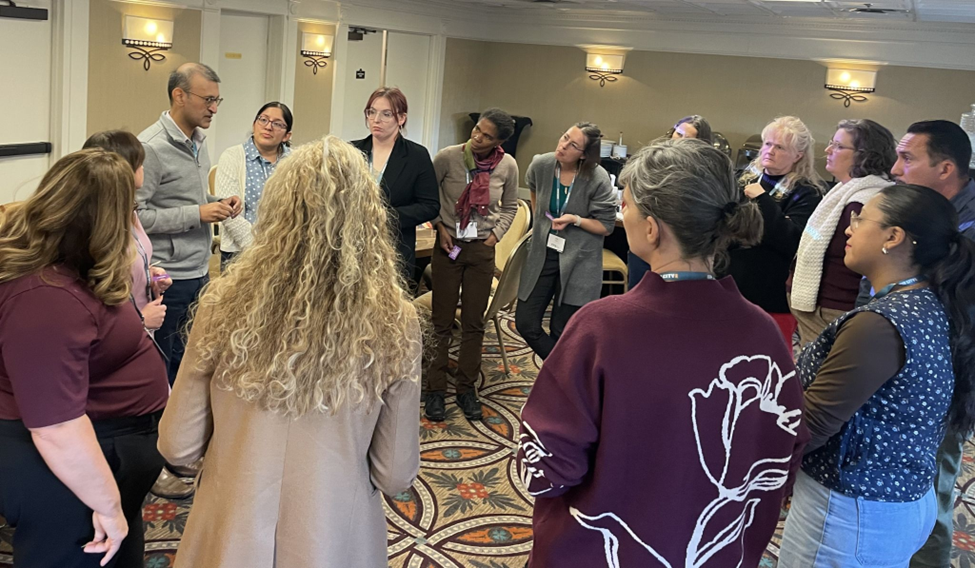
We also examined the stark disparities between FEMA individual assistance applications across states. Sarah shared data on the number and types of disasters that have impacted the PPREP region over the past decade and compared those figures with states like Florida, Texas and Louisiana — places that tend to receive far more attention and funding following disasters. This sparked a deeper discussion about recent federal policy shifts and what it means for community foundations’ disaster response strategies. If you’re looking for someone who can make sense of disasters and data, call Sarah!
The learning continued into the afternoon with Jolie Wills, a leading psychosocial expert in disaster and disruption and Founder & Executive Director at Hummingly Foundation. Jolie shared practical tools that community foundations can use to help grantees and key community leaders sustain themselves as they sustain others during long term disaster recovery. She emphasized the importance of taking time to pause, reflect and invest in teams to address fatigue and burnout. She introduced us to the Doing Well card deck — a resource designed to help teams and individuals navigate stress, uncertainty and decision-making during challenging times. Jolie left us with a powerful reminder: Don’t be the canary in the coal mine — have a plan to prevent burnout before it hits.
On our final day, we heard from the PPREP members themselves. They shared how they are responding to grantee and community needs in the ever-changing federal, state and local funding environments. One of the greatest strengths of the PPREP cohort is the strong connection among members — the way they share resources, provide feedback and support one another through challenges.
We are deeply grateful to our PPREP cohort members and to our partners at Center for Disaster Philanthropy and Margaret A. Cargill Philanthropies. We’re already excited to see where we’ll gather next year!
About the Author
Hazel Paguaga is the Senior Program Manager at The Funders Network. She handles the programmatic support for TFN’s Inclusive Economies, Mobility and Access, and PPREP working groups.
Photos provided by Hazel Paguaga and Brooke McPherson.