Reflections from the 2025 One Water Summit: Collaboration, Connection and a Call for Alignment
BY Kerry Hastings, Program Coordinator, TFN’s Urban Water Funders
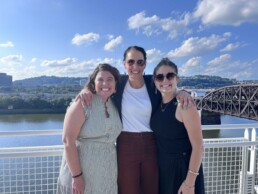
The US Water Alliance's One Water Summit from July 7-11 in Pittsburgh offered more than just sessions and panels — it was a powerful reminder of the importance of human connection and cross-sector collaboration in shaping a more equitable water future.
Throughout the week, I connected with funders, nonprofit leaders, utility staff and even corporate representatives who are working at the intersection of water, equity and climate resilience. One message came through loud and clear: we don’t have a shortage of technical knowledge — we have a shortage of collaboration.
That’s a challenge — and an opportunity. How can philanthropy support the alignment needed to unlock the potential of our collective work?
I also left wondering: Are we engaging corporate funders as deeply as we could? The Summit surfaced interest and energy from private-sector partners, and I’m curious how we might cultivate them as co-investors with the Urban Water Funders in a just and sustainable water future.
In-person convenings like this one also offer something that Zoom never can: the chance to deepen relationships and build trust. Our funder breakfast on Friday brought together 20 participants to talk candidly about how we better communicate and align in this moment of flux. And a happy hour hosted by the BHP Foundation turned into an honest conversation about the quirks and challenges of philanthropy — something our nonprofit partners told us they deeply appreciated.
There was also beauty and joy. A standout session on narrative and storytelling, an electrifying performance from Britton and the Sting and an impromptu dance party that reminded us why we’re in this together. I left with the question: How do we better integrate arts and storytelling into our collective strategy, and align it around a unified message?
As we move forward with our own work at The Funders Network — including a new initiative focused on inclusive infrastructure — I’m carrying these reflections and questions with me. And I’m grateful to the US Water Alliance for creating the space to explore them together.

Advocacy Spotlight: Mass Senior Action Council
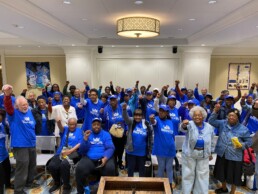
TFN’s Advocacy Spotlight Series, spearheaded by the network’s Mobility and Access Collaborative, lifts up the work of nonprofit grantees making an impact in their communities and beyond. We asked funders to nominate a stellar grantee to be featured in this series. We’ll share these Advocacy Spotlights TFN’s Blog and social media platforms as part of our commitment to amplifying community-led sustainability solutions and building the field of philanthropy through shared learning.
Advocacy Spotlight: Mass Senior Action Council
Nominated by: Lisa Jacobson, Senior Program Officer — Mobility, Barr Foundation
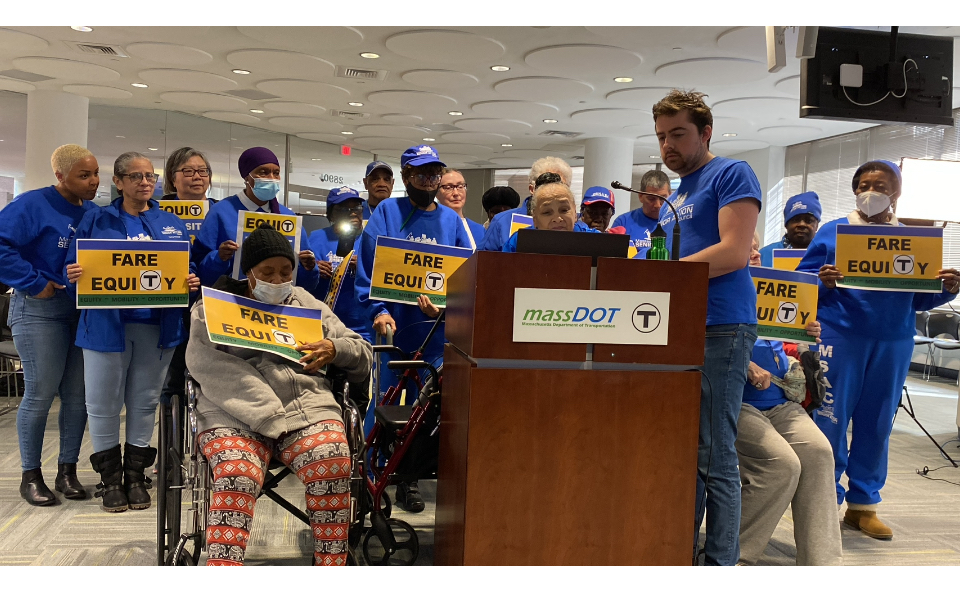
MBTA Board Meeting: Mass Senior Action Council members call on the MBTA Board to include all paratransit users in the proposed low-income fare. On the day the Board voted to approve the low-income fare, the Secretary of Transportation made an amendment to include all paratransit riders, citing the years of advocacy by Mass Senior Action members in her remarks.
About Mass Senior Action Council
"Mass Senior Action Council (MSAC) is a multi-racial, grassroots, member-led organization of low- and moderate-income seniors working across neighborhood, racial, religious and socio-economic lines to find common ground to meet the needs of seniors. They have 1300 members organized in six chapters across MA and are known for its successful organizing of lower-income seniors. The Barr Foundation supports them as they are very active (and impactful) in transportation and climate work, particularly when it comes to affordable and reliable transit access for seniors."
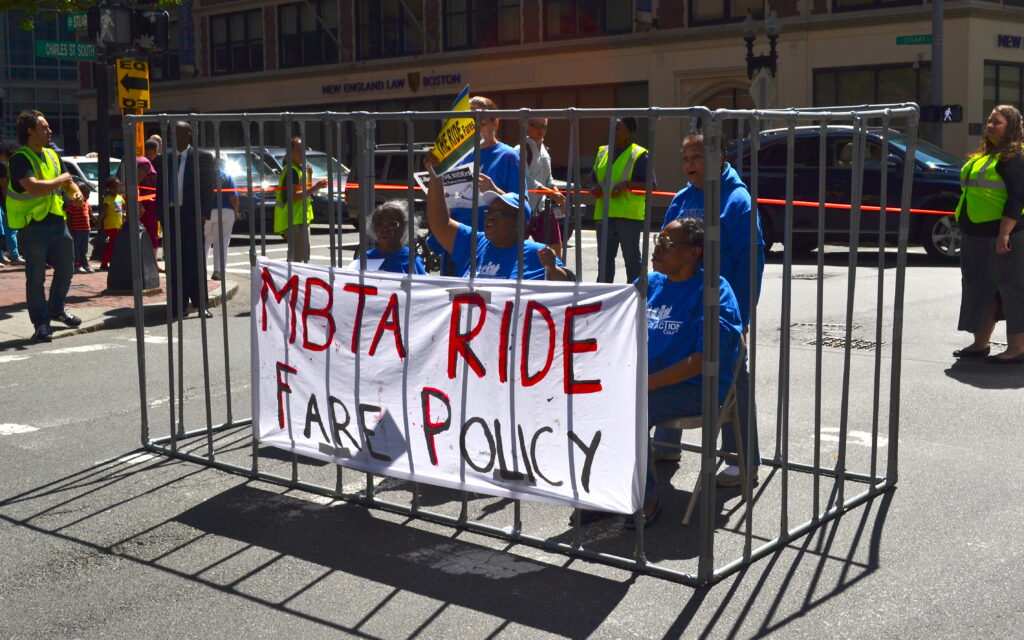
2014 MBTA RIDE CD : In 2014, members of the Mass Senior Action Council, ages 67 to 90, blocked traffic to protest an extreme fare increase for senior and disabled individuals who rely on paratransit service. Five individuals were arrested during this act of civil disobedience, which ultimately led to the first-ever fare reduction in MBTA history and the implementation of a pilot means-tested fare program
About Their Impact
"MSAC has been organizing and advocating for years on getting a low-income fare on the MBTA. It was finally successful after about 10 years of work! At the last minute, they got buy-in from the MBTA board to ensure that all paratransit service would be included in the low-income fare.
Thanks to Mass Senior Action Council, the MBTA is the first transit authority in the nation to include paratransit in the low income fare policy. They have a great story to share of successful organizing and advocacy, leading to policy change.
Featured Image: Mass Senior Action Council members rally at the State House. MSAC is recognized for its ability to bring together a large number of well-informed seniors who are empowered to use their voices and experience to effect change on issues that impact their lives and communities.
About this series: TFN invited funders to nominate a stellar grantee to be featured in the Mobility and Access Collaborative’s Advocacy Spotlight series. The stories in this series were submitted by funders and shared with nominees in advance for fact-checking and further clarification when needed. If you have any questions about this series or TFN’s Mobility and Access Collaborative, please contact Martha Roskowski martha@fundersnetwork.org
Advocacy Spotlight: Transportation for MA
TFN’s Advocacy Spotlight Series, spearheaded by the network’s Mobility and Access Collaborative, lifts up the work of nonprofit grantees making an impact in their communities and beyond. We asked funders to nominate a stellar grantee to be featured in this series. We’ll share these Advocacy Spotlights TFN’s Blog and social media platforms as part of our commitment to amplifying community-led sustainability solutions and building the field of philanthropy through shared learning.
Advocacy Spotlight: Transportation for MA
Nominated by: Lisa Jacobson, Senior Program Officer — Mobility, Barr Foundation
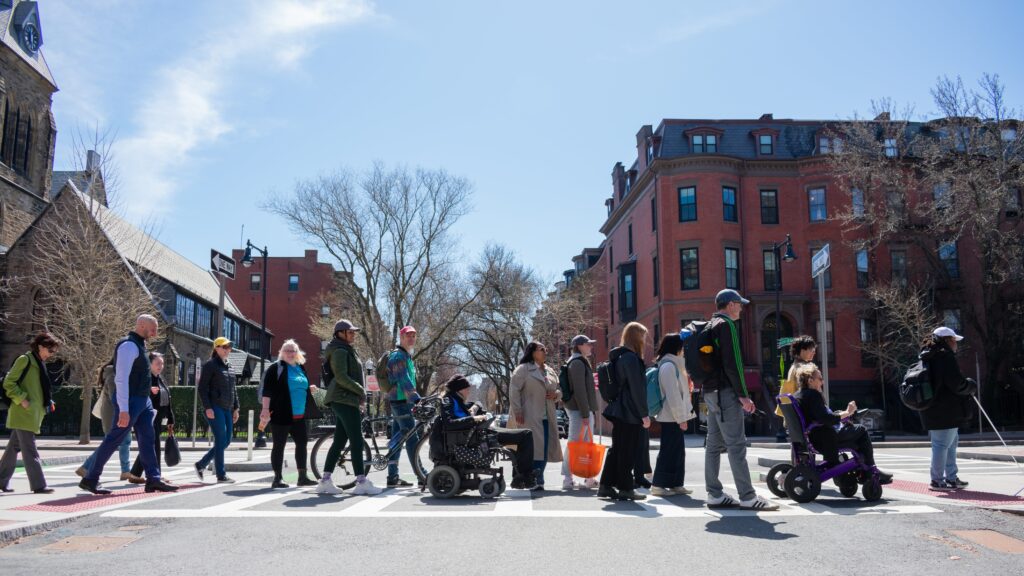
T4MA and its member organizations — Boston Center for Independent Living, MassBike and WalkMassachusetts — convened Shared Spaces, a group working towards collective advocacy with people with disabilities, pedestrians and bicyclists. In April 2025, Shared Spaces toured Tremont St. in Boston, learning and brainstorming solutions that work for all street users.
About Transportation for MA
"Transportation for MA (T4MA) is a statewide coalition of community-based organizations and aligned partners in Massachusetts to advance a just and equitable transportation system. They are the key organization in the state to lead on transportation policy at the state level."
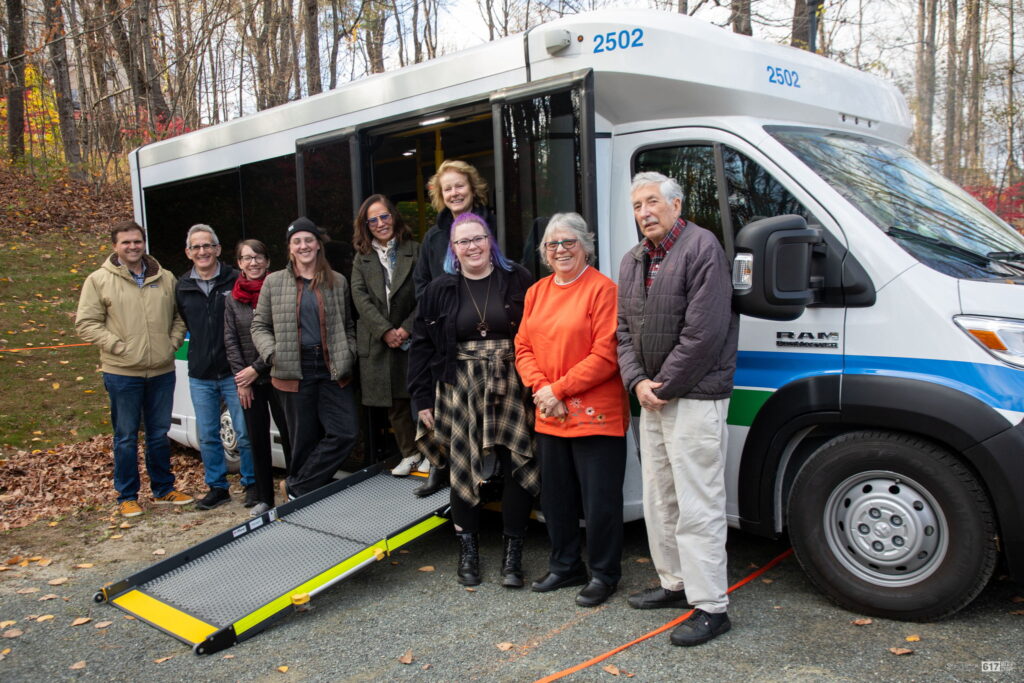
T4MA and member organization, Hilltown Community Development Corporation, convened for its RideAlong series, where they rode their micro-transit service through the rural Hilltowns. The service provides connection and community for folks with no other transportation options
About Their Impact
"T4MA recently went through an organizational restructuring process to meaningfully center equity and justice, rather than have it be one part of their mission. They did a substantial amount of work restructuring their by-laws, governance and leadership, member structure, policy priorities and a variety of their processes.
This work was really meaningful and set them in a new direction as an organization, building out a new membership to better reflect the diverse needs of communities from all over Massachusetts. Their work provides lots of lessons for non-profits in any sector."
About this series: TFN invited funders to nominate a stellar grantee to be featured in the Mobility and Access Collaborative’s Advocacy Spotlight series. The stories in this series were submitted by funders and shared with nominees in advance for fact-checking and further clarification when needed. If you have any questions about this series or TFN’s Mobility and Access Collaborative, please contact Martha Roskowski martha@fundersnetwork.org
Juneteenth Reflections: Honoring the Past Means Showing Up in this Moment
BY Dion Cartwright, TFN President & CEO
This Thursday is Juneteenth, a day that marks 159 years since the true end of legal slavery in the United States.
It’s a time to honor the ancestors who endured the horrors of enslavement and fought for freedom under the dark shadow of Jim Crow. It’s an opportunity to reflect upon our shared histories – and to also recognize the people showing up in this moment in the struggle for our shared liberation.
TFN stands in solidarity with those who are organizing, mobilizing and peacefully protesting in defense of immigrant communities, our democracy and fundamental human rights. As we navigate these politically fraught times, TFN remains committed to supporting and cultivating work that advances justice, equity and belonging for all people.
The celebration of Juneteenth reminds us that the journey toward freedom is long – and that the hard-won lessons of the past aren’t just dusty history lessons, they are powerful blueprints for resilience and survival.
I encourage our network of funders and partners to continue to invest in work that centers the experiences and needs of marginalized communities, who are already facing disproportionate harm from climate disasters, environmental hazards, economic disinvestment and barriers to health, education and opportunity.
The nonprofit grantee partners who directly serve these frontline communities may be facing increased risks and scrutiny in these uncertain times. As you consider how best to direct your resources in this moment, please ensure that these grantees have the financial, legal and operational support they need to protect their teams and preserve their missions.
Over the past weeks and months, I have been inspired to hear how many philanthropy leaders in our network are doing just that, from small place-based funders to national foundations. Thank you for stepping up.
On behalf of our TFN team, we are proud to work with you in service of creating more sustainable, prosperous and just communities where all people can thrive.
Below are resources and upcoming events to help inform and inspire you over the next few weeks and beyond, as well as a round-up of statements from the sector in response to the recent protests in LA and elsewhere.
How are you and your teams supporting your grantee partners and communities in these challenging times? And how else can TFN support you in this work?
I’d love to hear from you.
In the meantime: Be well, and take care of yourselves and each other.
In solidarity,
Dion Cartwright
President and CEO
Solidarity Statements
TFN Statement: In solidarity with those defending immigrant communities and fundamental human rights.
From the Sector: A curated list of statements and resources from TFN members and others.
Meeting this Moment
TFN is offering learning opportunities throughout the summer to inform your grantmaking work. I invite you to join us for:
Lessons from the 2024 Election Cycle: How Transit Measures Helped Restore Faith in Democracy
June 18 at 3 p.m. ET | Co-sponsored by The New York Community Trust, the Climate and Energy Funders Group, The Funders Network, the Health & Environmental Funders Network, and the New York Environmental Funders Network.
Allyship: How to show up for partners when the going gets tough
June 26 at 3 p.m. ET | Hosted by TFN’s Urban Water Funders
Defending Against Federal Funding Cuts to the Environment & Implementing California’s Climate Investments
June 27 at 10:30 a.m. PT | Hosted by TFN’s Smart Growth California
Effective Narratives in an Era of Mistrust
July 10 at 1 p.m. ET | Featuring by Nat Kendall-Taylor of the Frameworks Institute
Peer Communities
We’re also launching new TFN Peer Communities to help funders tackle the challenges of today, together. They include:
- Funders Working in Conservative Places
- Narrative Change: Stories for Impact
- Data & Technology
- The Executive: CEO Peer Group
Keep on the lookout for more information throughout the summer, or reach out to me directly for more details about these peer communities.
Resources for Funders
Executive Actions & Legislation: TFN is a proud member of the United Philanthropy Forum, which recently updated its Advocacy, Awareness, & Action campaign offerings to aid the philanthropic ecosystem — from infrastructure organizations to foundations to the nonprofits they support — in understanding current and potential future executive actions.
Listening at TFN25: Power, Solidarity and Love
BY Melinda Tuan, Managing Director, Fund for Shared Insight
As a first-time participant at a TFN conference, I came to Baltimore with a question: In a national environment characterized by fear and uncertainty, are place-based funders still committed to listening to community?
In sessions and conversations throughout TFN25, and as the room filled with people for a session on listening and participatory practices during the meeting’s last morning, the answer was clear. The chaos and hazards of our context have only strengthened the commitment of TFN funders to listen to the communities they serve and work shoulder-to-shoulder with them so that people are better off in ways they define for themselves.
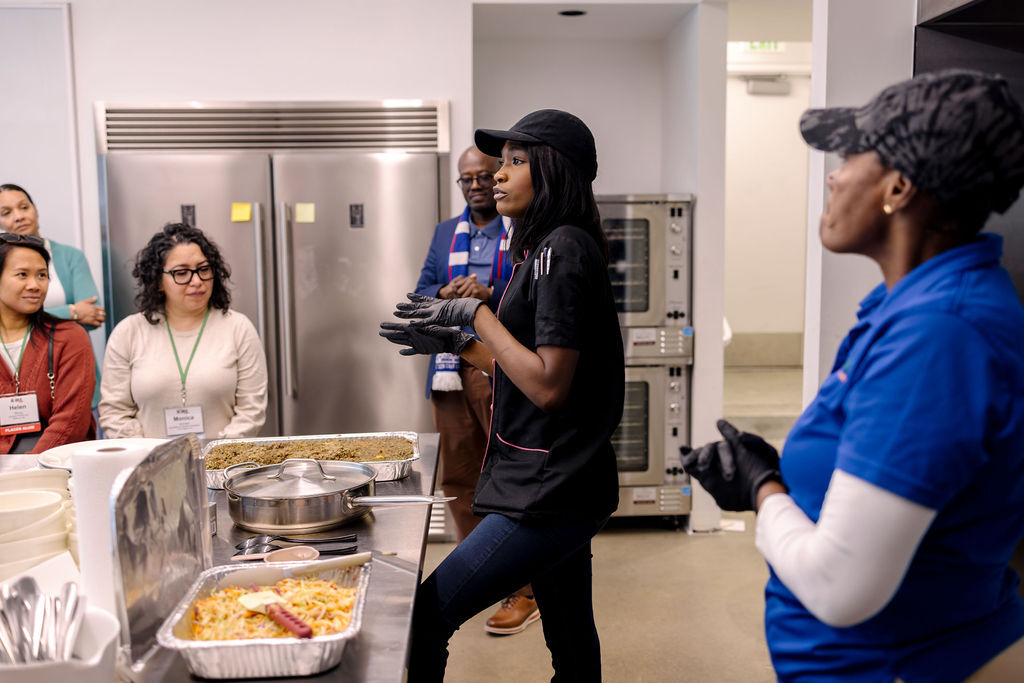
TFN25 attendees learn about the importance of arts funding in the community, culture as a driver of economic development and learning key skills for practical application and mental health.
This kind of listening and partnering is what the funder collaborative Fund for Shared Insight has been exploring for the past decade — a journey that has taken us from building mechanisms such as Listen4Good to collect better feedback, to advocating for listening as a way funders can shift power to people and communities at the heart of their work. Through these efforts, we’ve seen that place-based funders have a special relationship with communities — and thus a particular opportunity and responsibility to listen to those communities. What drew so many of us into conversation on the last morning of TFN25 was our collective recognition that listening in non-extractive, authentic ways is an ongoing challenge, even when you’re committed to it.
At Shared Insight’s blog, and in resources including our Funder Listening Action Menu and Participatory Philanthropy Toolkit, we’ve been developing and collecting ideas, frameworks and promising practices to help funders listen to shift power to community. At TFN25, it was exciting to learn more about how place-based funders are listening to the communities they serve and being transformed by what they hear — and in turn, helping their communities achieve their own self-determined transformation.
From our conversations, I am taking away a wealth of examples and reflections on listening and power. To share a few:
The Power We Hold
Elizabeth Love, CEO of the Jacob and Terese Hershey Foundation, shared ways the foundation has been trying to better listen and respond to the communities it serves in Texas. The foundation’s board is changing its membership — moving from a board of all family members to include people closer to the community. And together, the board is doing the hard work of looking at their own power and how they wield it. Over the course of a year, they learned about racial equity, mapped their power and reflected on where they could shift power to communities.
Now, the board and staff embrace trust-based philanthropy, and they approach connections with current and potential grantees with an eye to correcting power imbalances. The team has reduced demands on organizations’ time in applications and reporting, and they attend town halls and speak with community members to learn about power and trust dynamics. Redesigned feedback conversations have led to a new fund to support capacity-building for grassroots organizations, designed and managed by a committee of grassroots leaders.
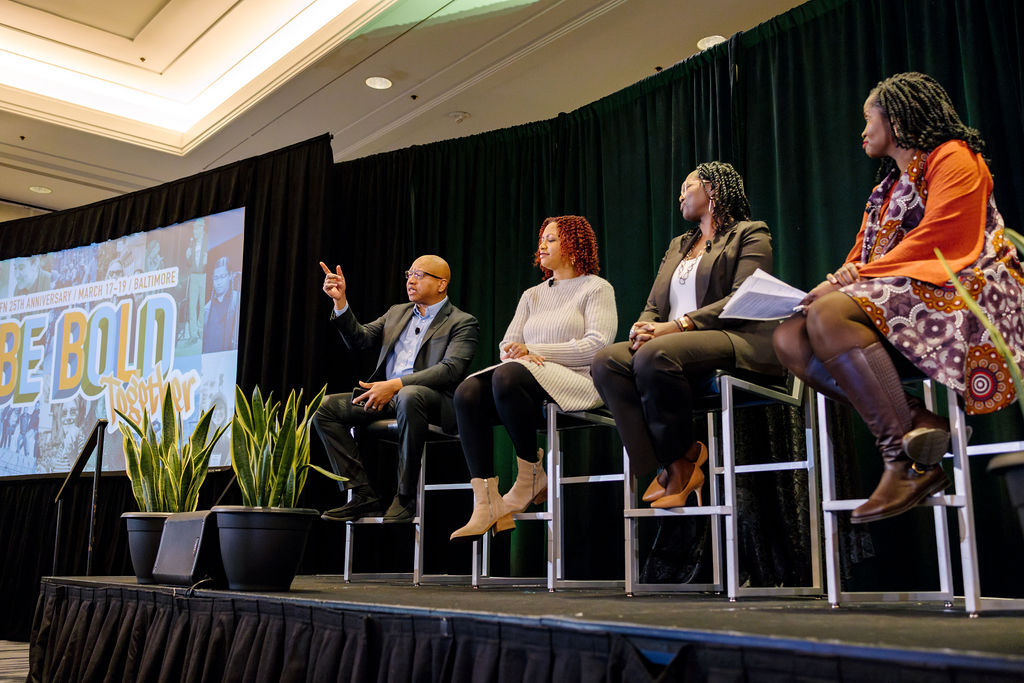
TFN25's Tuesday Morning Plenary speakers discussing ways that philanthropy can step up now to bolster and protect community partners.
Power Together
In the closing plenary, Maya Wiley, president of the Leadership Conference on Civil and Human Rights, crystalized another aspect of listening and power in our current moment, when it can seem like every issue we care about in our communities and on our planet is being threatened. But while the purpose of the Administration’s “flood the zone” strategy is to overwhelm responses, it’s also an opportunity for solidarity, Wiley pointed out. Rallying empathy and action across all impacted communities creates a great source of power.
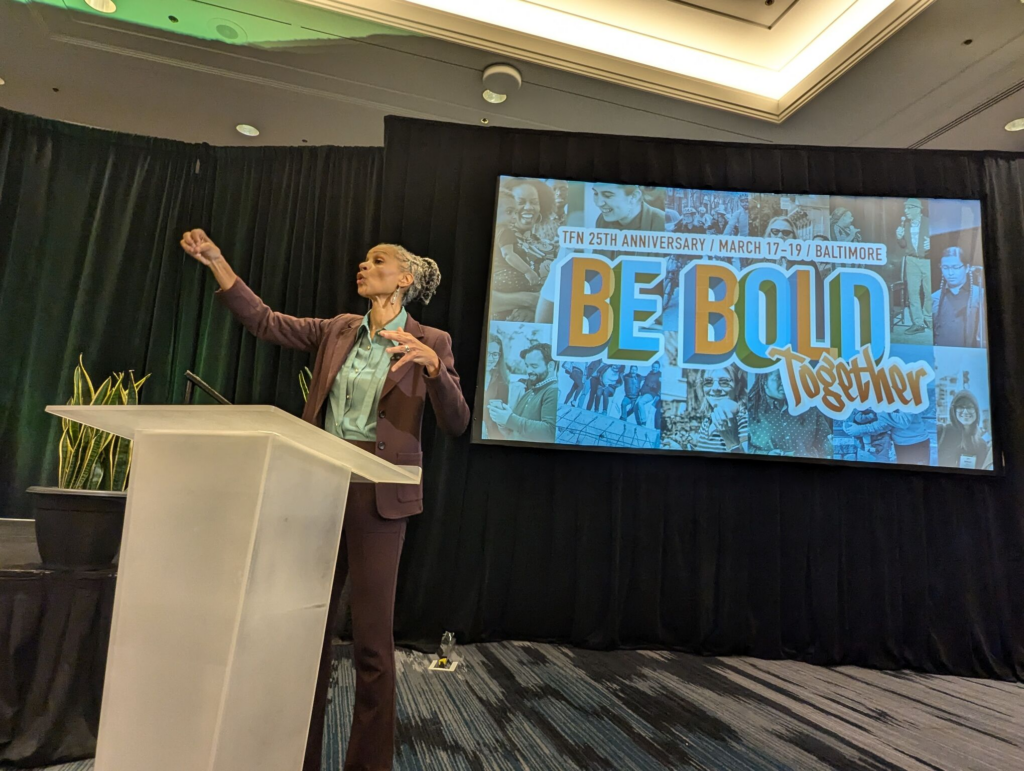
Maya Wiley discusses turning adversity into action that creates lasting change at TFN25's Closing Plenary.
Listening is an important part of building such solidarity and collective action. We recently wrote about this as “turning on the headlights” in times of crisis so funders don’t cause more harm or miss the opportunity to be of greatest use. Across our TFN25 conversations I heard about funders listening to communities as a way to better understand the moment, as well as supporting community leadership to meet it.
Power and Love
At the final lunch, sitting with colleagues from the Kresge Foundation, we landed on the topic of love. For me, the work that I do at Shared Insight is so joyful, and I heard similar joy reflected in their experience of working in deep partnership with communities in Detroit. We agreed that to do philanthropy well, it has to be done with love. And there is power in love.
In Shared Insight’s own experiment with participatory practices in philanthropy, one of our biggest lessons was that we need to reconsider how we understand power. In his final book, Where Do We Go from Here: Chaos or Community?, Dr. Martin Luther King Jr. wrote:
Power, properly understood, is the ability to achieve purpose. It is the strength required to bring about social, political or economic changes. In this sense power is not only desirable but necessary in order to implement the demands of love and justice. One of the greatest problems of history is that the concepts of love and power are usually contrasted as polar opposites. Love is identified with a resignation of power and power with a denial of love. ... What is needed is a realization that power without love is reckless and abusive and that love without power is sentimental and anemic. Power at its best is love implementing the demands of justice. Justice at its best is love correcting everything that stands against love.
This reexamination can help us see the power that lies in communities, and shift philanthropy’s role to share its own power from a place of love. Transformative love, as explored by Shiree Teng and Sammy Nuñez, fuses power and love on the path to justice, with deep listening as a crucial dimension.
My initial question coming into TFN25 was answered emphatically. I hope to keep hearing from TFN members about how you are using listening to build power and solidarity across your work. What was palpable over the three days of the meeting was the love foundations have for the communities they serve, their readiness to listen and transform in response and the power that listening through love holds as communities face the present and change the future.
About the Author
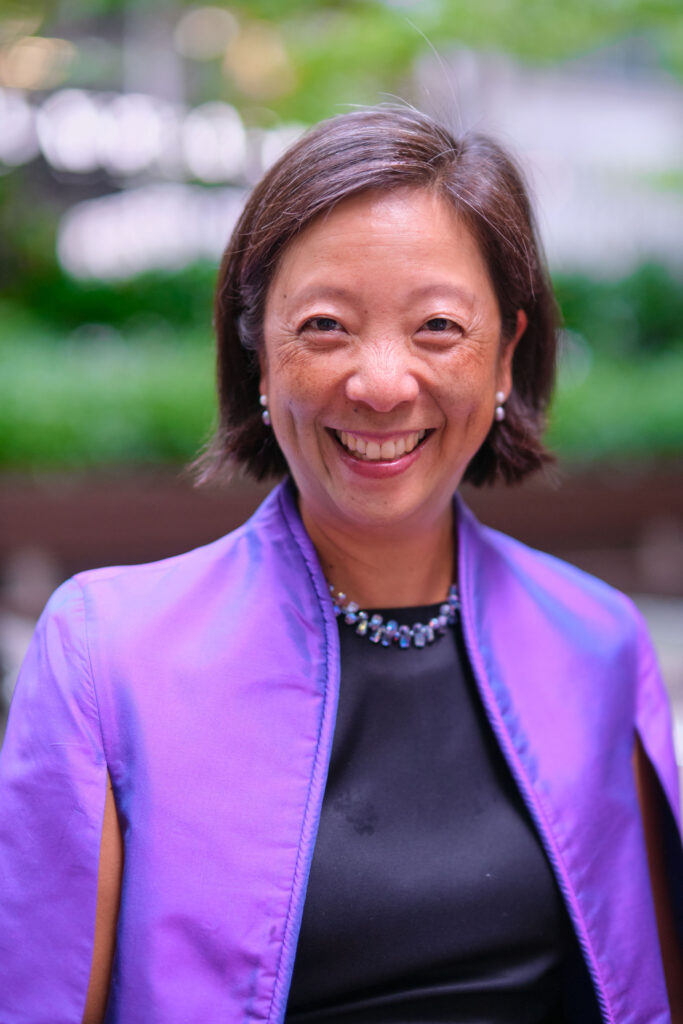
Melinda Tuan is Managing Director of Fund for Shared Insight. Find her on LinkedIn.
Advocacy Spotlight: BikeWalkKC
TFN’s Advocacy Spotlight Series, spearheaded by the network’s Mobility and Access Collaborative, lifts up the work of nonprofit grantees making an impact in their communities and beyond. We asked funders to nominate a stellar grantee to be featured in this series. We’ll share these Advocacy Spotlights TFN’s Blog and social media platforms as part of our commitment to amplifying community-led sustainability solutions and building the field of philanthropy through shared learning.
Advocacy Spotlight: BikeWalkKC
Nominated by: Kathryn Conner, Program Coordinator, The Equitable Transportation Fund
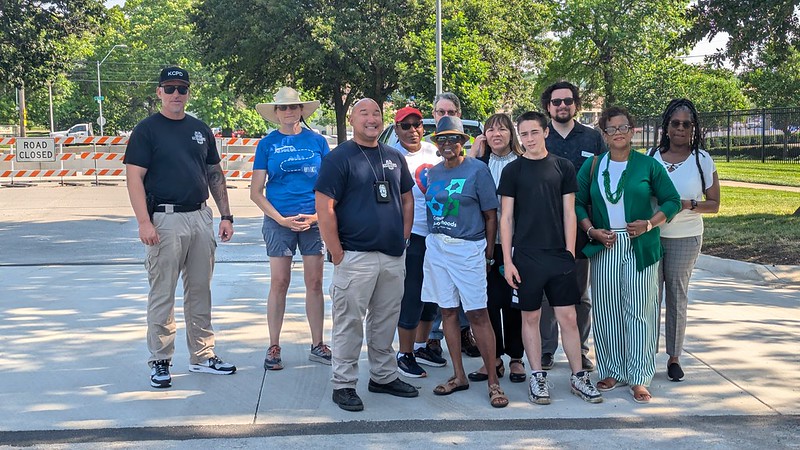
Nina Whiteside McCord and Neighbors United for Action neighborhood association organized to simplify an intersection and install a raised crosswalk at 63rd and Meyer to benefit residents and Kauffman School students in the 5th District of KCMO.
About BikeWalk KC
"BikeWalkKC advocates for policies and infrastructure that make walking, biking and public transit safer and more accessible in the Kansas City region. Their work addresses critical issues of health, safety and community connectivity. Combining public education, coalition-building and direct policy engagement, their approach serves as a model for other communities.
The Equitable Transportation Fund has supported BikeWalkKC because their work aligns with our mission to fund initiatives that create more just and inclusive transportation systems. Their efforts help shape transportation systems that serve all residents equitably, not just those with access to personal vehicles.
BikeWalkKC advances equity by advocating for safe and accessible transportation options in historically underinvested neighborhoods, where residents often face the greatest mobility barriers. Their programs prioritize engagement with communities of color, low-income residents and people with disabilities to ensure their needs and perspectives are at the center of planning and investment decisions."
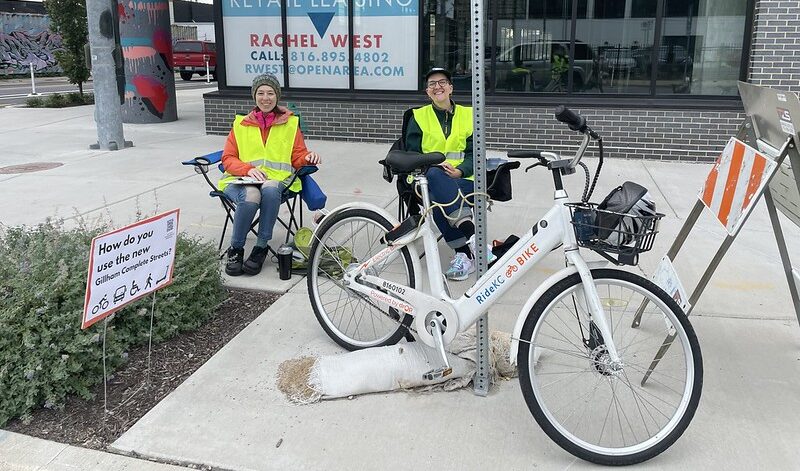
40 volunteers observed Kansas City, MO's Gillham Cycletrack in 2022, taking surveys from users on bikes, foot, and scooters and collecting data about driver behavior, safety, and more.
About Their Impact
"BikeWalkKC is a leader of the Transportation for All Coalition. A recent capacity-building grant from Ewnig Marion Kauffman Foundation enables BikeWalkKC to strengthen the coalition, deepen its research through a transportation case study of Kansas City with Urban Institute, and develop case statements on transportation and upward economic mobility. This grant is a significant milestone that builds on the foundation laid by previous support from ETF.
An in-person convening planned for fall 2025 of funders, policymakers and transportation advocates will elevate the conversation on transportation as a driver of economic mobility. The 2024 Transportation for All Coalition report captures the impact of this work and provides a roadmap for ongoing advocacy."
Featured Image: In 2023, BikeWalkKC received a Robert Wood Johnson Foundation grant to collect local data to understand how structural racism has shaped Kansas City's transportation system and infrastructure and made Black and Brown neighborhoods less safe for residents. This photo is from a neighborhood walk audit for that project.
About this series: TFN invited funders to nominate a stellar grantee to be featured in the Mobility and Access Collaborative’s Advocacy Spotlight series. The stories in this series were submitted by funders and shared with nominees in advance for fact-checking and further clarification when needed. If you have any questions about this series or TFN’s Mobility and Access Collaborative, please contact Martha Roskowski martha@fundersnetwork.org
Advocacy Spotlight: LINK Houston
TFN’s Advocacy Spotlight Series, spearheaded by the network’s Mobility and Access Collaborative, lifts up the work of nonprofit grantees making an impact in their communities and beyond. We asked funders to nominate a stellar grantee to be featured in this series. We’ll share these Advocacy Spotlights TFN’s Blog and social media platforms as part of our commitment to amplifying community-led sustainability solutions and building the field of philanthropy through shared learning.
Advocacy Spotlight: LINK Houston
Nominated by: Elizabeth Love, CEO, Jacob and Terese Hershey Foundation
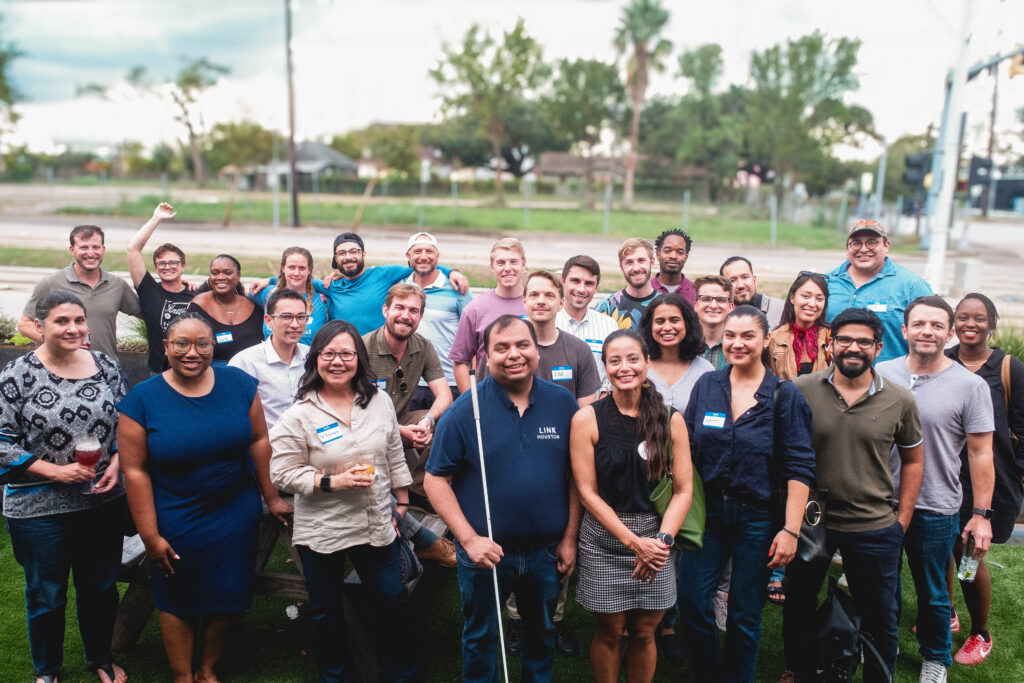
LINK Houston Community Action Network gathering. Photo Credit: LINK Houston
About LINK Houston
"LINK Houston advocates for a robust, equitable transportation network so that all people can reach opportunity. LINK focuses on ensuring inclusive mobility so that people can move around our region affordably and sustainably by walking, rolling, biking and riding transit; keeping communities united in the face of public infrastructure projects like highway expansions; and increasing transit access to housing.
LINK empowers residents to engage with decision-makers at agencies such as Houston METRO and the City of Houston, and serves as a powerful watchdog across our region. The Jacob and Terese Hershey Foundation supports LINK because the organization maintains influence among residents, public officials and the media, having shaped and now watchdogging the implementation of a $7.5 billion METRO bond package so that it boosts transit in low-access areas with a history of disinvestment.
LINK partners with fellow advocates to mobilize opposition to the I-45 expansion, culminating in a voluntary resolution agreement between the Federal Highway Administration and TxDOT to address community concerns. Link also ensures that community voices have seats on our Metropolitan Planning Organization's powerful Transportation Policy Council."
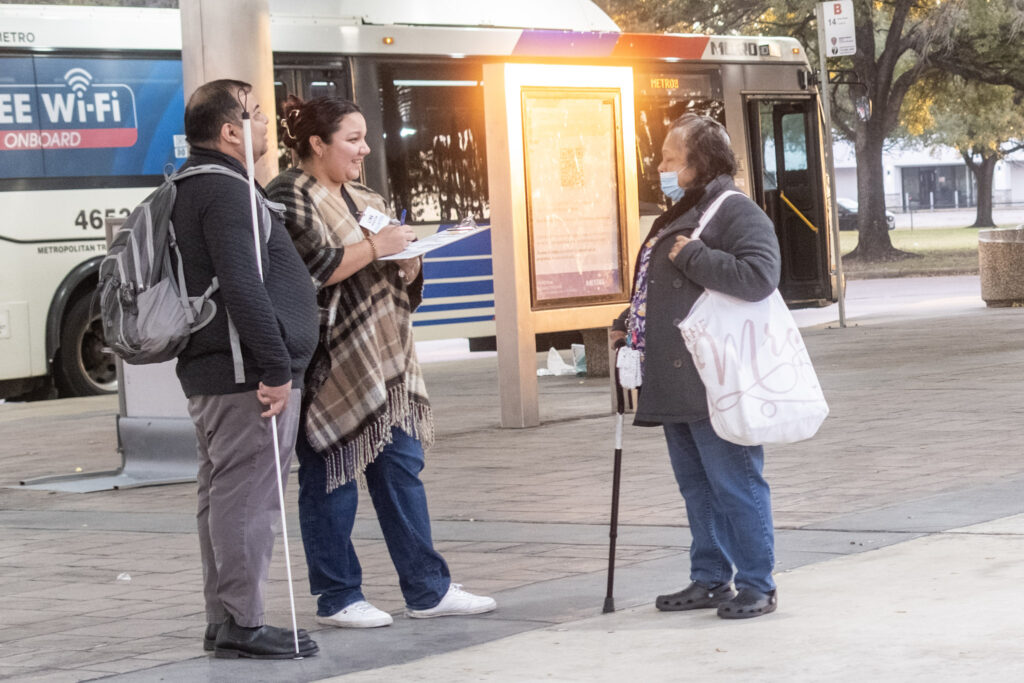
LINK Houston staff surveying bus riders for the 2025 Equity in Transit report. Photo Credit: LINK Houston.
About Their Impact
LINK Houston’s "Equity in Transit 2024" report emphasizes the need for increased bus service frequency and improved on-time performance, which are crucial for those who rely on public transit for work, education, healthcare and other necessities. The organization focuses on equity by prioritizing advocacy to benefit low-income and communities of color, which experience chronic disinvestment. LINK Houston uses data analysis and works with community members to survey bus riders to inform their recommendations. This approach helps them identify the most pressing needs and advocate effectively for changes that will have the greatest impact.
Over the years, LINK Houston’s Equity in Transit report recommendations resulted in additional and improved services in neighborhoods like Gulfton, Kashmere Gardens and Trinity Houston Gardens. The latest report in 2024 called for increased frequency on routes that were reduced due to the COVID-19 pandemic. Several of those routes are now on the frequent network.
Featured Image: LINK Houston staff with former Federal Highway Administrator speaking at the announcement of the Voluntary Resolution Agreement for the North Houston Highway Improvement Project. Photo Credit: LINK Houston.
About this series: TFN invited funders to nominate a stellar grantee to be featured in the Mobility and Access Collaborative’s Advocacy Spotlight series. The stories in this series were submitted by funders and shared with nominees in advance for fact-checking and further clarification when needed. If you have any questions about this series or TFN’s Mobility and Access Collaborative, please contact Martha Roskowski martha@fundersnetwork.org
Meet the Team: Hazel Paguaga
At TFN, we believe our strength lies in our people, and we take pride in recognizing the expertise and commitment of our team members. This ongoing series — Meet the Team — highlights the talented individuals who power our network.
BY Brooke McPherson, Communications and Engagement Associate, The Funders Network
In this edition of Meet the Team, we’re excited to spotlight one of TFN’s Program Associates, Hazel Paguaga!
Hazel plays a key role in supporting several of TFN’s initiatives and working groups and is a vital part of our team’s day-to-day operations. We caught up with Hazel to learn more about her work and background. And in honor of TFN’s 25th Anniversary theme Be Bold Together, we also asked Hazel what boldness means to her.
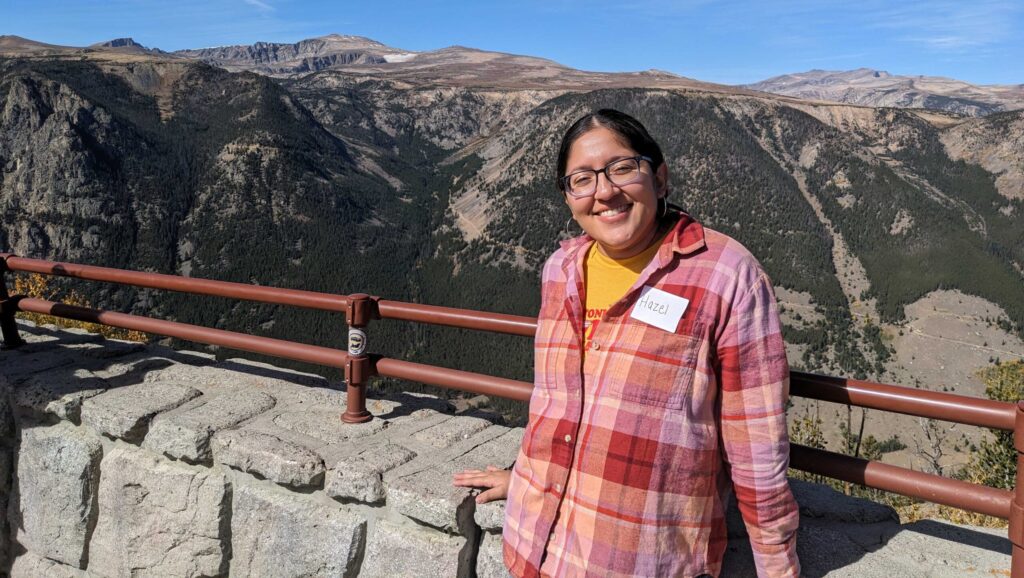
TFN: Hi Hazel! We’re thrilled to have you as our very first TFN team member spotlight! Can you tell us about your role here at TFN?
Hazel: Hey there! I support the Inclusive Economies working group, Mobility and Access Collaborative and Philanthropic Preparedness, Resiliency and Emergency Partnership (PPREP) cohort.
I help keep things running while weaving TFN’s values throughout our programming. I schedule meetings, take notes, input data into Salesforce, coordinate webinar logistics, run the Zoom room to ensure a smooth process during webinars, process recordings and send out webinar resources.
For our in-person meetings, I coordinate everything from catering to lodging to transportation and anything else in between to make sure we have a successful gathering. I keep information flowing and send out bi-monthly email roundups for Inclusive Economies and MAC with the latest news, resources and upcoming events.
If you’re looking for general information on these programs, I can point you in the right direction. I also add jobs to our job board so if you ever have something you’d like to share email jobs@fundersnetwork.org!
TFN: Wow, that’s a lot! Where are you from?
Hazel: My family immigrated from Nicaragua to Miami, where I was born and raised. Currently, I’m living in San Antonio!
TFN: You’ve been with TFN since 2019. Do you have a special moment or memory you’d like to share?
Hazel: My favorite memory with TFN was visiting Montana with the PPREP cohort last year. Being able to visit the communities in Red Lodge and Fromberg and hear from them directly about their disaster preparedness and recovery efforts. The drive through the Beartooth Mountains was amazing and a little scary!
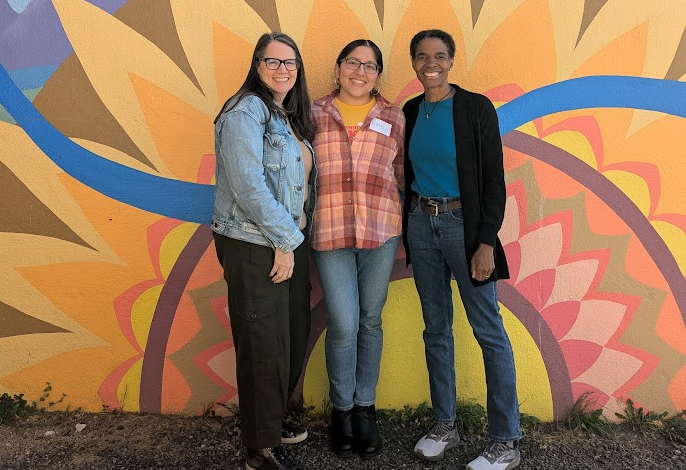 Hazel pictured with TFN’s Maureen Lawless and Danyelle O’Hara in Montana
TFN: And what about a fun fact about yourself?
Hazel: I love horror movies, even though I watch them through my fingers sometimes. I love a good scare!
TFN: As you know, The Funders Network is celebrating our 25th Anniversary and our theme for the year is Be Bold Together. What does boldness mean to you?
Hazel: Boldness means pushing yourself to do the things you’re hesitant or scared to do. It can look like taking a risk and trying something new when others around you are going on a different path.
Thank you, Hazel, for giving us a behind-the-scenes look at all the meaningful ways you support TFN’s work. Your dedication to our mission, infectious positivity and generosity shine through in everything you do — and we’re so lucky to have you as part of TFN’s team!
Keep an eye out for next month’s team member spotlight as we continue to celebrate the people who bring bring boldness and joyful purpose to this work.
Hazel also was the mastermind behind our TFN’s 25th Anniversary Conference playlist!
Advocacy Spotlight: Transportation Riders United
TFN’s Advocacy Spotlight Series, spearheaded by the network’s Mobility and Access Collaborative, lifts up the work of nonprofit grantees making an impact in their communities and beyond. We asked funders to nominate a stellar grantee to be featured in this series. We’ll share these Advocacy Spotlights TFN’s Blog and social media platforms as part of our commitment to amplifying community-led sustainability solutions and building the field of philanthropy through shared learning.
Advocacy Spotlight: Transportation Riders United
Nominated by: Chris Van Eyken, Director of Policy Strategy, TransitCenter
About Transportation Riders United
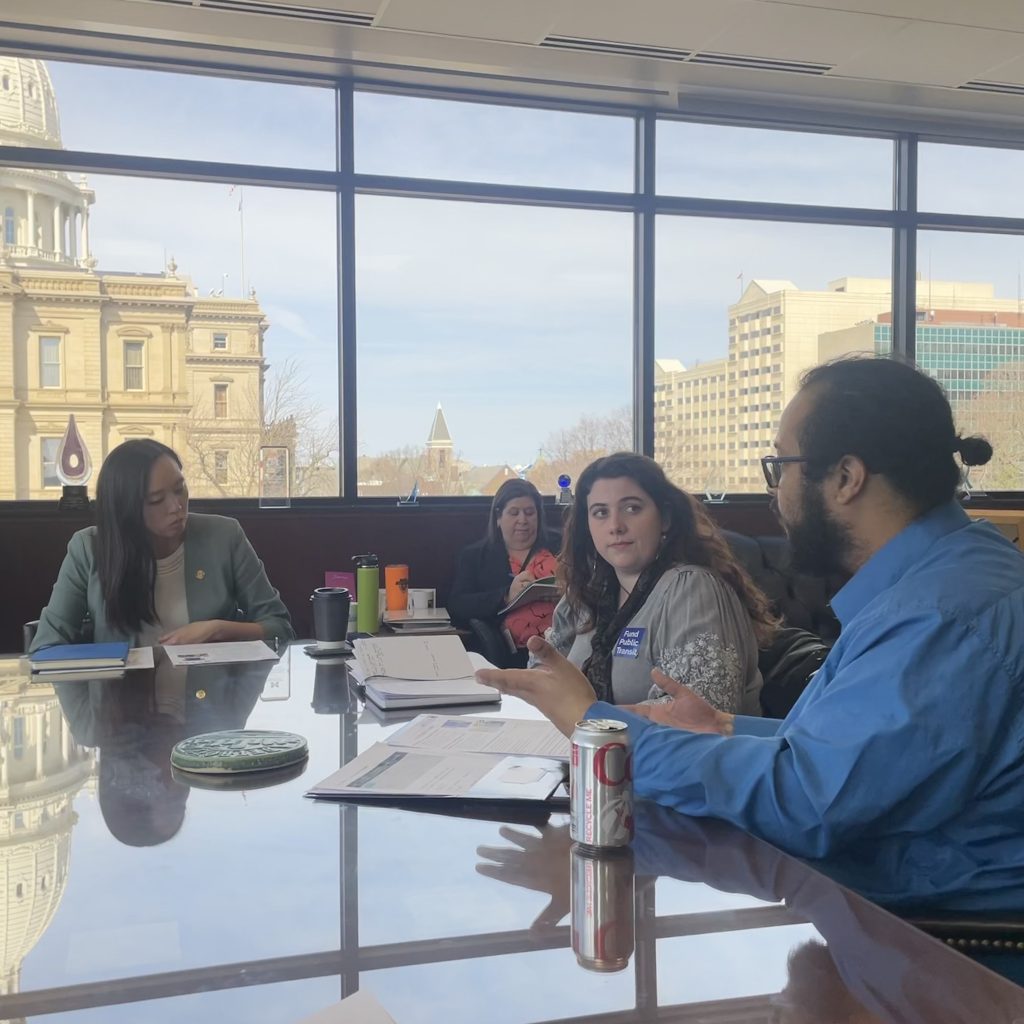
Transportation Riders United (TRU) is a nonprofit that has been working since 1999 to improve public transit in greater Detroit through education, engagement and advocacy. TRU advocates for more and better public transit in metro Detroit. TransitCenter supports their grassroots organizing to strengthen support for transit improvements.
TRU fights to improve transportation justice and equity in Detroit and its suburbs. One-third of Detroiters can't afford a car yet Michigan's transportation investments focus on highway widening. Bus commuters — 90% of whom are people of color — have commutes that take twice as long as driving.
 About Their Impact
TRU won a legislative victory last year that will support the expansion of transit to all of Wayne County. In 2022, TRU succeeded in expanding transit throughout all of Oakland County.
TRU is also one of the state leads for Michigan in the Clean RIDES Network, which unites more than 100 leading organizations working state by state to build sustainable transportation systems that cut costs for families, curb air pollution, and shorten commutes.
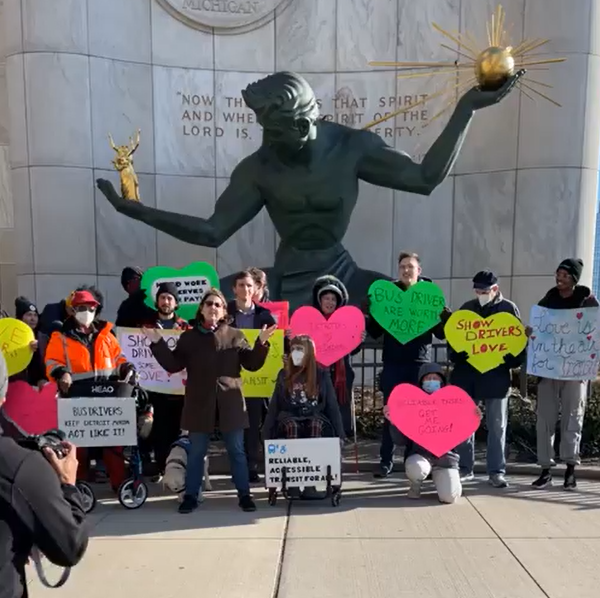 Featured Image: More than 100 supporters of funding public transit joined TRU in Lansing, Mich. for Transit Day at the Capitol. The day was spent meeting with legislators' offices, hearing from transit providers and policy makers and spreading the message of why increasing funding for public transit is so important.
Photo Credit: All photos provided by Transportation Riders United.
About this series: TFN invited funders to nominate a stellar grantee to be featured in the Mobility and Access Collaborative’s Advocacy Spotlight series. The stories in this series were submitted by funders and shared with nominees in advance for fact-checking and further clarification when needed. If you have any questions about this series or TFN’s Mobility and Access Collaborative, please contact Martha Roskowski martha@fundersnetwork.org
Going PLACES: On Radical Love
BY Tim Murphy, Program Officer of the McKnight Foundation, and member of the 2024 PLACES cohort
If you work in philanthropy, you know the phrase: “The word philanthropy comes from two Greek words meaning the love of humankind.”
While well-intentioned, I would bet a small fortune I am not the only person working in this sector that has rolled their eyes as that phrase reverberates around a staff meeting or conference session.
It’s easy to become slightly skeptical of philanthropy — or some may say downright cynical. In a world that is driven by grants, deadlines, arbitrary payout numbers, site visits, board rooms, strategic planning sessions and more — shall I go on? The truest sense of connection, love, and care are often hard to find, or can even be completely absent from the picture.
Over my eight years in philanthropy, I have sat with this contradiction time and again, wondering if the field is flawed or if I was just turning over the wrong stones? Is there actually a place within philanthropy that centers radical love; that welcomes people from all walks of life and celebrates their differences — that truly has the best interest of ‘us’ in mind?
As I hit submit on my application to be a 2024 TFN PLACES Fellow in December 2023, those questions ricocheted around my mind. Transparently, I had applied multiple times — not yet able to be accepted. Part of me was wondering “Damn, am I really that uninteresting?” Ironic coming from a funder, right?
What I did not know then that I do know now is that the questions posed above would be answered for me in a resounding manner throughout my PLACES experience (yes, I was finally accepted).
As the fellowship transpired, starting with a trip to Cleveland in the spring, I knew I was in for something special. It was instantly apparent I was in the midst of a special group of people. See for yourself!
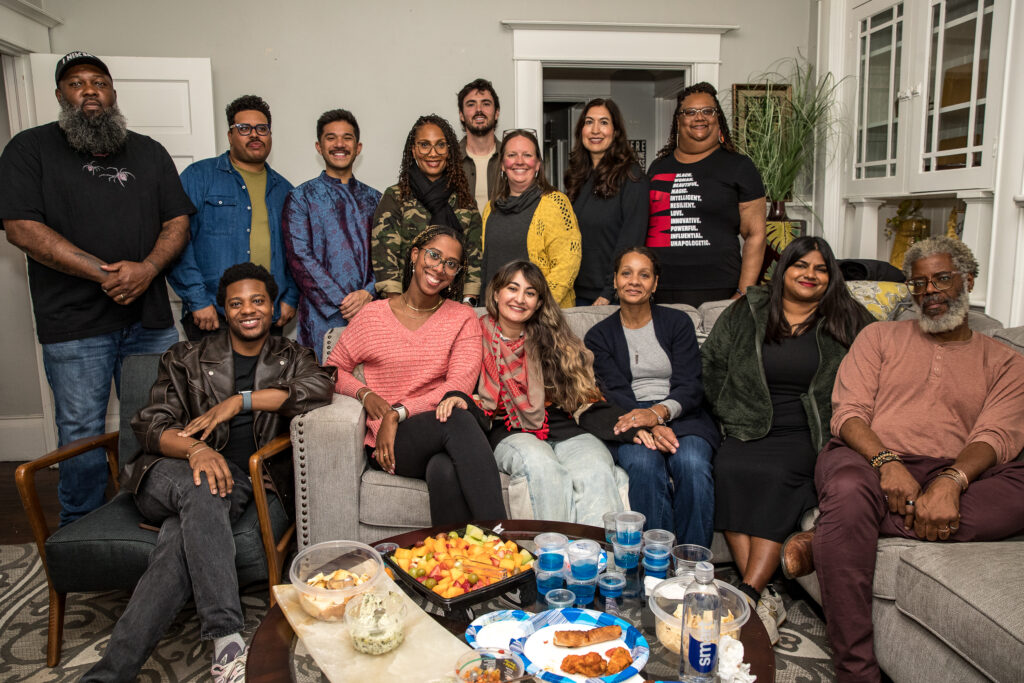
The 2024 PLACES Cohort. Photo Credit: Audrey McCann Photography.
Philanthropic leaders from across North America; trusted and revered community members; musicians; gardeners; organizers; amazing cooks; and so much more. We took the time needed to get to know one another and slowly built relationships. The TFN team knew that the work of love and care cannot be performed on an expedited timeline. We can’t rush the important things.
As the fellowship carried on, we got to see some of the most incredible community leaders I could imagine in Denver, met with Drake’s personal philanthropic advisor in Toronto (true story), and finished out a magnificent year in Sacramento engaging with indigenous leaders and learning about their hopes and dreams for the future.
 Scenes from the Sierra Health Foundation. Photo credit: Bina M. Patel.
As I reflect on the full experience that was the TFN PLACES Fellowship, I of course think about the groundbreaking community investment strategies, grantmaking best practices I learned about, and new, innovative ways of practicing philanthropy. But perhaps most importantly, I witnessed and participated in a new way of being in community together with other philanthropic leaders.
The cohort practiced radical love in a way that was new and profound for me. We practiced accountability and care all within the same breath. We took time to rest and share stories and laughs without rushing to an endpoint. And for me, as a straight, white male, I felt deep optimism and confidence that we can truly achieve a just, equitable future where people are seen and valued for who they are and who they want to become.
I come out of the fellowship re-energized and committed to our collective well-being. I will continue to think about my role in social change and philanthropy, but I will never question my commitment to fighting for a better world.
As I close, I think about a quote from adrienne marie brown where she asks, “What do you love enough to change for?” For me, the answer is reflected in our PLACES 2024 Fellowship cohort. I will always find a way to change for them; for us. I hope others will too.
About the Author
 Tim Murphy has served as a program officer at the McKnight Foundation with the Program Alignment team since 2021. In this role, he extends the capacity of McKnight’s program teams, including leading a portfolio of grants around institutional memberships, democracy, and local media and journalism. He is passionate about the intersection of media, democracy, and equity across the entire state of Minnesota. He is a member of the 2024 PLACES cohort.