BY Brooke McPherson, Senior Communications and Engagement Associate, The Funders Network
Welcome back to Know Your Network, TFN’s blog series highlighting the people making an impact across our community of funders, partners and allies — and beyond.
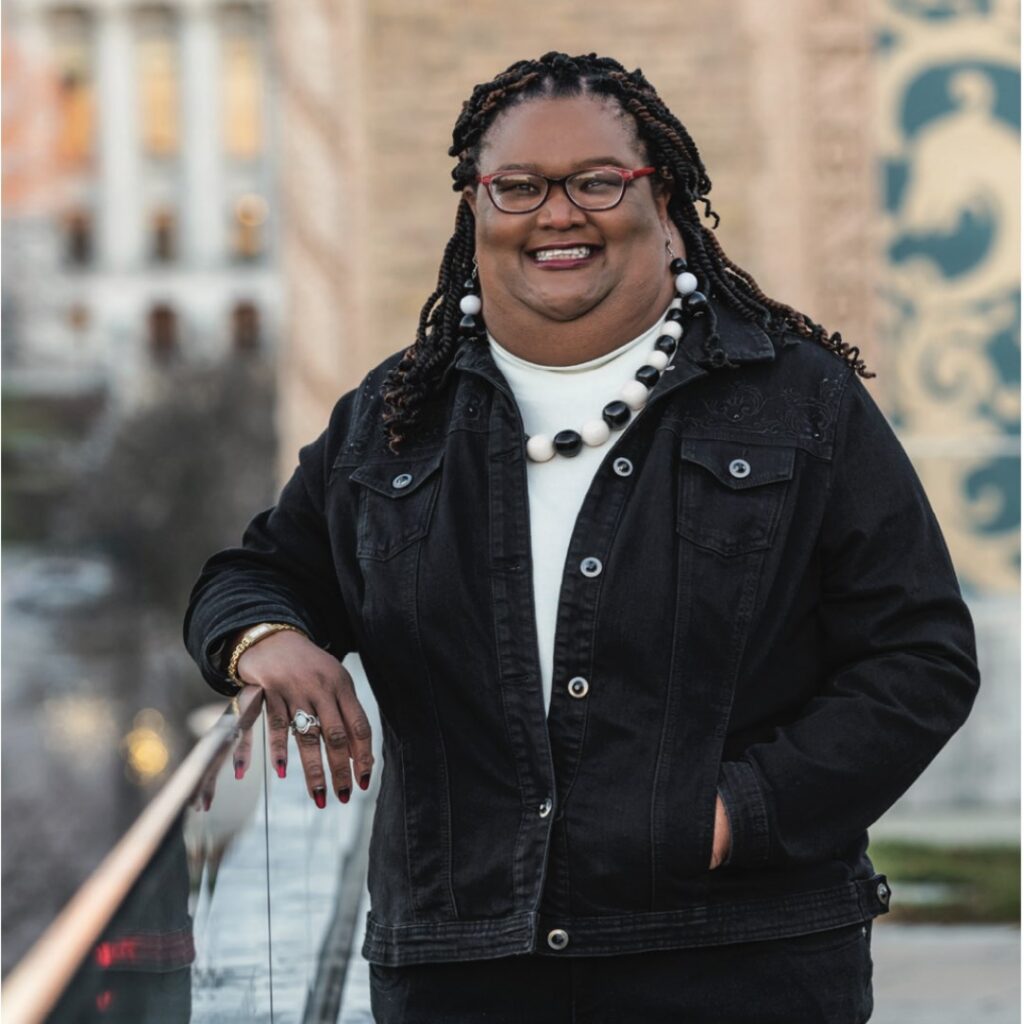
For this latest installment of KYN, we sat down with Angela Davis, director of grantmaking for the Madison Community Foundation, a TFN member organization, and alum of TFN’s 2024 PLACES Fellowship cohort.
Read on to learn more about Angela’s approach to building connections in her Wisconsin community, what advice she’d give to early-career funders and where she’s finding joy in these challenging times.
Q: An interesting thing we’ve noticed about our network is that people come to philanthropy through so many different avenues. So we’re curious: What’s your origin story? Tell us a little bit about your background and how you ended up in the philanthropic sector.
Community service and public service have always been a part of who I am. I have been a member of Delta Sigma Theta Sorority Incorporated for over 30 years.
Giving back to the community is something that’s been ingrained in me since I was young.
I’m from Hammond, Indiana, which is 10 minutes from Chicago. I went to school in Terre Haute at Indiana State University. I majored in political science, and minored in history, and I just knew I was going to law school.
But as graduation approached I said, I don’t think I want to do that. So I went back home and started working in my local planning and development office as a Community Development Planner. I worked with grassroots organizations — we did a lot of community development block grant programs.
And I worked with one organization that was trying to build a community center. Actually, it was to replace a community center where I went to nursery school and my parents went for various activities as kids.
I became the first director of that community center, The Ophelia Steen Family & Health Services Center. We had food pantries, the WIC program, your normal wraparound services: legal services, mental health, childcare, community rooms — and we were fundraising. I was doing philanthropy and raising money, and I didn’t even know I was doing that!
So, that was really cool, but I also realized if I stay in this job, I’m going to be here for 20, 30 years. There was more I needed to do! I said, I know what I’m going to do. I’m going to quit my job and go back to school full-time for my master’s in Human Resources Development for Higher Education & Industry at Indiana State.
While working as a graduate assistant in Alumni Affairs, I learned all about development, philanthropy, communications, and that this was really a profession. I got the bug. And I learned that this is something I really like.
Q: We learned a new TFN fact about you today — One of your first bosses at the Madison Community Foundation was Tom Linfield, a PLACES 2015 Alum! Tell us about your role at the community foundation.
I was recruited to Madison Community Foundation (MCF) as development director, working with fundholders, neighboring communities and with our women’s fund, A Fund for Women — and that’s where my love for philanthropy really grew.
The grant-making side of things, working with the advisory committee on the grant recommendations. I was like, Oh! I think I really like this part of the role.
MCF was creating a new role to expand the community impact team. I was asked if I would be interested. I said, heck yeah, I’m interested. And so now I’m the first Director of Grantmaking at Madison Community Foundation.
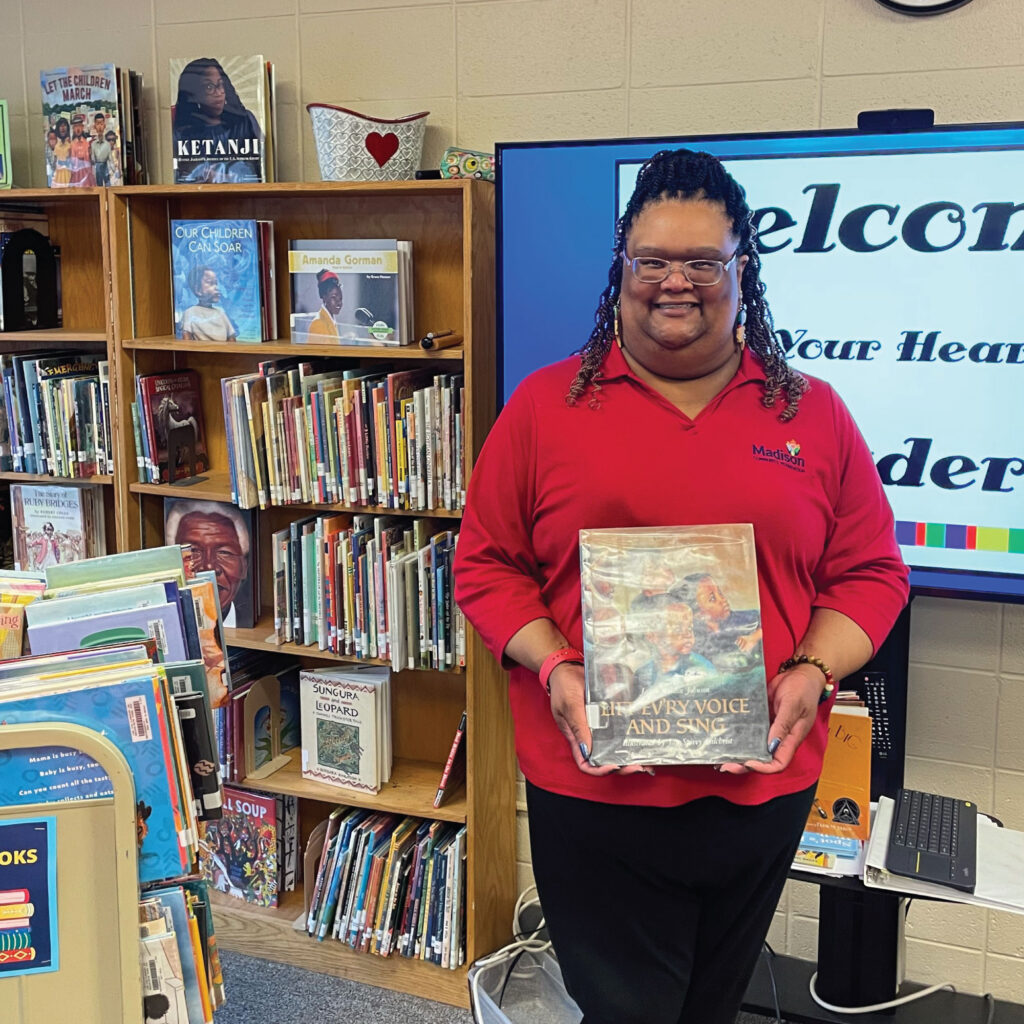
Angela participated in the 12th annual Read Your Heart Out Day at Lake View Community School. This special event invites Black family or community members to read stories to students to model the importance of reading, sharing stories, learning from elders, and uplifting Black voices
Q: We’re seeing so much disruption and uncertainty at the federal level, especially around programs like SNAP that fight food insecurity and the clawing back of funding for environmental programs. How are you navigating this at the community level?
In 2024, we received 89 letters of inquiry (LOIs) with a requested amount of $4.2 million. In 2025, we received 155 LOIs requesting over $8 million.
Our numbers have increased to the point where I couldn’t even manage individual meetings because of the sheer number of people that wanted to apply. We started doing Zoom office hours. People can hop on, ask their questions, and connect with other potential grantees.
We’re trying to be more efficient with our time by working on our guidelines to make things clearer and having a more equitable and transparent process. And that’s something that we all should be doing. Always evolving and making sure things are as centered as we can for the grantees. We also have finally transitioned away from paper to make things more user-friendly, because we still had people mailing things in.
Philanthropy was not built to replace governmental funding. That’s just keeping it 100% real talk. We weren’t set up to replace governmental funding, but what we can do is talk to each other.
We have a Dane County Funders roundtable. We meet with local funders through the Wisconsin Philanthropy Network, and if we have a grant proposal that I may not be able to fund, I pass that on to other funders that I think may be interested. We share ideas and trends, and our hope is to be more collaborative in the future.
Q: Is there anything else you want to add about your approach to or your philosophy around that funder-grantee relationship?
I love being a connector. I’m always listening. When I’m meeting, or even if I’m at an event, even reading the newspaper, watching the news, I’m always listening. Where is that connection at?
I want the work to be centered around the grantee, the partners, the nonprofits — because it’s not our program, it’s their program.
They’re boots on the ground. We’re just here trying to support the work, not take over or put ourselves in the middle.
And I try to be mindful of that and always be humble. Because this isn’t about Angela, the person. It’s about Angela, who can make the connection and help get this thing done.
Q: What are some lessons you’ve learned along the way you’d like to share?
I’ve learned that there is a need for more education for our nonprofit leaders. Particularly as we have this transfer of those seasoned nonprofit leaders to younger Black and brown leaders who are now taking the reins.
That’s one of the reasons why we’ve started our Goodman Nonprofit Center. We’re going to do more engagement in the coming year to offer training open to the entire nonprofit community. We are researching what topics are needed in the sector.
Q: What advice would you give to someone who is just starting out in philanthropy?
Find your people. I was lucky with PLACES. Those are my people. I can call on them anytime.
Professional development is usually one of the first things that’s taken out of the budget, and that’s so unfortunate. I hate to see that.
We need those connections with your professional peers. If something comes up, or you want to try something new, or bring something new to your organization, but you don’t have those professional connections…Who are you going to talk to?
Take advantage of opportunities to be part of a community like The Funders Network. Because it might just be a webinar or a conference that changes your life — or the lives of people in your community.
Q: These challenging times can be very draining. What is keeping you motivated? What is bringing you moments of joy?
Going to an open house, a ribbon cutting, a groundbreaking — knowing that we played a little part in that. Knowing that we’ve done something in the community that’s going to be transformational for years to come. That keeps me motivated.
I love the arts. I love the ballet, plays and the symphony.
I love seeing nature and the four seasons of the lake — the geese and the ducks and all the wildlife that comes through. Seeing people in their canoes in the summertime.
And then in the wintertime, I see people fishing on the lake or even walking on the lake when it freezes over. I’m not doing it! But I like to watch it.
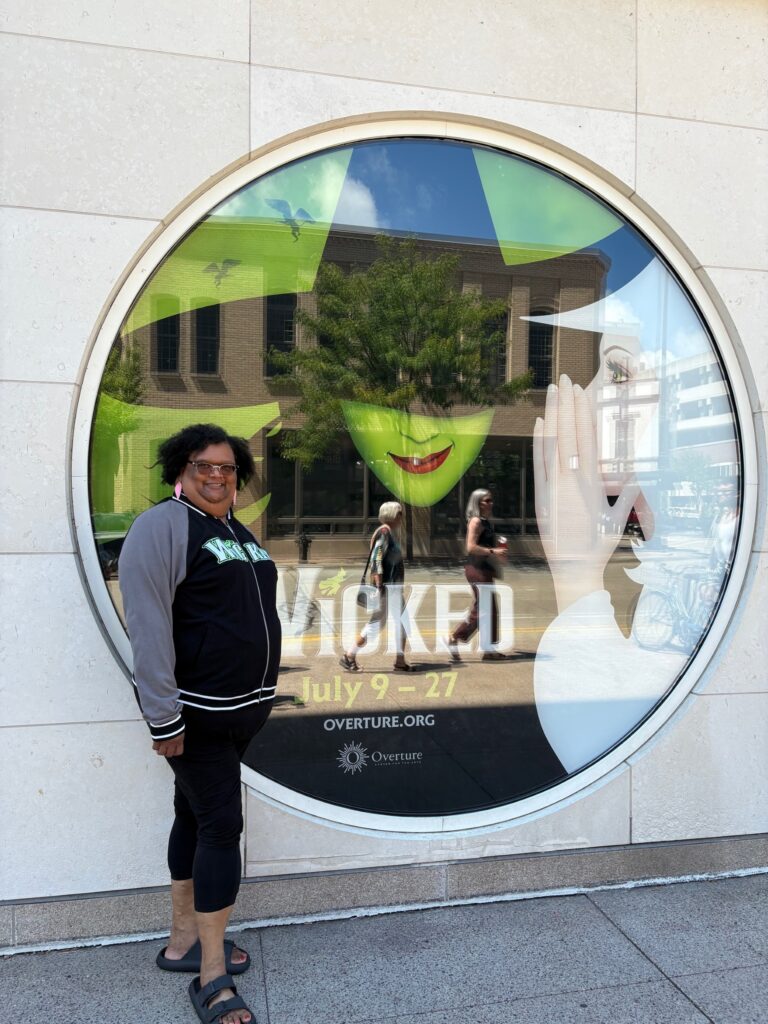
Angela loves musical theater — she has seen Wicked five times!
We’re so grateful to Angela for sharing her journey and insights.
Want to see for yourself how the PLACES Fellowship builds connections like Angela’s? Click here to learn more!