
BY Melinda Tuan, Managing Director, Fund for Shared Insight
As a first-time participant at a TFN conference, I came to Baltimore with a question: In a national environment characterized by fear and uncertainty, are place-based funders still committed to listening to community?
In sessions and conversations throughout TFN25, and as the room filled with people for a session on listening and participatory practices during the meeting’s last morning, the answer was clear. The chaos and hazards of our context have only strengthened the commitment of TFN funders to listen to the communities they serve and work shoulder-to-shoulder with them so that people are better off in ways they define for themselves.
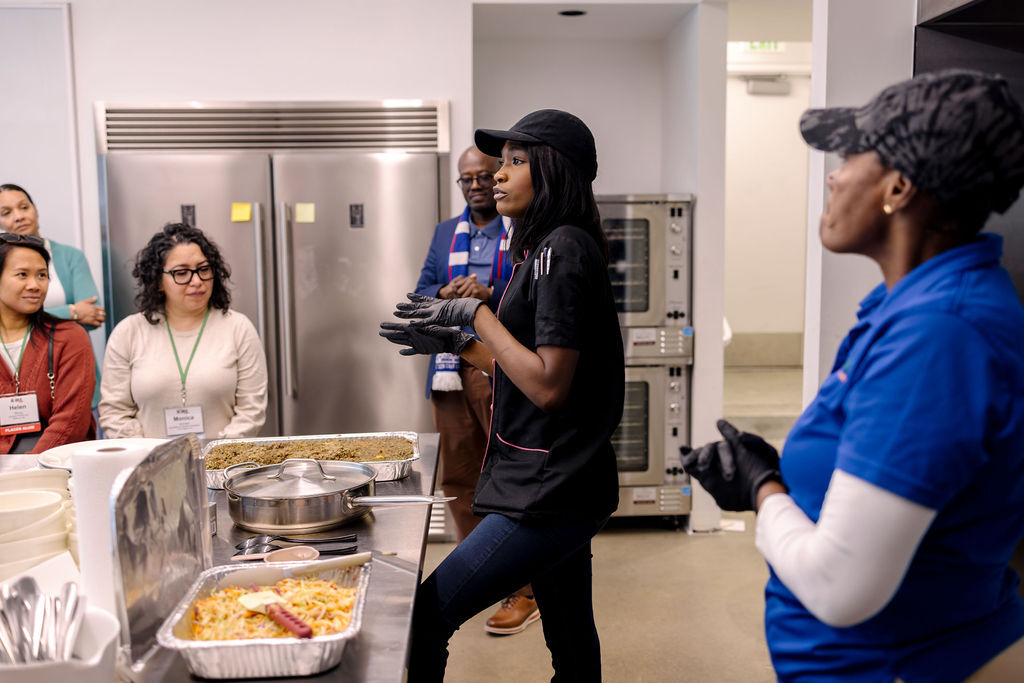
TFN25 attendees learn about the importance of arts funding in the community, culture as a driver of economic development and learning key skills for practical application and mental health.
This kind of listening and partnering is what the funder collaborative Fund for Shared Insight has been exploring for the past decade — a journey that has taken us from building mechanisms such as Listen4Good to collect better feedback, to advocating for listening as a way funders can shift power to people and communities at the heart of their work. Through these efforts, we’ve seen that place-based funders have a special relationship with communities — and thus a particular opportunity and responsibility to listen to those communities. What drew so many of us into conversation on the last morning of TFN25 was our collective recognition that listening in non-extractive, authentic ways is an ongoing challenge, even when you’re committed to it.
At Shared Insight’s blog, and in resources including our Funder Listening Action Menu and Participatory Philanthropy Toolkit, we’ve been developing and collecting ideas, frameworks and promising practices to help funders listen to shift power to community. At TFN25, it was exciting to learn more about how place-based funders are listening to the communities they serve and being transformed by what they hear — and in turn, helping their communities achieve their own self-determined transformation.
From our conversations, I am taking away a wealth of examples and reflections on listening and power. To share a few:
The Power We Hold
Elizabeth Love, CEO of the Jacob and Terese Hershey Foundation, shared ways the foundation has been trying to better listen and respond to the communities it serves in Texas. The foundation’s board is changing its membership — moving from a board of all family members to include people closer to the community. And together, the board is doing the hard work of looking at their own power and how they wield it. Over the course of a year, they learned about racial equity, mapped their power and reflected on where they could shift power to communities.
Now, the board and staff embrace trust-based philanthropy, and they approach connections with current and potential grantees with an eye to correcting power imbalances. The team has reduced demands on organizations’ time in applications and reporting, and they attend town halls and speak with community members to learn about power and trust dynamics. Redesigned feedback conversations have led to a new fund to support capacity-building for grassroots organizations, designed and managed by a committee of grassroots leaders.
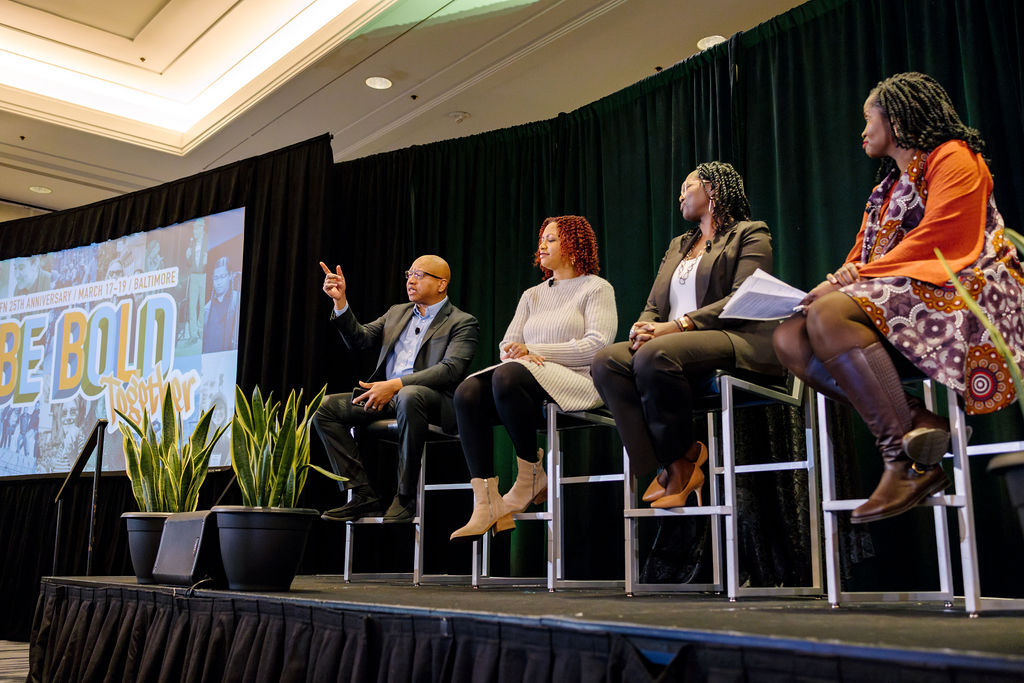
TFN25’s Tuesday Morning Plenary speakers discussing ways that philanthropy can step up now to bolster and protect community partners.
Power Together
In the closing plenary, Maya Wiley, president of the Leadership Conference on Civil and Human Rights, crystalized another aspect of listening and power in our current moment, when it can seem like every issue we care about in our communities and on our planet is being threatened. But while the purpose of the Administration’s “flood the zone” strategy is to overwhelm responses, it’s also an opportunity for solidarity, Wiley pointed out. Rallying empathy and action across all impacted communities creates a great source of power.
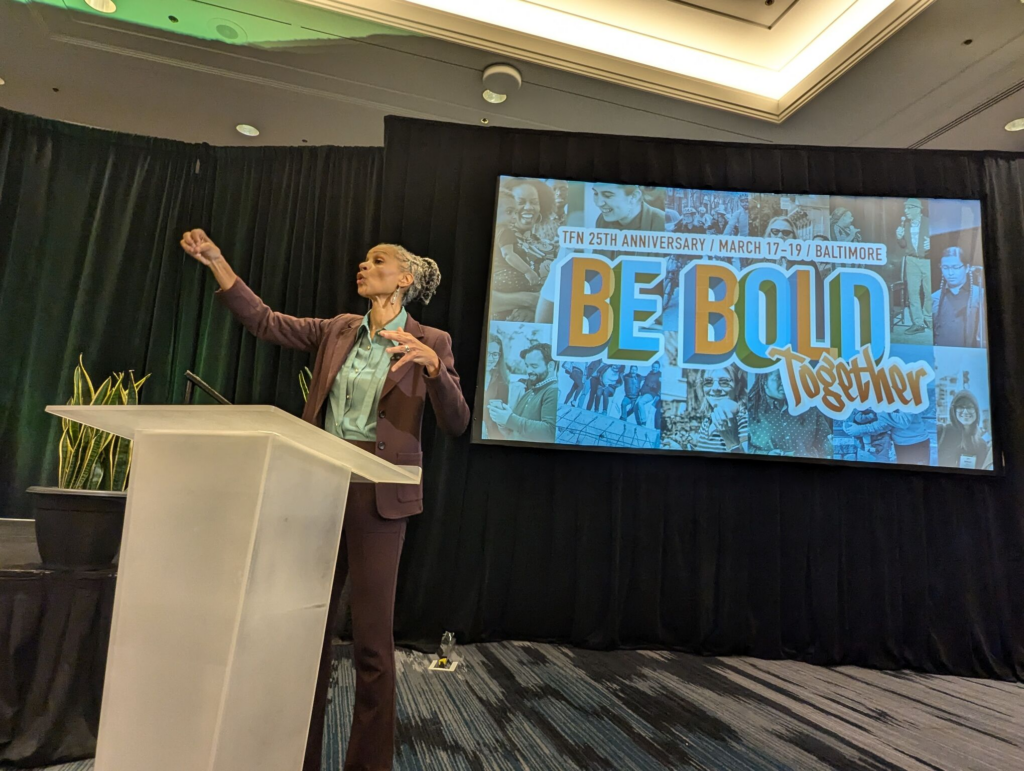
Maya Wiley discusses turning adversity into action that creates lasting change at TFN25’s Closing Plenary.
Listening is an important part of building such solidarity and collective action. We recently wrote about this as “turning on the headlights” in times of crisis so funders don’t cause more harm or miss the opportunity to be of greatest use. Across our TFN25 conversations I heard about funders listening to communities as a way to better understand the moment, as well as supporting community leadership to meet it.
Power and Love
At the final lunch, sitting with colleagues from the Kresge Foundation, we landed on the topic of love. For me, the work that I do at Shared Insight is so joyful, and I heard similar joy reflected in their experience of working in deep partnership with communities in Detroit. We agreed that to do philanthropy well, it has to be done with love. And there is power in love.
In Shared Insight’s own experiment with participatory practices in philanthropy, one of our biggest lessons was that we need to reconsider how we understand power. In his final book, Where Do We Go from Here: Chaos or Community?, Dr. Martin Luther King Jr. wrote:
Power, properly understood, is the ability to achieve purpose. It is the strength required to bring about social, political or economic changes. In this sense power is not only desirable but necessary in order to implement the demands of love and justice. One of the greatest problems of history is that the concepts of love and power are usually contrasted as polar opposites. Love is identified with a resignation of power and power with a denial of love. … What is needed is a realization that power without love is reckless and abusive and that love without power is sentimental and anemic. Power at its best is love implementing the demands of justice. Justice at its best is love correcting everything that stands against love.
This reexamination can help us see the power that lies in communities, and shift philanthropy’s role to share its own power from a place of love. Transformative love, as explored by Shiree Teng and Sammy Nuñez, fuses power and love on the path to justice, with deep listening as a crucial dimension.
My initial question coming into TFN25 was answered emphatically. I hope to keep hearing from TFN members about how you are using listening to build power and solidarity across your work. What was palpable over the three days of the meeting was the love foundations have for the communities they serve, their readiness to listen and transform in response and the power that listening through love holds as communities face the present and change the future.
About the Author
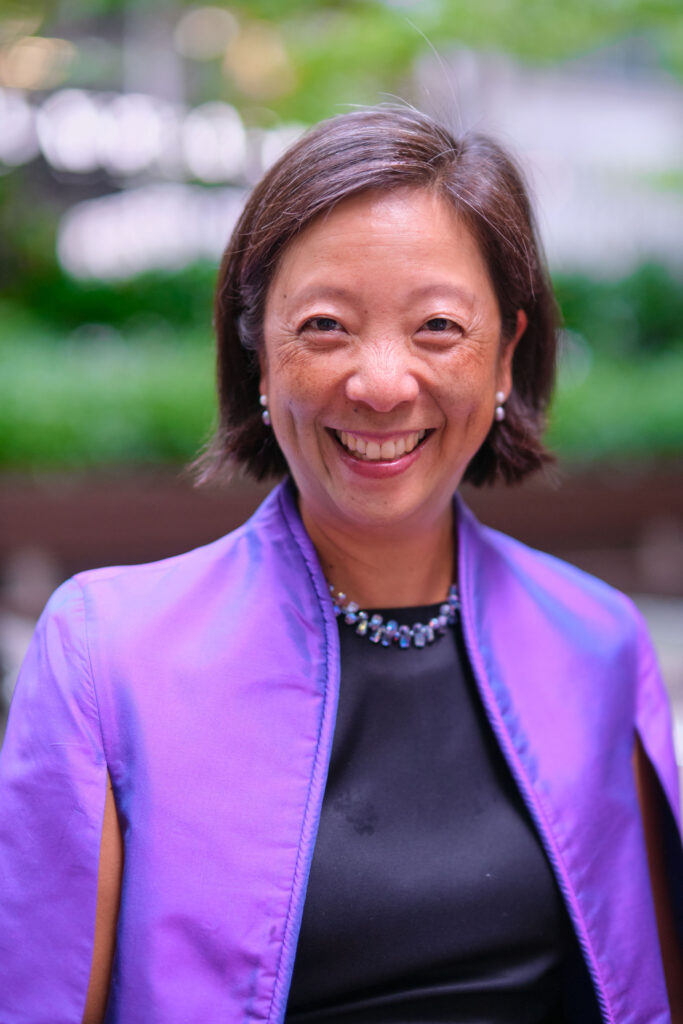
Melinda Tuan is Managing Director of Fund for Shared Insight. Find her on LinkedIn.