
Going PLACES: Responding to the call — and learning to co-struggle alongside organizers in the South
BY Leticia Rojas, Gulf South Program Officer, Hive Fund for Climate and Gender Justice, and 2025 PLACES Fellow
“Shift from being a funder to being a co-struggler.”
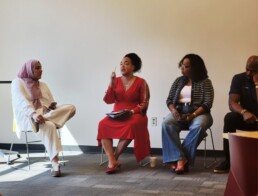
Weeks after hearing Dawn Harrington, executive director of Free Hearts — an organization led by formerly incarcerated women — speak during a PLACES site visit in Nashville, her words are still ringing in my ears.
Throughout our PLACES Fellowship, we’re introduced to amazing organizers, strategists, and leaders from across the country who often leave me furiously taking notes to memorialize the nuggets of wisdom they share with us. No single phrase has stuck with me more than Dawn’s, because she wasn’t just pointing at process changes, such as providing multi-year, general operating support or verbal reporting (which we do at Hive Fund!) but a change in our mindset and stance as funders, which required me to think more deeply about my approach.
As I work to put my fellowship learnings into practice, Dawn’s call has continued to buzz around in my head. What would it truly mean to co-struggle alongside the brave and brilliant organizers in the South? And what does that look like for me as a funder?
A refrain I’ve heard often from grantee partners — and one that came up repeatedly during our site visit in Nashville — is that funders can and should think about what we can do to serve organizations “beyond the grant.”
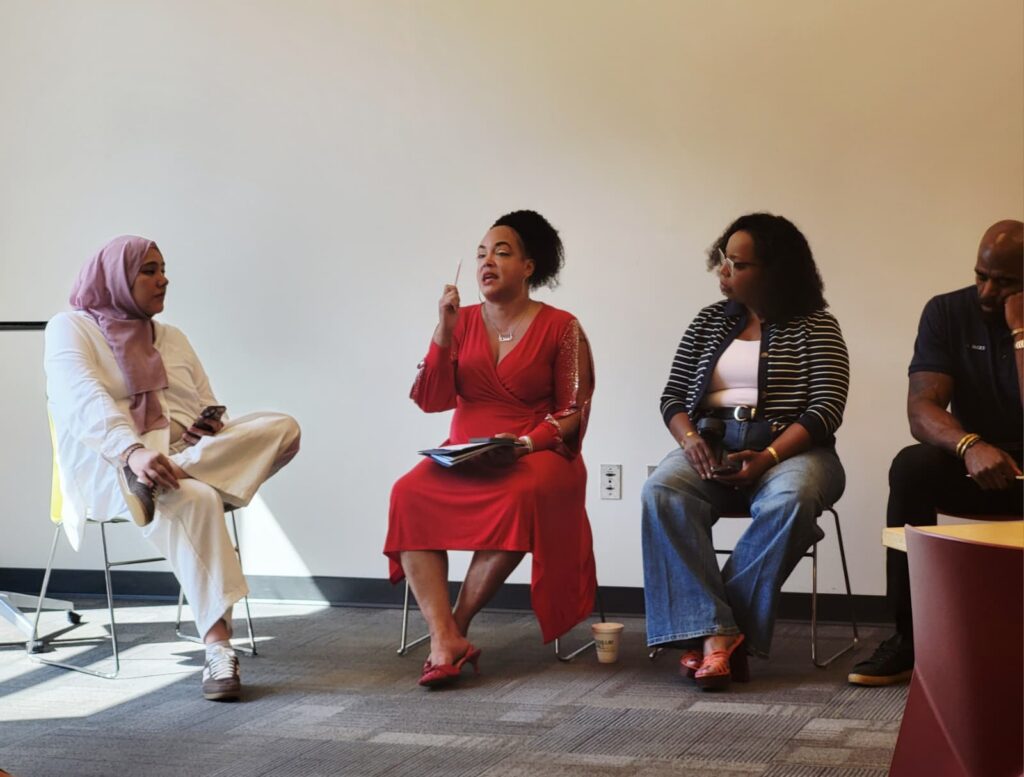
During a panel on immigrant defense, Melinda Noblitt, interim executive director of Tennessee Justice for Our Neighbors, shared how a funder made it possible for her to take a recent sabbatical. That support enabled the deep rest she needed to continue serving communities facing harsh anti-immigration policies and ICE raids.
Melinda’s story reminded me how much funders need to think outside the usual boxes — to show up with creativity and abundance as organizations and movement leaders face growing threats to their health and safety. I’ve seen new executive directors be able to shine when we provided support for executive coaching, and organizations be able to meet their community’s needs when we provided surge support during disaster recovery through our healing justice and holistic security grants at Hive Fund, and these supports have never been more important than they are now.
We also heard directly from funders finding meaningful ways to show up for grantees beyond cutting a check. Adnan Karim of the Community Foundation of Middle Tennessee spoke about how the foundation leveraged their community relationships to hold a press conference to rally support for a rapid response “Belonging Fund,” channeling direct aid to immigrant families impacted by ICE raids.
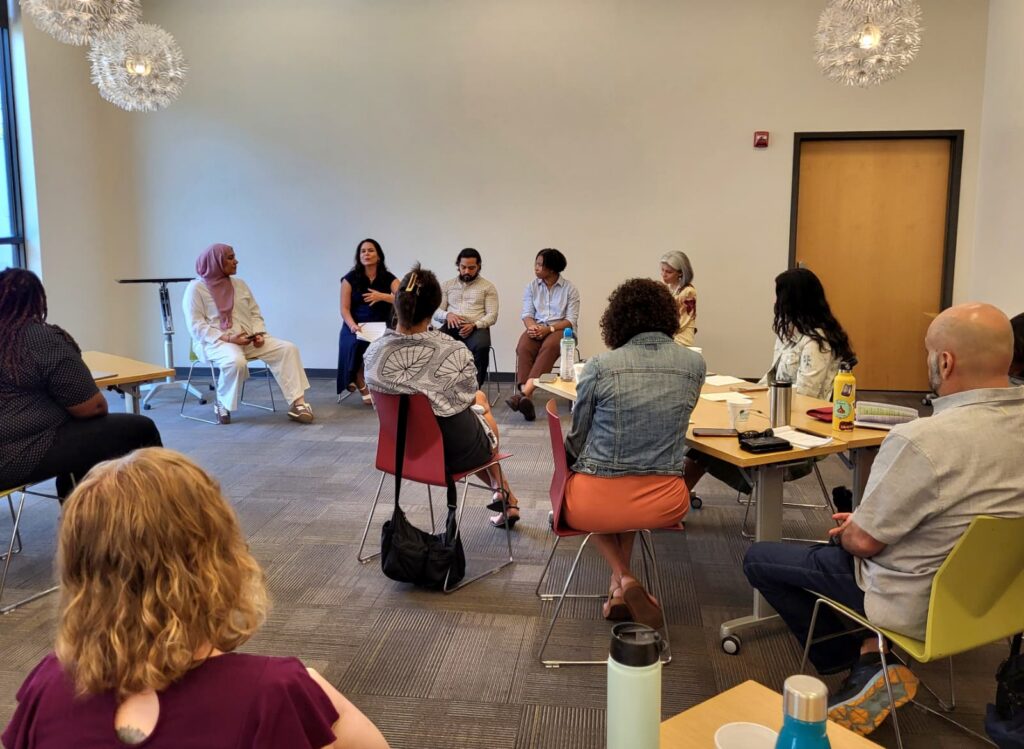
Another powerful example of co-struggling came from The Healing Trust. Through their participatory grantmaking initiative, the 37208 Fund, they shifted decision-making power directly to residents of Nashville’s 37208 ZIP code, a historically Black neighborhood gutted by highway expansion.
Hearing from both grantees and committee members about the projects made possible by this funding: from a lifeguard academy for local youth to nutrition and cooking classes for seniors was deeply moving. These hyper-local initiatives, led by people in their communities would likely not have been possible through traditional grants, and more broadly the approach of community-led grantmaking processes represents transformative shift away from traditional philanthropy — which tends to hoard power within grantmaking institutions — toward one that taps into deep community wisdom and expertise.
Participatory grantmaking is one way to share power and co-strategize. But the more I sit with what it means to be a co-struggler, the more I realize there are so many ways to live out that ethos — in how we build relationships, make decisions, and show up alongside our partners every day.
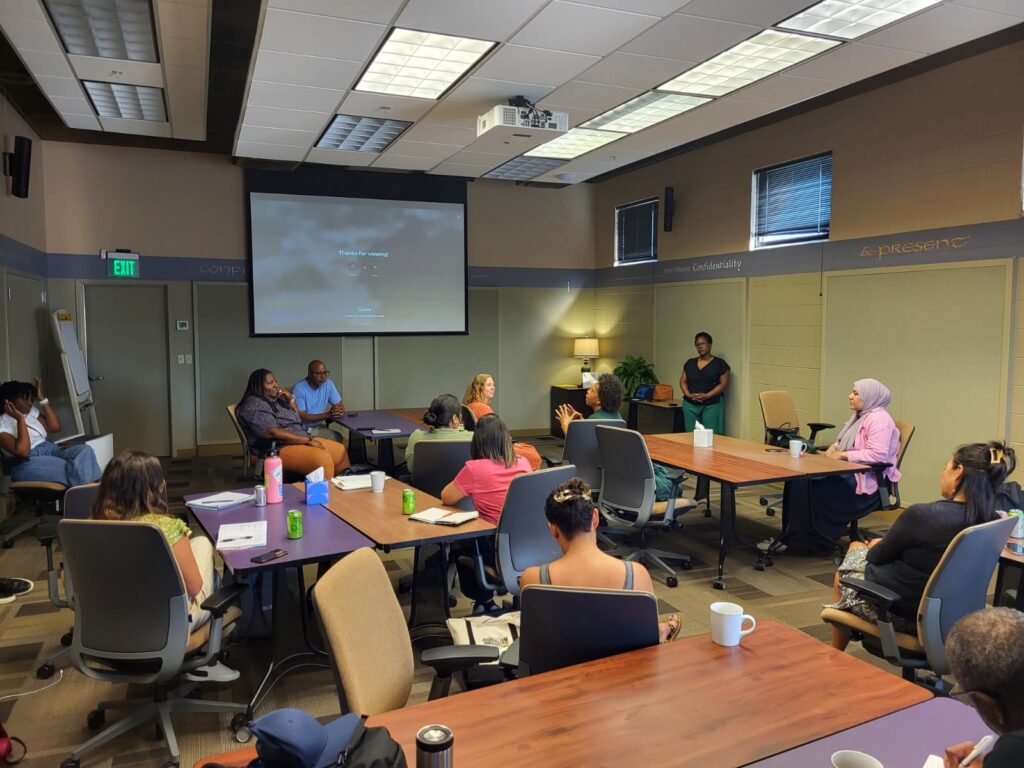
At Hive Fund, we’ve been putting these ideas into practice in our own work. This year, we revisited our strategies to meet a rapidly shifting landscape and respond to the rise of authoritarianism with clarity and purpose. As part of this process, we hosted a series of conversations with our grantee partners, peers, and allies to gather feedback and ideas, ensuring our strategies reflect the wisdom of the broader movement, not just our own perspectives.
What came out of those conversations was more than a grantmaking plan. It was a blueprint for how we move forward as an institution working alongside our movement partners. Taking this time to reflect helped me see my own work in a new light and reaffirmed the importance of leaning into practices that keep us accountable as true co-strugglers.
Lastly, I’m learning that co-struggling means cultivating relationships that nourish and sustain us, not just as organizations, but as people. In that same panel on solidarity and movement building where Dawn spoke so powerfully, it was clear the speakers weren’t just colleagues working in the same space, but they are also a community deeply connected by trust, care, and shared commitment.
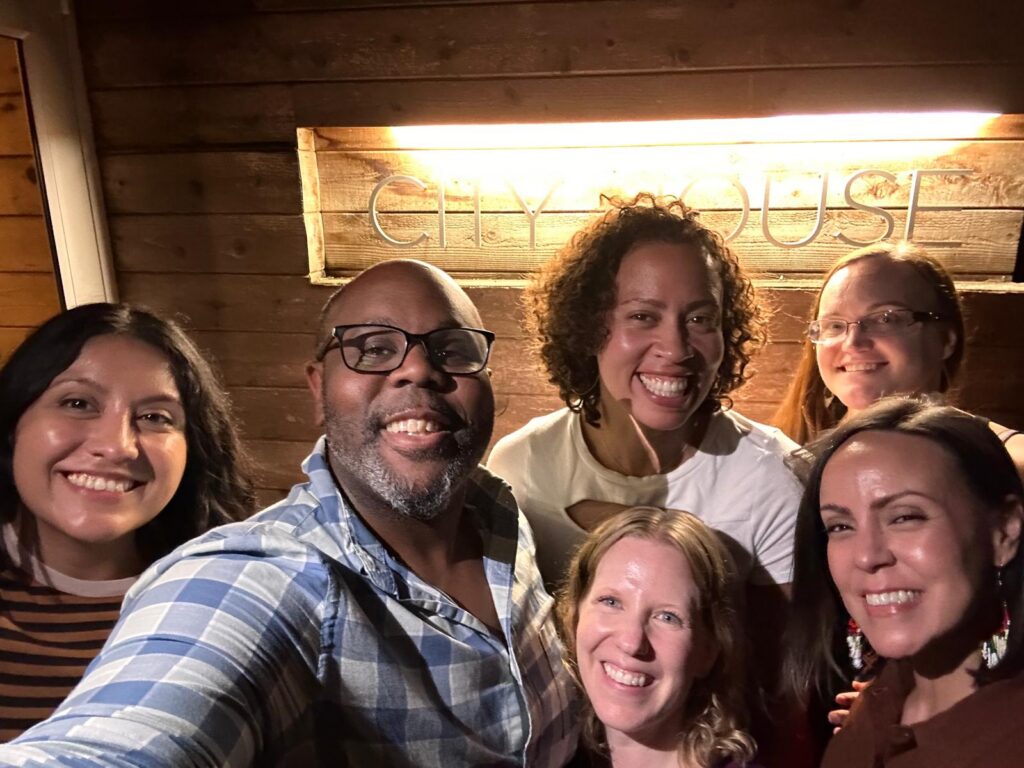
It’s also what our PLACES fellowship has modeled: a network of peers who show up for one another, across institutions and geographies, and who are building the kind of solidarity that lasts beyond any one project or position.
I still have a lot to learn — and a lot to put into practice — to truly live into Dawn’s call to be a co-struggler. But through PLACES, I’ve seen what’s possible when funders commit to listen more deeply, share power more intentionally, and build relationships that will last.
As I continue on this journey, I hope to translate Dawn’s words into more than a scribble in my notebook. I’ll be carrying them like a compass, guiding how I move through this work and pointing me toward deeper ways of showing up in solidarity.
And thanks to PLACES, I know I’m already finding my way.
About the Author
 Leticia Rojas is the Gulf South Program Officer at the Hive Fund for Climate and Gender Justice. She is an alum of TFN's 2025 PLACES Fellowship cohort.

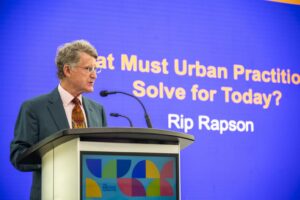
Kresge Foundation's Rip Rapson on "Honoring the gifts of American cities: Emerging themes for equitable community development" | Cross-post
The Funders Network is committed to sharing the stories and strategies of our members, partners and others in the philanthropic sector working to create more sustainable, prosperous and equitable communities.
Today, we’re sharing a blog post by Rip Rapson of The Kresge Foundation, reflecting on the themes that emerged during a series of convenings marking the foundation's 100-year anniversary.
BY Rip Rapson, President & CEO, The Kresge Foundation
A little over a year ago, I addressed 300 partners, peers and friends at Kresge’s Our Urban Future conference, the last of several events marking the Kresge Foundation’s Centennial. I told the group:
“Let’s use our time together to fire our imagination to conceive of a bolder, more equitable urban trajectory. I am optimistic that we can do that. . . . And, under the circumstances, being anything other than an optimist strikes me as a profoundly unproductive use of our time.”
The last year has provided innumerable invitations to pessimism, resignation, even despair. I acknowledge the accumulated and deep losses and remaining challenges, but still, I stand by the spirit of my words. We can conceive of a bolder, more equitable urban trajectory that amplifies and honors the gifts of our cities: diverse populations, neighborhood assets and unbowed civic and community leaders. We see people envisioning and implementing this trajectory every day.
So even as we mourn the careless destruction of pillars of civil society, the families and communities destroyed by deportation, the hateful rhetoric and violent action visited upon our cities, we also hope. We hope because we know what we have done and what we can do to move toward greater equity and opportunity in cities.
Yes, there has been whiplash around funding. Loud voices have denigrated and dismissed prior efforts, tried to erase history and stopped the flow of information that helps measure progress. But you haven’t stopped, and neither has Kresge. That’s why we’re publishing this Centennial convening summary now. The work still matters.
When we combine what we heard during our Centennial convenings with our own understanding of how change happens in cities, we see three themes for city building and civic problem-smashing emerge. Cities need:
-
A multi-sectoral, pluralistic approach and the right leadership to organize and maintain it
-
Community self-determination and creative use of assets
-
New and strengthened systems to deliver diverse forms of capital
Over the past year, we’ve seen continued progress on each of these themes. Our grant partners tell us they are putting more energy into convening, collective action, collaboration and building stronger networks, especially with groups that have not historically engaged with their issues.
In the face of efforts to uproot and isolate vulnerable people and describe them as outsiders or threats, people are rallying to defend their neighbors. New communities of practice are emerging, such as one that Kresge supports to help city residents secure quality employment, improved income, and health insurance.
As federal dollars abruptly disappear, people are imagining new ways to engage the private markets to accelerate real estate investment in disinvested areas and creating community-owned infrastructure that can operate independently of political shifts. Kresge is providing resources to nonprofits to help them become more resilient and manage their funds for longevity and impact.
Like you, the Kresge Foundation will not deviate from our mission of strengthening the building blocks of equity and opportunity in American cities. While partners and friends might have to adjust methods or even make excruciating decisions about where to move forward and where to pause, we are all steadfast in our commitment to our shared purpose and the shared vision of our urban future.
This summation of our Centennial year convenings, 100 Years of Grantmaking: Lessons Learned from the Kresge Foundation’s Centennial Convenings, is not a postcard from a vanished era. Instead, I hope it is a galvanizing reminder of the variety of ways that people across the country are still, continually moving every day towards great equity and opportunity, and even joy, in America’s cities.
The work has never been easy. You are not alone. Let’s keep going together.
Additional Resources
➡️ Read the original post and learn more about President and CEO Rip Rapson on The Kresge Foundation website.
➡️ Watch Rip Rapson deliver opening remarks at the Our Urban Future gathering in Detroit (via YouTube).
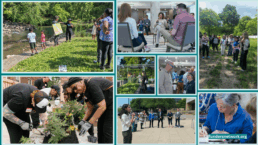
Urban Water Funder Updates: Dr. Robert Bullard, Chris Tomlinson and Radhika Fox join our Houston lineup
BY TFN Staff
TFN's Urban Water Funders 2026 Annual Meeting will bring together funders from across the country for an intimate, engaging and interactive convening designed to spark new ideas, build stronger partnerships and explore collaborations that meet the needs of the moment.
Water issues have a profound impact on civic life, public health, climate resilience and economic justice, especially for those in historically marginalized and vulnerable communities. Together, we’ll explore where philanthropic resources can have the greatest impact and how funders can better work together to address the opportunities and challenges our communities face.
So who will be joining us in Houston February 9-11?
Read on for agenda highlights to learn more about the thought-provoking lineup of featured speakers, strategic conversations and place-based learning we have in store. We'll also incorporate participatory facilitation methods to create a candid space to ask pressing questions and share feedback with trusted peers. And we'll offer plenty of time for moments of inspiration, connection and joy, including our opening night dinner and lively "Fast Pitch" funder reception.
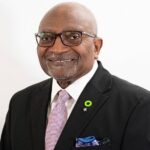
Feb. 9 | Day One kicks off with powerful insights from nationally-acclaimed environmental justice leader Dr. Robert Bullard, founding director of the Bullard Center for Environmental and Climate Justice and distinguished professor of urban planning and environmental policy at Texas Southern University. He'll join us as we explore how we, as funders and partners, are meeting this moment of change — individually and collectively.

Feb. 10 | Day Two begins with journalist and author Chris Tomlinson, who will unpack the political, social and organizing fabric that shape the south — and therefore, the country.
- We'll then depart for site visits to learn from Houston water advocates, community members and funders about the community-centered resilience work happening in the flood-prone metropolis. We’ll be joined by leaders from Houston Water to share alongside advocates about their collective OneWater efforts.
- The day will close with a lively “Fast Pitch” session, where funders share bold ideas and explore collaborative, fundable projects.

Feb. 11 | Day Three turns our lens outward, focusing on how to support movement-building across an ecosystem of diverse players, coalitions and interests.
- Funders will process the many moving efforts to build power at local and state levels and how these efforts ladder up for bigger, future progress.
- We’ll spend time diving deep into funder-led discussions focused on areas for activation, such as climate migration, data centers, implementation of federal infrastructure funding and the water workforce.
- National water leader Radhika Fox will wrap up our gathering as our final featured speaker, helping us chart a path for foundations, nonprofits and other water stakeholders to meet what lies ahead.
Newcomers are welcome! Join us if you are already engaged with TFN's Urban Water Funders working group — or are looking to learn more about us. Registration is open to donors, staff, directors and trustees of all grantmaking institutions.
Visit the Urban Water Funders 2026 Annual Meeting event page to access our draft agenda and for information on registration and lodging.
California Wellness Foundation CFO: Fund managers from diverse backgrounds are delivering standout returns | Cross post
The Funders Network is committed to sharing the stories and strategies of our members, partners and others in the philanthropic sector working to create more sustainable, prosperous and equitable communities.
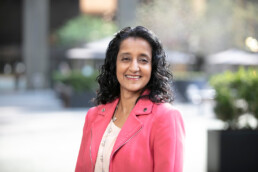
Today, we’re lifting up a recent opinion piece in Fortune authored by Rochelle Witharana, Chief Financial and Investment Officer for The California Wellness Foundation, why the foundation aligned its endowment with its mission by ensuring its assets are managed by firms that are led by significantly diverse teams.
By Rochelle Witharana, CFO at The California Wellness Foundation
The next big investing opportunity isn’t buried in the markets – it’s hiding in plain sight. The data keep stacking up: fund managers from diverse backgrounds are delivering standout returns.
The latest report from the National Association of Investment Companies found that managers who are women or from racially diverse backgrounds outperformed private-equity benchmarks with a 16 percent internal rate of return, compared with 9 percent for the median. This kind of return is catching the eye of CalPERS, the California state pension plan with $500 Billion of assets to manage.
And yet the majority of institutional investors continue to ignore the smart money, instead pouring trillions through the same old-school, closed-door networks.
At the California Wellness Foundation, we’ve seen the strength of diverse managers in our own portfolio. Since 2016, we’ve invested through diverse fund managers who bring fresh insight, disciplined execution, and long-term vision. The results speak for themselves: steady, market-rate performance and broader impact for our mission to advance wellness for California’s communities.
Resetting Risk and Reward
Research from McKinsey, and BCG and Cambridge Associates shows that companies led by women and people of color consistently outperform peers in preparation, strategy, and execution. They invest earlier, identify overlooked opportunities, and back founders serving fast-growing, underserved markets.
With all the performance data you would think that gender and racially diverse managers would be attracting an enormous volume of portfolios to invest. But that’s not happening.
A Knight Foundation survey shows out of $82 trillion of assets under management in the US, just 1.4% were invested with diverse managers in 2021. So where is everyone?
Traditional investing often favors familiarity: established firms, “old boy” networks, and stagnant playbooks. Such narrowness can stifle innovation and overlook emerging value.
Diversifying managers outside of old school networks brings a dimension beyond the expected – that prized edge that delivers higher financial returns. When investors draw from wider experience and networks, they see risk and potential more clearly. They also capitalize on stable, undervalued markets that hold untapped growth potential.
➡️Head to Fortune to read Rochelle's full commentary piece, Fund managers from diverse backgrounds are delivering standout returns and the smart money is slowly starting to pay attention
Partners for Places Jobs and Inclusive Infrastructure Initiative: Six Communities, $1.5 Million in Matching Grants
BY Tere Figueras Negrete, TFN Senior Communications Director
A new grant program will help communities tap the potential of infrastructure projects to drive economic growth where it’s needed most — helping scale small businesses, train and retain skilled workers, and build career pathways for young people in critical industries.
In all, six communities will receive $1.5 million in matching grants through the Partners for Places Jobs and Inclusive Infrastructure Initiative to effectively and equitably implement public infrastructure projects across the U.S., including in rural counties, large urban cities and on Tribal lands.
The six grantee communities are: Albuquerque, N.M.; Atlantic City, N.J.; the Kalispel Reservation near Usk, Wash.; Milwaukee, Wis.; Pittsburgh, Pa.; and Tucson, Ariz.
This new initiative, a program of The Funders Network (TFN), will ensure public infrastructure projects improve communities through job creation, workforce development and training, equitable contracting and other economic benefits.
Local partnerships are at the heart of the Partners for Places Jobs and Inclusive Infrastructure Initiative, which provides funding, technical expertise and other support for grantees as they work to complete infrastructure projects — while keeping the needs of their communities at the forefront.
“Even with recent rollbacks in federal infrastructure funding, there are still billions of public dollars committed to community infrastructure projects across the country,” said Ann Fowler Wallace, Vice President of Programs and Partnerships for The Funders Network. “The Partners for Places Jobs and Inclusive Infrastructure Initiative brings together key partners to make sure these projects are completed in ways that center community values and voices.”
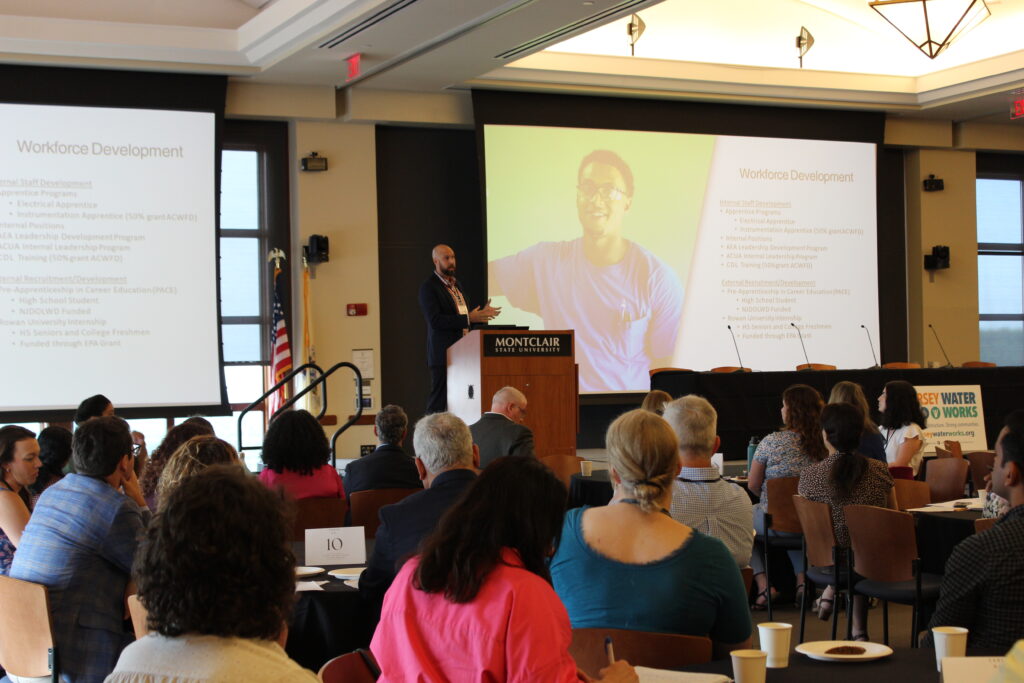
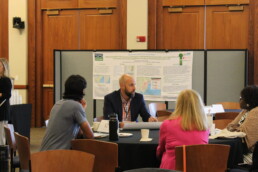
Matthew DeNafo, president of the Atlantic County Utilities Authority, highlights the importance of the water workforce in New Jersey. Atlantic City community partners will use its Partners for Places funding to upskill and retain utility workers essential to sustaining local infrastructure. Photo credit: New Jersey Water Works Collaborative.
How will these six grantee communities use their Partners for Places Jobs and Inclusive Infrastructure Initiative grants?
Community partners in Albuquerque will connect dozens of young people to a forestry project across urban and rural areas in Bernalillo, McKinley, and Doña Ana counties, helping them acquire skills that both create career pathways to high-quality jobs and support climate resilience in their communities.
In Tucson, the funds will help local landscapers and arborists scale their operations and help their workers acquire the certifications needed to secure government contracts, ensuring small business owners benefit from a federally funded urban forestry project.
Four of the grantee communities will focus on investments in water infrastructure and workforce development, creating pipelines for job opportunities and career advancement in a critical industry.
In Milwaukee, where efforts to clean up the Milwaukee Estuary have resulted in one of the largest environmental infrastructure efforts in the country, community partners will connect residents to cleanup jobs, apprenticeships and training.
Pittsburgh, which is tackling the largest water infrastructure modernization project in the city’s history, will use its Partners for Places Jobs and Inclusive Infrastructure Initiative funds to recruit, train and employ new pools of workers to support the project and benefit from new, family-sustaining careers.
“The strength of our infrastructure depends on the strength of our workforce,” said Rob Cherry, CEO of Partner4Work in Pittsburgh. “This investment builds pathways into high-demand careers while supporting critical projects that will keep our region running for decades to come.”
Community partners in Atlantic City, concerned about a looming shortage in the national water labor sector as highly skilled workers retire, will use these funds to train and retain current water utility employees — expanding access to opportunities that will help them grow in their careers and sustain the local water infrastructure.
And on the Kalispel Reservation in Washington, the Kalispel Tribe of Indians is implementing a new, sovereign drinking water system in direct response to a water supply crisis that has plagued their community with boil-water advisories, pressure failures and other issues. Community partners will use the Partners for Places Jobs and Inclusive Infrastructure Initiative funds to create both temporary construction jobs and permanent careers in water utility operation and management.
The first round of this pilot initiative will provide $640,000 to the six grantee communities through the grant program. With contributions from local funders, a total of $1.5 million in funding will be committed to the selected communities.
The Partners for Places Jobs and Inclusive Infrastructure Initiative is supported by the generosity of Spring Point Partners, a social impact organization that is among the more than 110 grantmaking institutions that are members of TFN.
"We are thankful to The Funders Network for having the vision for this work and for the opportunity to support it in its initial stages," said Chetana Mirle, Interim Chief Grants Officer for Spring Point Partners.
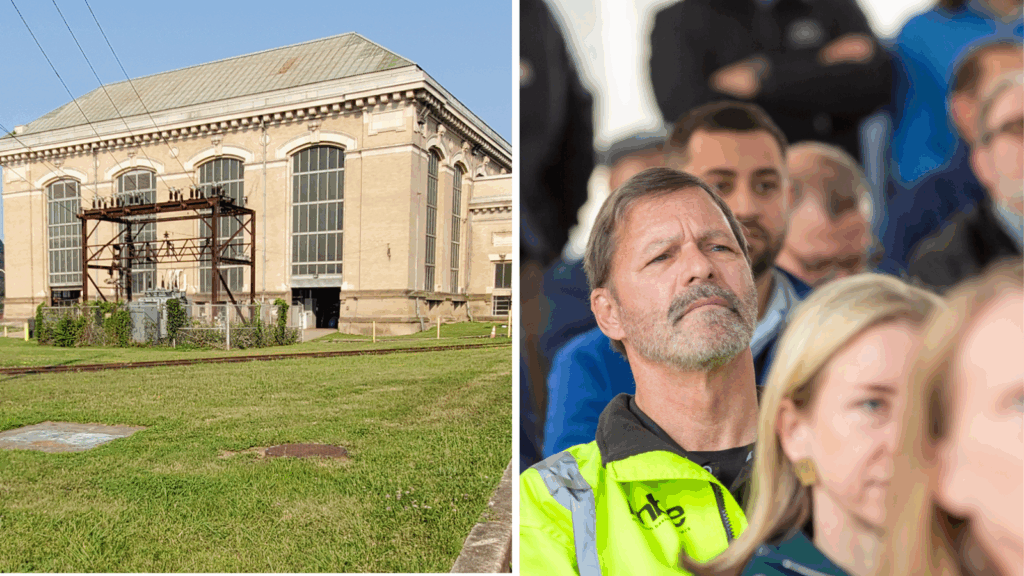
Pittsburgh's plan to modernize and protect the city's drinking water system for generations to come includes a major overhaul of the Aspinwall Pump Station, including preservation of the building’s historic façade and architectural features. Construction and building trade representatives attended a kick-off event for the project in November 2025. Photo credit: Pittsburgh Water.
The Partners for Places Jobs and Inclusive Infrastructure project descriptions, grant recipients, community partners and matching funders are:
- Albuquerque, N.M. ($110,000): To train and place youth in water and climate resilience careers through pre-apprenticeships, apprenticeships, and partnerships with city/county infrastructure projects. Grant recipient: The Semilla Project. Community partners: PowerCorps and Coalitions & Collaboratives, Inc. Matching funder: W.K. Kellogg Foundation ($500,000).
- Atlantic City, N.J. ($90,000): To enhance job skills in the water sector, creating economic opportunities and promoting sustainability in the Atlantic City area. Grant recipient: New Jersey Future. Community partners/ Matching funders: Atlantic County Utilities Authority, Atlantic City Municipal Utilities Authority and Jersey Water Works ($55,000).
- Kalispel Reservation near Usk, Wash. ($110,000): To create pipelines to both temporary construction jobs and permanent careers in water utility operation and management connected to a new sovereign drinking water system for the Kalispel Reservation. Grant recipient: The Kalispel Tribe. Community partner: Kalispel Department of Public Works. Matching funders: Paul Allen Foundation and Innovia Foundation ($25,000).
- Milwaukee, Wis. ($110,000): To ensure Milwaukee’s $500 million investment in waterway restoration delivers equitable opportunity by connecting frontline residents to cleanup jobs, apprenticeships, and training. Grant recipient: Harbor District Inc. Community partners: Milwaukee Metropolitan Sewerage District and Milwaukee AOC Community Advisory Committee. Matching funder: Fund for Lake Michigan ($160,000).
- Pittsburgh, Pa. ($110,000): To expand workforce equity by training underserved frontline communities for family-sustaining careers while supporting Pittsburgh's largest water infrastructure modernization project. Grant recipient: Partner4Work. Community partners: Pittsburgh Water and Sewer Authority, Trade Institute of Pittsburgh, A. Philip Randolph Institute – Pittsburgh and Pittsburgh Gateways. Matching funder: Henry L. Hillman Foundation ($60,000).
- Tucson, Ariz. ($110,000): To scale local landscaping firms and certify frontline workers to secure contracts, bridging workforce training and business readiness to build Tucson’s inclusive green economy. Grant recipient: Local First Arizona Foundation. Community partners: Pascua Yaqui Development Corporation, City of Tucson and Tucson Clean and Beautiful Commission. Matching funders: Freeport-McMoRan Foundation, Arizona Community Foundation and Arizona Complete Health ($60,000).
About The Partners for Places Jobs and Inclusive Infrastructure Initiative
The Partners for Places Jobs and Inclusive Infrastructure Initiative, a project of The Funders Network (TFN), is a matching grant program that helps community partnerships unlock public dollars, increase opportunities for small businesses, and create career pathways for local workers.
These grants support communities that are advancing work on infrastructure projects supported by federal, state or other public dollars. This funding is not for the physical infrastructure itself, but for the human infrastructure needed to create meaningful collaborations and center community engagement.
Through the Partners for Places Jobs and Inclusive Infrastructure Initiative, grantee communities receive investment and technical support to effectively and equitably ensure public infrastructure projects improve frontline and low-wealth communities through job creation, workforce development and training, equitable contracting, and other economic benefits.
This new initiative is part of TFN’s broader Partners for Places community-centered matching grant program, which focuses on projects that foster long-term local relationships that make communities of all sizes more prosperous, livable and vibrant.
To date, the Partners for Places grants program has awarded more than $13 million across North America over the past decade, leading to nearly $26 million in investments.
For additional information and media inquiries, contact: Tere Figueras Negrete, Senior Communications Director at The Funders Network at tere@fundersnetwork.org
Featured image: Matthew DeNafo, president of the Atlantic County Utilities Authority, highlights the importance of the water workforce in New Jersey at a local event. Photo credit: New Jersey Water Works Collaborative..
A Message from our President & CEO: With philanthropy under attack, now is the time to turn values into action — and tap into our shared strength
BY Dion Cartwright, TFN President & CEO
Philanthropy, at its best, is about turning values into action.
Protecting our planet and advocating for justice. Providing services to those most in need and helping communities recover from crises. Uplifting artistic expression, expanding opportunity and nurturing civic participation.
Every day, I witness members of this network practice their values by moving resources toward causes of critical importance.
This work is not easy. It takes collaboration, compassion and conviction.
So when I read the news about the recent presidential memorandum that unfairly casts suspicion and increased scrutiny on charitable foundations, philanthropic networks and nonprofits — institutions rooted in service, generosity and stewardship — I was both deeply concerned and deeply offended.
But definitely not surprised.
We’ve known for some time that the philanthropic sector could be targeted by an administration that has already launched a barrage of executive orders, investigations and public insults against universities, law firms and other institutions meant to instill fear and quiet dissent.
Even though the recent headlines may have confirmed what many of us suspected was coming, it brings additional stress and strain as we navigate the impacts on our organizations, grantee partners and the communities we serve.
And less time focused on the values that moved us to action in the first place.
Maybe you were inspired by your faith tradition to see a higher purpose in serving others.
Maybe you were motivated by stories of civil rights icons or labor leaders or climate activists.
Or maybe you just had a grandma who never let a hungry stranger pass by her door without offering them something to eat.
We may have arrived at this work from different places, and for different reasons. But the members of The Funders Network share a common commitment to helping create communities that are more resilient, sustainable, healthy and prosperous.
This is work that strengthens our democracy, not weakens it.
No politician, regardless of party, should be able to tell you how to direct your grantmaking or target your team because they disagree with your organization’s mission or values.
Attack on Fundamental Freedoms
The recent directive, which expands federal oversight of nonprofits and philanthropic organizations, is framed as part of a broader effort to address domestic terrorism and political violence.
But this is really an overt attempt to silence our freedom of speech and freedom to give in ways that align with our values.
Foundations and nonprofits must continue to have the freedom to direct their resources as they see fit, regardless of politics or who is in power. And no one should fear for their safety simply for expressing their views, including through peaceful protest.
We at TFN unequivocally condemn the administration’s attempts to restrict these fundamental freedoms, and we strongly object to attempts to cynically mischaracterize the critical work done by foundations and nonprofits.
We recently joined with more than 180 philanthropic institutions in condemning acts of political violence — as well as recent attacks on members of the charitable and nonprofit sector that seek to portray them as contributing to those acts of violence.
The open letter, issued by a coalition of charitable foundations and published by Unite in Advance, was spearheaded and signed by numerous organizational members of TFN.
This is just one of many examples of how our members and others in the sector are choosing to meet this moment.
Tap into TFN
Now, more than ever, we must lean into the collective wisdom, experience and strength of this network.
Across TFN, there are rich resources to draw from, including learning cohorts, working groups and peer communities that are bringing funders together.
They’re engaging in deep-dive conversations, learning sessions and one-on-one calls to untangle complex issues, share strategies and identify opportunities for collaboration and action.
There is a deep reserve of hard-earned wisdom in our ranks.
Just last week, I was on a peer community call with members who have been effectively navigating tough political climates and policies at the state and local levels for years. They gave fellow funders not only practical advice about how to face our current challenges, but also a sense of empowerment and resolve by sharing specific examples, tools and successes.
We all have something to share, and we all have something to learn.
That’s why I encourage you to deepen your engagement with TFN in this difficult moment.
Together, we can stand firm in our values, strengthen our collective impact and ensure that philanthropy continues to be a force for resilience, justice and transformation in our communities.
If you’re new to TFN, unsure how to connect with others in our network, or would like to set up a candid one-on-one call with a member of our leadership team, please don’t hesitate to reach out to us at membership@fundersnetwork.org.
We’re here to help, and we would love to hear from you.
Thank you for your ongoing support of our network, and of each other.
Additional Resources
Statement on Political Violence and the Fundamental Freedom of Speech | Unite in Advance
Statement: Government Actions Threaten the Independence of the Philanthropic Ecosystem | United Philanthropy Forum
Increased Compliance and Risk Measures for Philanthropy Organizations
The United Philanthropy Forum has shared these key takeaways and action steps following the recent executive memorandum. (TFN is a member of the Forum.)
Key Provisions Affecting Philanthropy:
- The IRS, DOJ and Treasury have been directed to increase monitoring of tax-exempt organizations for potential involvement — direct or indirect — in activities linked to domestic terrorism or organized political violence.
- Nonprofits, funders, boards and employees may be investigated if suspected of providing support or coordinating with such entities domestically or internationally.
- Agencies are expected to review existing and prospective grants, partnerships and programs for compliance, with a focus on preventing illicit funding or association with groups designated as involved in criminal activity or terrorism.
- While the memorandum does not itself create new compliance rules, it signals a shift toward heightened oversight and enforcement.
Potential Action Steps for Foundations:
- Review current risk and compliance practices related to grantmaking, partnerships and political activities.
- Update internal policies and procedures to anticipate strengthened federal oversight.
- Increase training and guidance for foundation staff and boards on compliance and transparency.
For additional advice on compliance and risk measures for foundations, visit the United Philanthropy Forum's Executive Actions Impacting the Philanthropic and Nonprofit Sectors.
About the Author
Dion Cartwright is the president and CEO of The Funders Network, Dion first joined TFN in 2016 to direct the PLACES Fellowship program and lead the organization’s work to address equity, inclusion, and structural racism. Visit our team page to learn more about Dion and the rest of our staff at TFN.

Statement on Political Violence and the Fundamental Freedom of Speech: TFN joins more than 100 philanthropic organizations in open letter published by Unite in Advance
BY TFN Staff
The Funders Network has joined more than 100 philanthropic institutions in condemning acts of political violence — as well as recent attacks on members of the charitable and nonprofit sector that seek to portray them as contributing to those acts of violence.
The open letter issued by a coalition of charitable foundations, including numerous members of TFN, was published Wednesday by Unite in Advance.
"Organizations should not be attacked for carrying out their missions or expressing their values in support of the communities they serve. We reject attempts to exploit political violence to mischaracterize our good work or restrict our fundamental freedoms, like freedom of speech and the freedom to give," reads the statement.
"Attempts to silence speech, criminalize opposing viewpoints, and misrepresent and limit charitable giving undermine our democracy and harm all Americans."
TFN stands in solidarity with our members and others in the sector committed to creating communities that are more prosperous, sustainable and just, and rejects divisive efforts to impede this critical work.
We've shared the full statement below.
➡️ To read the letter along with the full list of signatories, visit the Unite in Advance post on Medium here.
Additional Resources
➡️ In the news: 100-Plus Foundations Stand United as White House Goes on the Attack by the Chronicle of Philanthropy's Alex Daniels.
➡️ About Unite In Advance: Read this Nonprofit Quarterly piece by Tonya Allen of the McKnight Foundation, Deepak Bhargava of the Freedom Together Foundation, and John Palfrey of the MacArthur Foundation.
Statement on Political Violence and the Fundamental Freedom of Speech
Published by Unite in Advance
“Acts of political violence — from the recent murder of Charlie Kirk to the murder of Speaker Emeritus Melissa Hortman of Minnesota — have no place in our democracy. Our hearts are with the families and loved ones of those lost to these senseless attacks, and we extend our deepest sympathy in the face of unimaginable pain.
Our country is built on the premise that everyone has the right to express themselves, even when others don’t agree with or like what they say. No one should fear for their safety simply for expressing their views. We must all forcefully condemn these heinous acts as affronts to the fundamental principles and health of our nation — and as charitable giving organizations, including those working in communities impacted by these tragedies, we do.
Our organizations are composed of people working to strengthen communities. We support our neighbors when they are in need and remain committed to uniting across divides and partisanship. Philanthropy exists to bring people together, not drive them apart.
Organizations should not be attacked for carrying out their missions or expressing their values in support of the communities they serve. We reject attempts to exploit political violence to mischaracterize our good work or restrict our fundamental freedoms, like freedom of speech and the freedom to give. Attempts to silence speech, criminalize opposing viewpoints, and misrepresent and limit charitable giving undermine our democracy and harm all Americans.
At a moment that is fragile and fraught, we must rise to the higher standard we all collectively desire. Now is a moment for leadership that drives unity rather than sows further division. Our organizations will continue focusing on helping people across all backgrounds, geographies, ideologies, and belief systems, to heal, thrive, and live peacefully together, protected by the freedoms guaranteed in our Constitution."
"Amuurica!" by Katherine Albin is licensed under CC BY-ND
New Funding Opportunity: Partners for Places Jobs and Inclusive Infrastructure Initiative
BY TFN Staff
The Funders Network is launching a new pilot funding opportunity that will leverage infrastructure funds to ensure projects benefit underserved areas, including training and expanding career pathways for local workers in critical industries.
The deadline to apply is Sept. 15, 2025
The Partners for Places Jobs and Inclusive Infrastructure Initiative is aimed at supporting communities with investments and technical expertise to effectively implement equitable infrastructure projects. This new pilot will be launched through the Partners for Places community-centered grantmaking program.
With this initiative, Partners for Places will award place-based grants to community partnerships advancing inclusive infrastructure projects, support cohort learning, and provide access to regional and national expertise to help communities achieve their goals.
This funding is not for the physical infrastructure itself, but for the human infrastructure needed to create meaningful collaborations and center community engagement.
This value is at the heart of Partners for Places: bringing together the key partners who can make tangible progress on shared goals while keeping the voices of communities front and center.
The focus of this new initiative is to enable communities to ensure that project implementation directly benefits frontline and low-wealth communities through job creation, workforce development and training, equitable contracting, and other inclusive economic modalities.
The grant is intended for projects that are already supported by public funds. These include water infrastructure funds, as well as Inflation Reduction Act (IRA) and Bipartisan Infrastructure Law (BIL) funds that have already been allocated.
The first round of investments will have a strong emphasis on place-based water-related projects. TFN anticipates at least half of the projects will focus on water project implementation. Those working in other infrastructure areas may apply.
Partners for Places Jobs and Inclusive Infrastructure Initiative
Resources:
- Application Information and Forms
- Click here to access the Invitation to Apply, Selection Criteria and other documents.
- Overview Session: July 30 from 2-3 p.m. ET
-
- TFN will provide more information about this pilot funding opportunity during this virtual overview session.
-
Questions?
- For questions about this funding opportunity, please reach out to TFN’s Vice President of Programs and Strategic Partnerships Ann Fowler Wallace at ann@fundersnetwork.org
- For funders interested in investing in the Partners for Places Jobs and Inclusive Infrastructure Initiative, or the core Partners for Places grant program, reach out to TFN’s Chief Development Officer Aileen Rosa Sánchez at aileen@fundersnetwork.org.
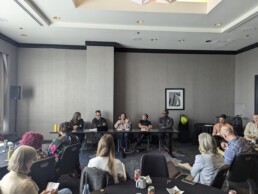
Featured image: Members of TFN’s Urban Water Funders and Inclusive Economies working groups gathered in Baltimore to discuss the new Partners for Places funding initiative following TFN’s 25th Anniversary Conference in March.
Going PLACES: From NYC to CNY, a Journey of Equity, History & Belonging
BY Jonathan T. Reid, Program Officer, ECMC Foundation, and 2025 PLACES Fellow
As a native New Yorker, I thought I knew my state. But until recently, I had never set foot in Syracuse. That changed during a site visit with my TFN PLACES Fellowship cohort — and what I found there felt like a homecoming.
TFN's PLACES (Professionals Learning About Community, Equity and Sustainability) Fellowship is more than a professional development program. It’s a journey into the heart of place-based philanthropy, equity-centered leadership, and systems change. Through immersive site visits, fellows explore how philanthropy can be a tool for justice, not just charity. We learn to ask deeper questions, challenge assumptions, and center community voices in our work.
Syracuse is a small(ish) city with big-city challenges and an even bigger heart. We were welcomed by the Central New York Community Foundation, whose commitment to equity is not just in their mission — it’s in their methods. Their trust-based, community-led approach to grantmaking is a model for how philanthropy can shift power, not just resources. They fund local organizations doing the work, not just those with the right connections. That distinction matters.
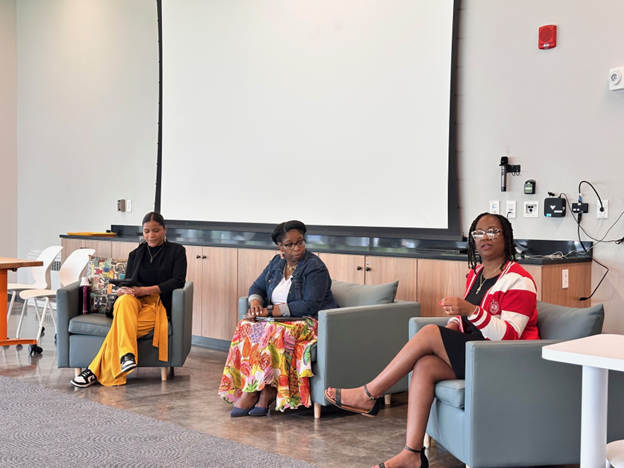
The PLACES 2025 Cohort's site visit to Syracuse included a conversation with Black maternal health experts. From left: Rachel Johnson, Keturah Albright and Tiffany Lloyd.
One of the most inspiring stops was the Asha Laaya Farm (Farm of Hope), the agricultural branch of Deaf New American Advocacy Inc. Seeing how they are cultivating both food and community was deeply moving. Their work is a reminder that equity includes language, culture and access to land. It’s about creating accessible spaces where everyone can thrive.
We also visited the Community Folk Art Center, a vibrant hub for Black and Brown artists and cultural expression. There, and throughout our visit, we were reminded that art is not just decoration — it’s resistance, storytelling, and healing.
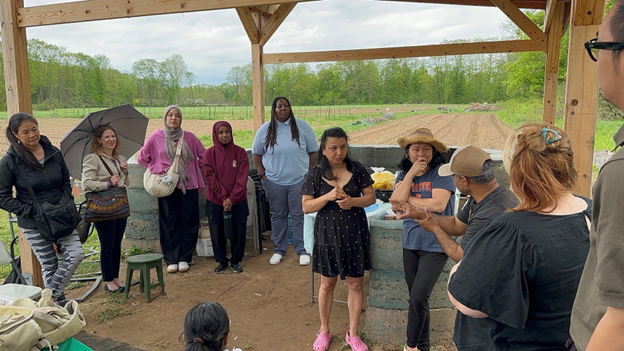
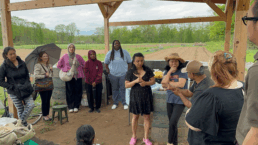
PLACES 2025 Fellows visited with the leaders of Asha Laaya Farm (Farm of Hope), a branch of Deaf New American Advocacy.
Our time with Robert Searing, education director at the Onondaga Historical Association, grounded us in the city’s complex history. From the legacy of Harriet Tubman to the Jerry Rescue, Syracuse has long been a site of resistance and refuge. These stories are not just historical footnotes — they echo the city’s present-day struggles and triumphs. The same spirit that fueled the Underground Railroad now fuels community-led efforts to address housing, education and economic justice.
Philanthropy has a role to play in this. But it must be the right role. Too often, we fund organizations based on relationships, not results. In a “word of mouth” city like Syracuse, that can reinforce inequities. We need to fund the work — not just the people we know. That means asking hard questions, having real conversations, and, as one of our speakers reminded us, learning to “ask ‘why’ five times” to get to the root cause. Surface-level solutions won’t cut it.
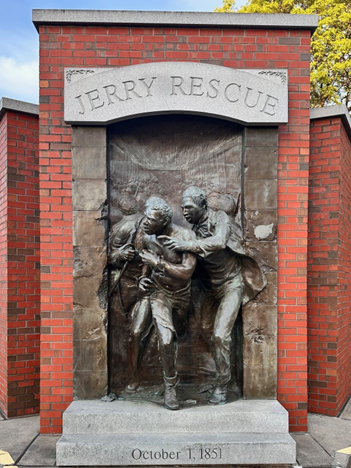
A monument to the "Jerry Rescue" in Clinton Square, Syracuse. In 1851, a crowd of abolitionists in Syracuse rose to the defense of a fugitive from slavery named William Henry, also known as "Jerry," who had been arrested under the Fugitive Slave Act of 1850. Jerry's arrest was met with fierce resistance from the local abolitionist community, who forcibly freed him from his captors and helped him escape to Canada.
What stood out most during our visit was the presence of what I’d call “unconditional solidarity.” It’s more than allyship — it’s a deep, ongoing commitment to standing with communities, not just for them. The organizations we met are doing the hard work of shifting power back into the hands of the people. That’s not easy. Connecting community-based organizations with systems is complex and often messy. But it starts with trust.
And trust was everywhere. I felt it in the way we were welcomed. I saw it in the relationships between funders and grantees. I heard it in the stories shared over meals and meetings. Syracuse may be new to me, but it felt like home because of the people who opened their doors and hearts to us.
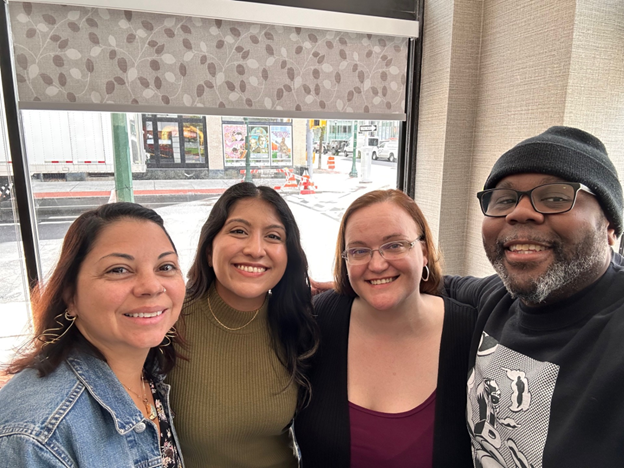
PLACES 2025 Fellows during the site visit to Syracuse. From left: Raquela Delgado Valentin, Leticia Rojas, Brandy Cramer and Jonathan T. Reid.
This visit reminded me that equity work is not about parachuting in with solutions. It’s about showing up, listening deeply, and staying in the conversation. It’s about recognizing the unequal distribution of power — and doing something about it.
As I return to my own community and work back at ECMC Foundation, I carry Syracuse with me. Its history, its people and its lessons. I’m grateful to TFN’s PLACES Fellowship for creating the space to learn, reflect and grow.
And I’m even more grateful to the people of Syracuse for showing us what it looks like to live your values out loud.
About the Author
Jonathan T. Reid is a program officer at ECMC Foundation. He oversees a portfolio of grants focused on increasing the number of college students from historically underrepresented backgrounds, including low-income and first-generation populations, who pursue and attain postsecondary credentials. He is also a member of TFN's 2025 PLACES Cohort.
Photo credits: All photos courtesy of Jonathan T. Reid.
Statements of Solidarity & Resources for the Sector
BY TFN Staff
TFN originally shared this statement on June 10, 2025, in solidarity with those peacefully protesting ICE raids and militarization of our communities in L.A. and elsewhere. Below is a round-up of solidarity statements and resources from TFN members and others in the sector. To add your organization's statement or resources to this list, please reach out to Brooke McPherson at brooke@fundersnetwork.org
The California Wellness Foundation
Sierra Health Foundation and The Center
Joint statement from California for Prosperity and Affordability
Additional Resources:
Grantmakers Concerned with Immigrants and Refugees’ 100 Days In: A Roadmap for Funding Migrant Justice captures the philanthropic and movement efforts in support of immigrant and refugee communities that have sprung up across the country.
Liberty Hill Foundation's Immigrant Rights and Protections Docket: Defending Immigrant Rights, Supporting Families, and Advancing Justice
San Francisco Foundation | Spring 2025 Give Guide
San Francisco Foundation | Give Guide: Protect Immigrants and Refugees