TFN Statement: In solidarity with those defending immigrant communities & fundamental human rights
BY TFN Staff
TFN originally shared this statement on June 10, 2025. Please read our companion blog post for a round-up of solidarity statements and resources from TFN members and others in the sector.
The Funders Network stands in solidarity with those in California and elsewhere who are organizing, resisting and mobilizing in defense of immigrant communities and fundamental human rights.
What has unfolded in recent days across Los Angeles is both heartbreaking and deeply alarming.
This is not about politics or policy debates. This is about dignity, safety and the right to live free from fear.
The xenophobic and aggressive tactics we are witnessing represent a dangerous escalation that inflicts lasting trauma, destroys trust, and tears families and communities apart.
The Funders Network, including our Smart Growth California initiative, remains committed to supporting movements for justice, equity and belonging.

Partners for Places: Meet the New Grantees!
BY Tere Figueras Negrete, TFN Senior Communications Director
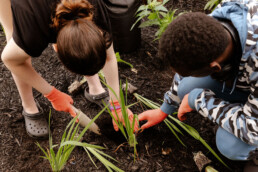
A local gardening club will lend their decades of expertise to help install rain gardens in a flood-prone neighborhood.
Citizen scientists will be empowered to help keep groundwater safe for drinking.
And low-income families will get welcome upgrades like plug-in air conditioners and electric appliances that will make their homes more livable and climate resilient while reducing their energy costs.
These are just a few of the sustainability projects supported by the latest round of Partners for Places grants, which help fund efforts to create more equitable and resilient communities across the U.S.
In all, seven U.S. communities will receive nearly $1.6 million in Partners for Places matching grants that bring together local governments, place-based funders and frontline community groups — fostering collaborative relationships, building trust and driving meaningful impact.
Successful Partners for Places projects advance much-needed climate planning and sustainable solutions in communities both large and small, and across diverse political and geographic landscapes.
Meet the Grantees
The seven communities receiving this latest round of Partners for Places grants are: Binghamton, N.Y.; Burlington City, N.J.; Chicago, Ill.; Denver, Col.; Detroit, Mich.; Memphis, Tenn.; and Orlando, Fla.
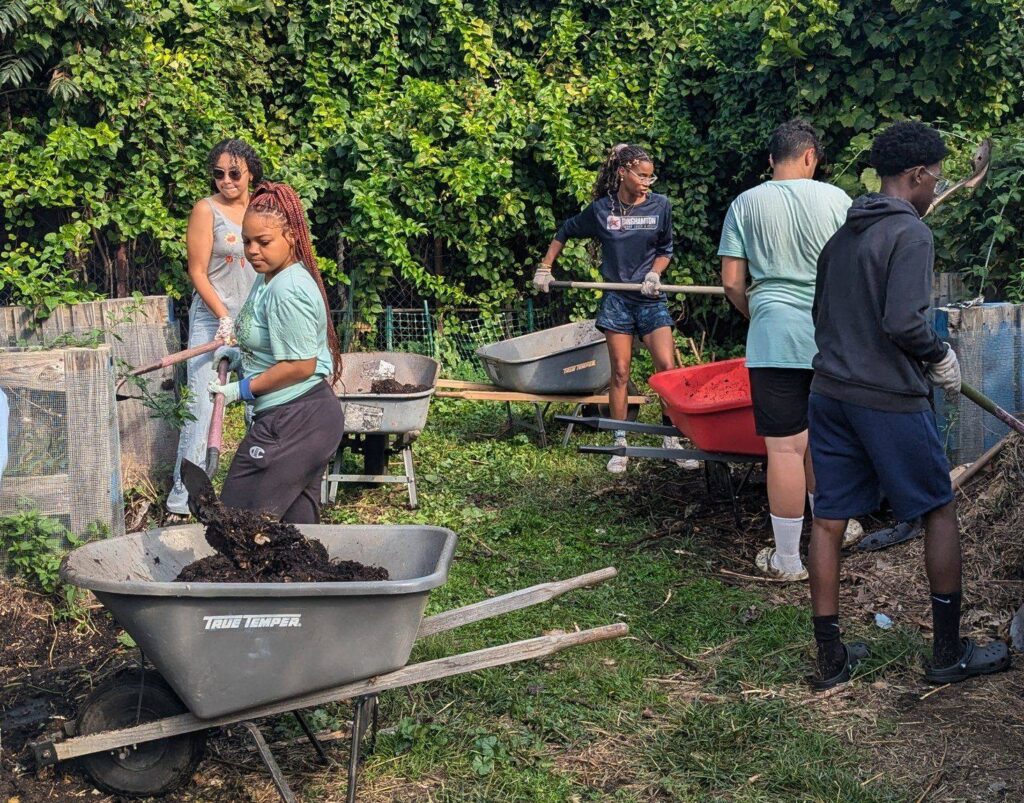
Partners for Places will help support a community-led composting program in Binghamton, N.Y., that provides nutrient-rich fertilizer for neighborhood food gardens and diverts waste from landfills. Photo credit: Volunteers Improving Neighborhood Environments (VINES).
How will these Partners for Places grants help local sustainability efforts?
In Binghamton, Partners for Places will help create a community composting program that diverts food waste from landfills, reduces greenhouse gas emissions, and generates nutrient-rich fertilizer for local food gardens. The program will help neighbors start composting in their own backyards, train volunteers and youth employees to maintain upgraded composting systems in community gardens and set up a composting facility at an urban farm that will eventually process up to 1,000 pounds of food scraps per week.
Orlando will use its Partners for Places grant to help low-income renters, most of whom have recently been homeless or are at risk of homelessness, reduce their utility bills and increase resilience in a state known for its hurricanes, heat and other extreme weather events. The project includes installing energy-efficient “plug in” appliances like window air conditioners and placing portable solar units on rooftops, balconies or yards with battery back-ups that can power lifesaving medical equipment during an outage. Residents also receive an energy efficiency basket containing educational materials, LED lights, aerators and glow-in-the-dark star stickers — intended to encourage kids to turn off lights to see their stars shine.
Denver will also use Partners for Places funds to help low-income residents make their homes more climate resilient and energy efficient while working to improve indoor air quality in the Globeville and Elyria-Swansea neighborhoods — which are often regarded as some of the most polluted neighborhoods in the nation. This includes reducing pollution through electrification of homes, weatherization, and advancing clean energy solutions. The project will also create a shared governance model to oversee the grant and spark collective action around shared priorities like emergency preparedness.
Ashley Perez, energy policy coordinator with the City of Orlando, carries one of the energy efficiency baskets that will be distributed to low-income households with the support of Partners for Places funds. Photo credit: City of Orlando.
With the support of matching local funders, these projects also help build bridges between city officials and the communities that bear the brunt of environmental injustice but are often left out of decision-making processes.
In Memphis, the grant will be used to train and empower “citizen scientists” and other residents of the Alcy Ball neighborhood to create a community-driven groundwater protection plan. The South Memphis neighborhood is centered on the site of a defunct World War II defense depot where everything from carcinogenic industrial liquids to Nazi mustard gas bombs were buried – directly above a critical aquifer. A massive breach in the confining clay layer protecting the aquifer renders South Memphis’ drinking water particularly vulnerable to contaminants in the ground above. The project includes mapping aquifer vulnerabilities, resident-led environmental testing, and outlining a community-driven plan for aquifer protection and green infrastructure interventions.
In Chicago, decades of disinvestment in the city’s South and West Sides have left residents vulnerable to heightened flooding and sewage issues, depleting community resources and eroding trust in local leadership. Partners for Places funds will be used to support a community-informed framework for identifying and addressing flooding and sewage disparities, including opportunities for residents to co-create a vulnerability assessment and develop recommendations to the city that will help shift infrastructure investments to these marginalized and climate-vulnerable communities.
This latest round of Partners for Places grants includes two projects specifically designed to advance green stormwater infrastructure, which uses nature-based solutions to manage and treat runoff, reduce pollution, and potentially recharge groundwater.
Burlington City will use the funds to plant shade trees and install rain gardens — sunken landscaped areas that capture rainwater and runoff from hard surfaces like streets — to improve air quality and better capture and cleanse stormwater in a community at risk of flooding due to its proximity to the Delaware River. The plan includes education and training opportunities for residents, as well as activating community volunteers like a local club of veteran gardeners who will lend their expertise to the effort.
Detroit will use Partners for Places funds to build green stormwater infrastructure projects following extensive community input. In a city that has grappled with an aging water infrastructure and frequent flood risks, the project will create a collaborative private-public partnership aimed at fostering community trust, reducing bureaucratic barriers, and developing more sustainable responses to storms and other extreme weather events.
➡️Curious to learn more about green stormwater infrastructure projects? Check out this this fact sheet and video from We the People of Detroit, the community-led group that is partnering with the City of Detroit for their Partners for Places project, about how they transformed an outdoor space into a hub for learning, celebration and environmental stewardship.
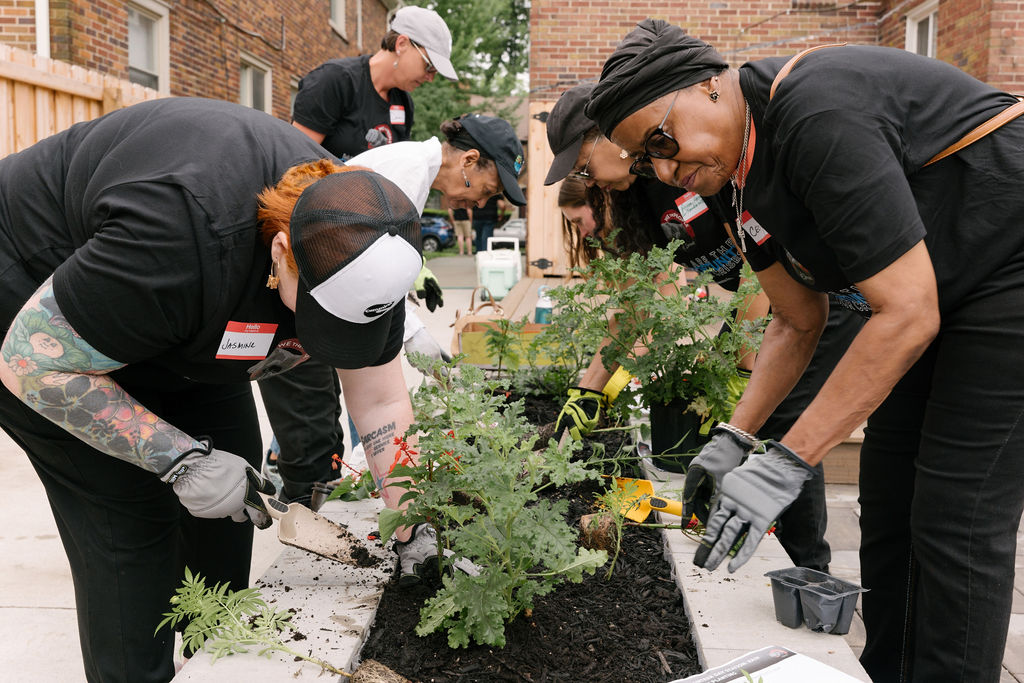
We the People of Detroit will partner with the City of Detroit to advance green stormwater infrastructure solutions in flood-prone areas. Photo credit: Carolina Gutman
Partners for Places, led by The Funders Network (TFN) in partnership with the Urban Sustainability Directors Network (USDN), will provide $925,000 in funding to these seven communities through the grant program. With contributions from local matching funders, a total of $1,557,500 will be committed to fund sustainability projects in these selected communities.
To date, Partners for Places has awarded more than $12 million across North America in this successful matching grant program, leading to more than $25 million in investments.
The matching grant program brings national funder investors together with place-based funders to support equitable, sustainable climate action and green stormwater infrastructure projects. The program’s national investors currently include the Freedom Together Foundation, The Kresge Foundation, and the Pisces Foundation. One or more local foundations are required to provide at least a 50% matching grant.
The latest Partners for Places grant recipients, project descriptions, frontline community groups and matching funders are:
- Binghamton, N.Y. ($115,000): To create a community composting program that reduces waste, lowers emissions, enriches urban agriculture efforts, and engages residents through education and outreach. Frontline community groups: Volunteers Improving Neighborhood Environments, Inc. and Cornell Cooperative Extension of Broome County. Matching local funder: Conrad and Virginia Klee Foundation ($100,000).
- Burlington City, N.J. ($120,000): To support Greening Burlington City, a plan to empower community members with the resources and tools to apply green stormwater infrastructure to improve health and environmental concerns. Frontline community group: The Opportunity League. Matching local funder: Anonymous ($120,000).
- Chicago, Ill. ($150,000): To co-develop a flood and sewage vulnerability assessment and policy recommendations that will help shift infrastructure investments to vulnerable communities impacted by historic disinvestment and facing climate risks. Frontline community groups: Little Village Environmental Justice Organization, Center for Neighborhood Technology, and Alliance for Great Lakes. Matching local funder: Walder Foundation ($150,000).
- Denver, Col. ($125,000): To organize with community partners to improve indoor air quality and address extreme heat for Tierra Colectiva CLT homes and build community governance and resilience. Frontline community group: GES Coalition. Matching local funder: The Denver Foundation ($62,500).
- Detroit, Mich. ($150,000): To create a public-private partnership to advance green stormwater infrastructure (GSI) solutions a more sustainable approach to addressing flooding issues across the City of Detroit. Frontline community group: We the People of Detroit. Matching local funder: Cummins ($75,000).
- Memphis, Tenn. ($150,000): To pilot a community-driven groundwater protection plan in Alcy Ball, implementing green infrastructure and citizen science to protect the local aquifer and create a scalable model for the city. Frontline community groups: Protect Our Aquifer and Alcy Ball Development Corporation. Matching local funder: Hyde Family Foundation ($75,000).
- Orlando, Fl. ($115,000): To bring clean energy, energy storage and energy efficiency upgrades to those who are struggling with their energy bills and are most impacted by climate change. Frontline community groups: Homeless Services Network of Central Florida, Grassroots Impact, and The Desire Foundation. Matching local funders: Central Florida Foundation, and Allegany Franciscan Ministries ($50,000).
Partners for Places FAQs
→ Where is Partners for Places making an impact? Read previous grant announcements and explore the Partners for Places Grantee Map here.
→ Where can I learn about completed Partners for Places projects? Visit the Partners for Places Idea Bank to explore what grantees are doing, learning and sharing.
For additional information and media inquiries, contact: Tere Figueras Negrete, Senior Communications Director at The Funders Network, tere@fundersnetwork.org.
*Feature image at top: We the People of Detroit | Photo credit: Carolina Gutman
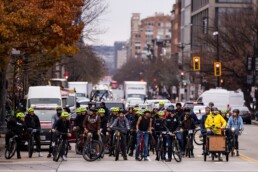
Advocacy Spotlight: Bike Bus World
TFN’s Advocacy Spotlight Series, spearheaded by the network’s Mobility and Access Collaborative, lifts up the work of nonprofit grantees making an impact in their communities and beyond. We asked funders to nominate a stellar grantee to be featured in this series. We’ll share these Advocacy Spotlights TFN’s Blog and social media platforms as part of our commitment to amplifying community-led sustainability solutions and building the field of philanthropy through shared learning.
Advocacy Spotlight: Bike Bus World
Nominated by: Natalie Draisin, Director, North America Office and United Nations Representative, FIA Foundation
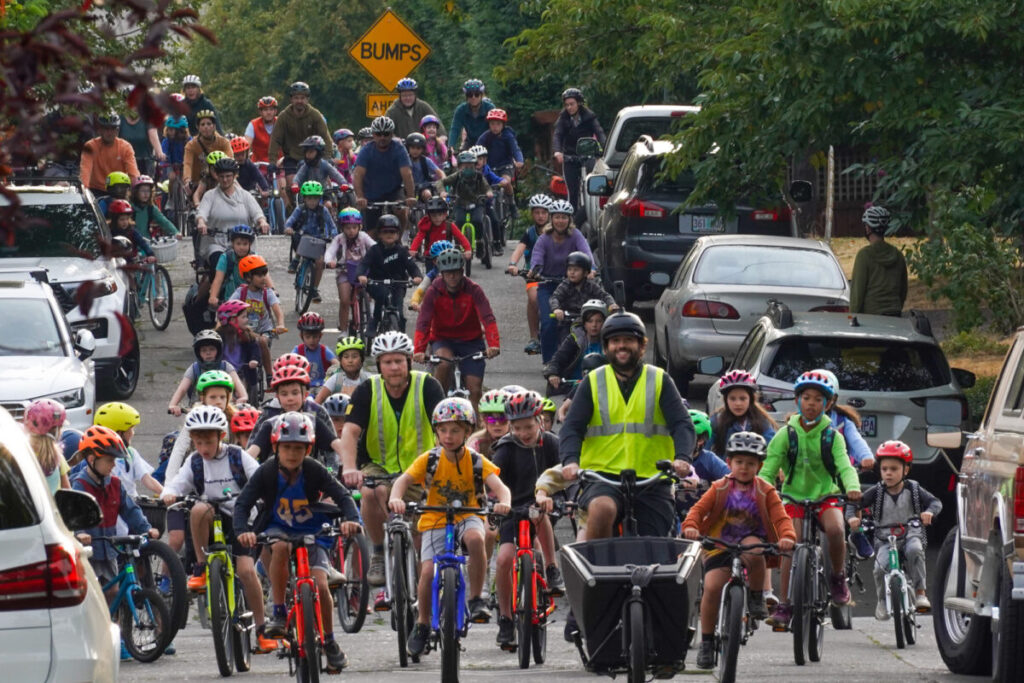
PE teacher Sam Balto captains a 2022 bike bus to Alameda Elementary in 2022. Balto is also the executive director and co-founder of Bike Bus World. Photo credit: Jonathan Maus/BikePortland
About Bike Bus World
"Bike Bus World is revolutionizing the way children and communities experience transportation by fostering a movement that is joyful, inclusive, and transformative. As an organization, they tackle pressing societal issues, including childhood physical inactivity, the mental health crisis, transportation emissions, social isolation, and road safety inequities.
Bike Bus World’s innovative approach empowers communities to establish bike buses — organized group rides to school that prioritize fun, safety, and sustainability. By equipping organizers with tools, advocacy strategies, and funding, the organization is expanding equitable access to active transportation nationwide. Their work aligns with the National Roadway Safety Strategy, the United Nations Decade of Action for Road Safety, and the UN Sustainable Development Goals (SDGs), particularly SDG 11.2 and SDG 3.6, which focus on making transport safer and more accessible for vulnerable populations.
Bike Bus World advances equity by addressing disparities in transportation safety and accessibility, particularly for children and communities of color who are disproportionately impacted by car-centric infrastructure. By advocating for active transportation policies and funding, they work to ensure that every child has a safe and viable alternative to car travel. Their commitment to systemic change — alongside their grassroots engagement — makes them an organization worth spotlighting."
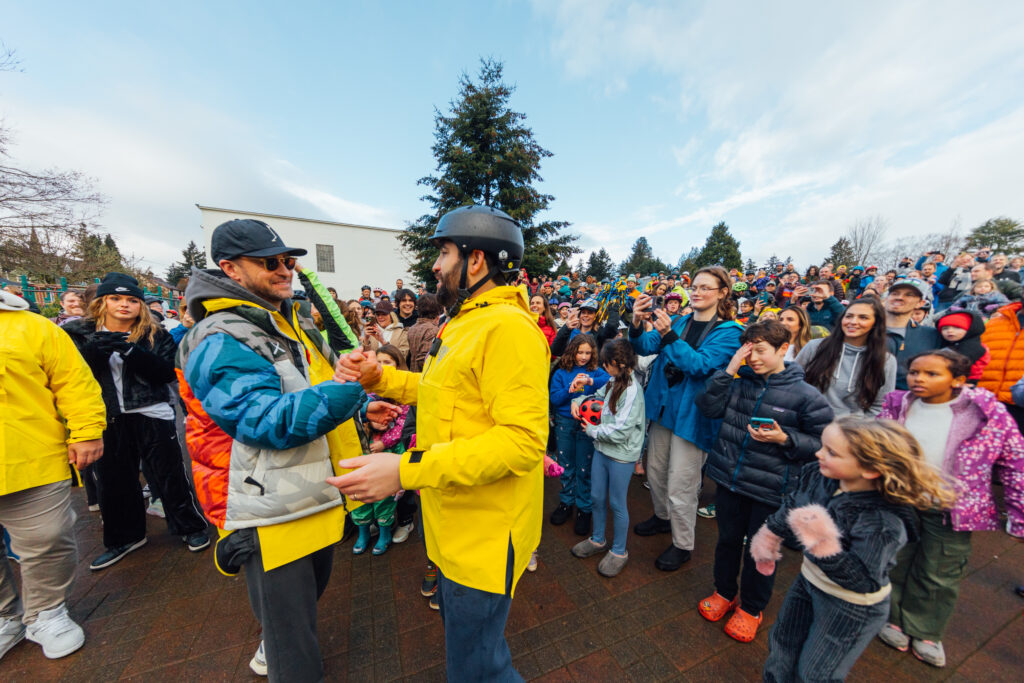
Alameda Elementary PE teacher Sam Balto helped lead a 2022 bike bus to the school, which quickly went viral on social media. Photo credit: Jonathan Maus/BikePortland
About Their Impact
"One of Bike Bus World’s most significant policy victories occurred in 2023 with the passage of Virginia’s Bike Bus Bill, which introduced flexibility in student transportation funding. This milestone demonstrates the power of collective advocacy and community action in reshaping transportation policy to better serve students and families.
Beyond policy wins, Bike Bus World’s national and global reach continues to grow. The organization collaborated with the U.S. Department of Transportation on a social media campaign, attended the 2024 White House Holiday Party to represent the movement, and helped launch over 40 new bike buses in communities across the country. They also provided over $50,000 in bike bus supplies, ensuring that more children could safely participate.
Their impact extends to cultural influence as well. High-profile figures, including musicians Adam Metz (AJR) and Justin Timberlake, have participated in Bike Bus rides, helping to amplify the movement. Media coverage in outlets such as The Washington Post, The Atlantic, and CBS Evening News has further elevated their mission, bringing the conversation about active transportation into the mainstream.
Through strategic advocacy, community building, and large-scale visibility, Bike Bus World is not only changing how children get to school but also reshaping the broader conversation around sustainable and equitable transportation."
Learn More
Bike Bus World offers tools and tips on how to start your own bike bus here. Follow them on Instagram at @bikebusworld.
Featured Image: Bike Bus World helped organize a bike bus at Washington D.C.'s Dunbar High School in December 2024. Photo Credit: Brian Rimm Production.
About this series: TFN invited funders to nominate a stellar grantee to be featured in the Mobility and Access Collaborative’s Advocacy Spotlight series. The stories in this series were submitted by funders and shared with nominees in advance for fact-checking and further clarification when needed. If you have any questions about this series or TFN’s Mobility and Access Collaborative, please contact Martha Roskowski martha@fundersnetwork.org
Building Bridges Across Water: Lessons from the 2025 Water Table Gathering
BY Kerry Hastings, Program Coordinator, TFN's Urban Water Funders
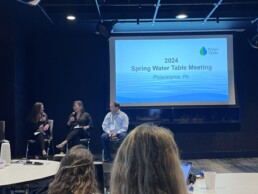
This April, funders and leaders from across the water sector gathered in Philadelphia for a meeting of the Water Table, a forum for funders to learn together, coordinate resources, and take action on water housed at the Water Foundation, a TFN member organization.
The Water Table is a key partner of TFN’s Urban Water Funders working group. We’re in a pivotal moment for those of us dedicated to addressing both upstream and downstream water issues, and the gathering reaffirmed just how deeply interconnected our conversations around conservation, clean water, equity, and infrastructure are. Over the past year, we’ve been working to bridge the divide between traditional “conservation” funders and urban water funders, and it’s clear that we have much more in common than we often realize.
One of the most striking moments came from a speaker who shared reflections from her time in the federal government. She recounted a meeting where philanthropy CEOs were invited to discuss water priorities with the Biden administration. Her key takeaway: There was no clear, coherent ask from the water sector.
This lack of alignment left many in the previous administration feeling unsure of what water advocates actually wanted. The speaker noted that while we are currently playing defense and pausing certain priorities, we also have an opportunity to step back as a sector and build a unified water agenda — one that a robust, multi-stakeholder coalition can co-create and support. There is tremendous opportunity for philanthropy to step into this moment and provide the leadership and resources needed to weave together diverse players in the water space.
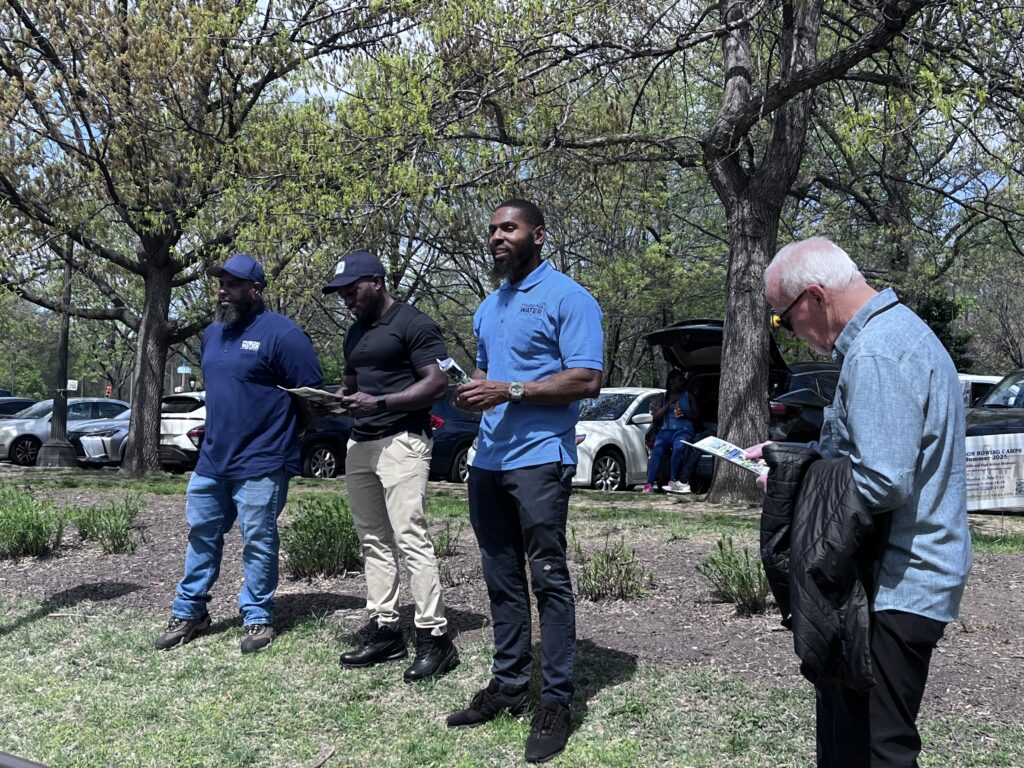
Philadelphia water department staff and PowerCorpsPHL grads joined to share about their work maintaining the city’s green infrastructure.
For philanthropy, the essential question is: How can we use our unique power to advance a shared water agenda?
In addition to supporting the development of networks and shared priorities, there is also the opportunity to invest in water communications and uplift water as a “light in the darkness” for climate action.
While the water sector is being heavily impacted by the changing priorities and paused federal funding, there is also opportunity for real movement and action. Heather Taylor Miesle, Senior Vice President at American Rivers shared that survey after survey show that water is a priority for people — even more so than climate or clean air. In the fall of 2024, she reported, a significant number of water-related ballot measures passed. We’re continuing to see progress on water access in traditionally conservative places, including rural areas, showing that we can keep pushing forward even amid tremendous challenges.
So what messages work? Andy Kricun of Moonshot Missions, who previously led the Camden, N.J., water department, emphasized the importance of telling stories that evoke visceral reactions and drive home the need for safe, affordable water for everyone.
For instance, he would describe the devastating impact of flooding when raw sewage filled a family’s basement, or how kids were sent to foster care simply because a family couldn’t afford water bills.
“People should be angry,” he said.
Beyond messaging, we need people who are ready to act and prioritize water.
Hahrie Han, a researcher at Johns Hopkins University who studies movement-building, shared a powerful distinction between “mobilizing” and “organizing.” Mobilizing, she explained, is about getting people to do a thing — usually through a simple, top-down ask. Organizing, on the other hand, is about helping people develop an internal compass, navigate uncertainty, take action when needed and enact the values we want to see in the world.
"Don’t outsource your outrage to someone else," Han said.
This powerful invitation is a reminder to philanthropy to fund to critical work of grassroots organizing.
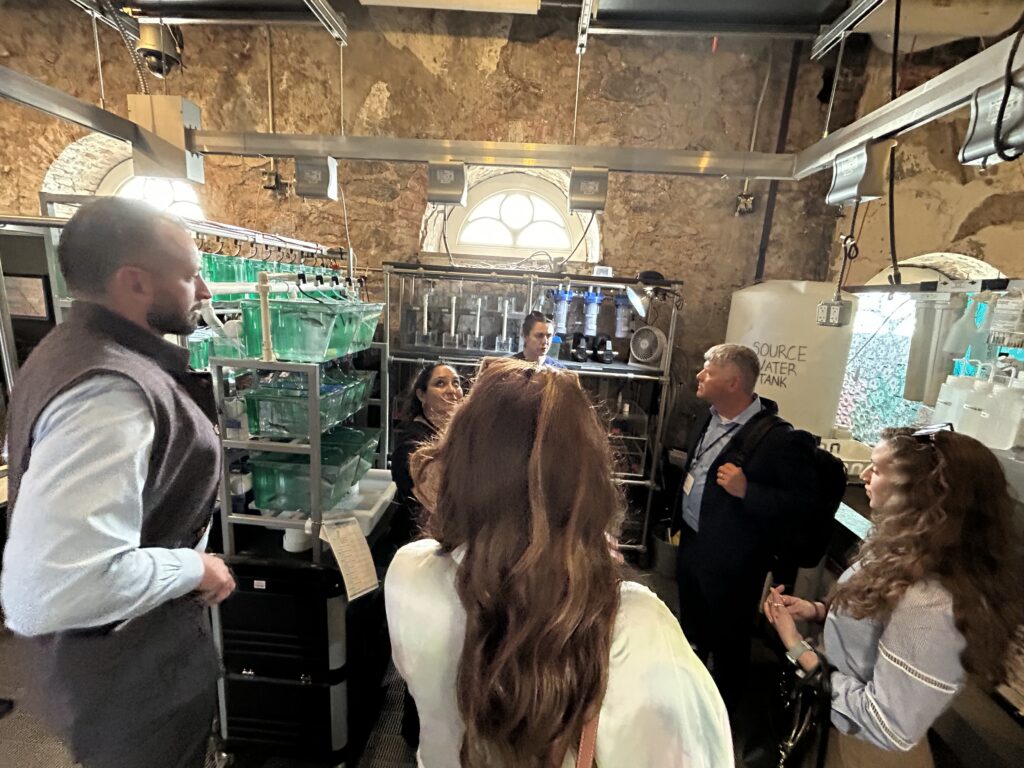
The Philadelphia event included a tour of the Fairmount Water Works.
One final reflection: The best way to mitigate risks down the line is to build partnerships now. Across all speakers, this message rang loud and clear. For the water sector, that means working beyond our traditional silos to create durable, cross-sector partnerships — especially with fields like public health, economic justice, and democracy.
Funders have a critical role to play in this moment. The roles lifted up during our discussions included:
- Fund leaders and convening efforts to build a culture of collaboration across the sector, while mapping out the next steps for collective action.
- Tell local stories with local people — make them both visual and visceral.
- Support networks for the systematic sharing of information across the field.
- Help build national narratives that unite us around a collective belief that enough is enough.
- Fund grassroots work — change happens in place, and people are empowered through personal connections
At the conclusion of the Water Table meeting, folks met from the Urban Water Initiative, a growing collaboration between TFN’s Urban Water Funders and Water Table. Funders from both groups have been participating in co-facilitated meetings and we are actively exploring coordinated outreach strategies to build new partnerships and drive resources to our sector. We are more committed than ever to ensuring that water becomes a central focus in the broader conversations shaping the future.
Whether your focused on public health, economic justice or democracy, there is a place for every funder to see how water fits into their goals and issues. Now is the time to act. Let’s work together to make water a common cause and drive real, lasting change. If you’re interested in connecting with TFN’s Urban Water Funders working group, please reach out to me, Kerry Hastings, at kerry@fundersnetwork.org.
About the Author
 Kerry Hastings is the Program Coordinator for TFN’s Urban Water Funders working group.
Featured image: (From left) Nicole Cordan of Hewlett Foundation, Mami Hara of US Water Alliance and Andy Kricun of Moonshot Missions share their thoughts on a panel about scaling work. All photos courtesy of Kerry Hastings.
The Battle for Common Sense: What I Learned About Cultural Mindsets at TFN25
BY Diana Williams, Program Manager, TFN's Smart Growth California
On a recent flight, the man sitting next to me struck up a conversation about California wildfires. Let’s just say he had some opinions.
A month ago, I’d have felt a little trapped. (Actually, I still felt a little trapped, but that’s also because it was a four-hour flight.) But thanks to TFN’s 25th Anniversary Conference, I had a new framework in my back pocket that helped me understand what was going on: cultural mindsets.
Here’s what happened.
My seatmate blamed the wildfires on government and environmentalists, full stop. He talked about mismanagement, lax enforcement, and how environmentalists won’t let anyone clear away underbrush. Never mind that climate change plays a role and that environmentalists aren’t exactly fans of dead underbrush. It didn’t make a dent.
Then it clicked: Aha! This wasn’t a policy debate. It was about worldview. My seatmate didn’t just think the system was flawed, he thought it was rigged and that others were to blame.
This was a real-time example of something I’d learned a few weeks earlier about narrative change from Nat Kendall-Taylor of the FrameWorks Institute at TFN’s conference: a growing number of Americans interpret the world through lenses of fatalism and othering.
It’s not just that people disagree. They’re starting from completely different premises. And when someone believes the system is out to get them, and that working together is no use, dialogue ends, problem-solving is blocked and trust in the democratic process erodes.
Sound familiar?
Cultural Mindsets as a Powerful Tool
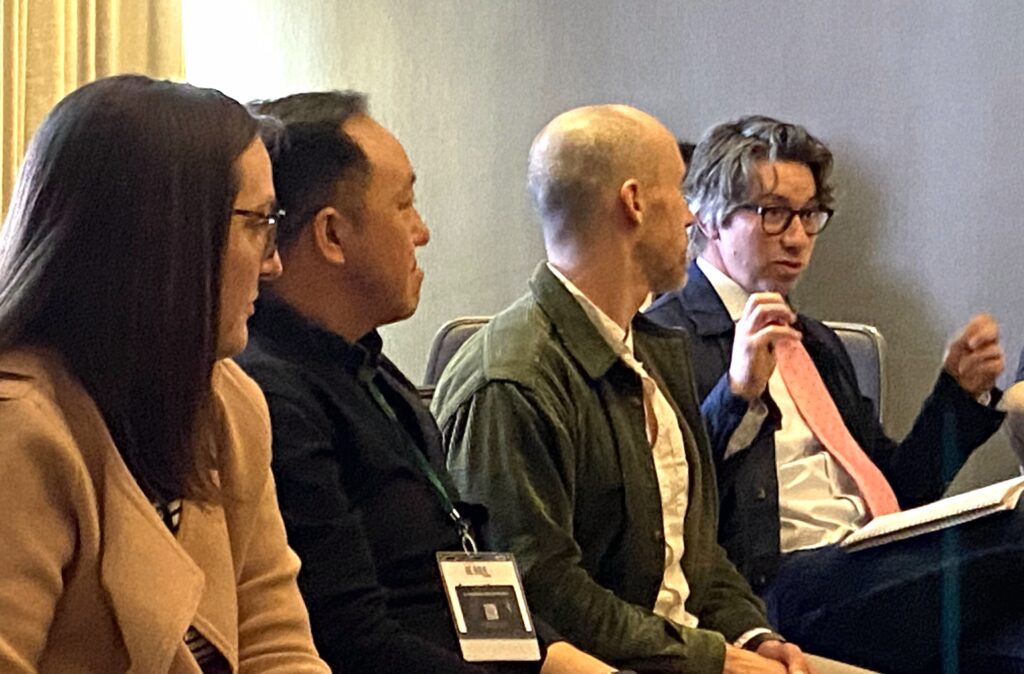
TFN25 panelists for the session Effective Narratives In an Era of Mistrust (left to right): Jess Zetzman, Robert Wood Johnson Foundation; Jonathan Tran, The California Endowment; Robert Avruch, formerly of the Chan Zuckerberg Initiative; and Nat Kendall-Taylor of FrameWorks Institute. Photo credit: Diana Williams
Here’s the hopeful part: Mindsets can shift. With the right framing, language, and strategy, we can open up space for new perspectives to take root, changing what people believe is possible.
We dove into how mindsets shift — and what makes storytelling resonate — alongside more than 80 funders from towns and cities across the country. Together, we wrestled with a simple (but not-so-simple) question: Why do some stories shape the future, while others fade into the noise?
The workshop was moderated by Robert Avruch, who led a narrative campaign to change how Californians view housing for the Chan Zuckerberg Initiative. Others sharing their expertise were Jonathan Tran of The California Endowment, who focuses on community infrastructure for grassroots groups to build their own narratives, and Jess Zetzman of the Robert Wood Johnson Foundation, whose job includes synchronizing the many different narrative efforts unfolding within her foundation.
Leaving the Echo Chamber
Kicking off the conversation, Avruch opened with a sobering truth: millions of people get their news from platforms like Fox News and Breitbart, and dismissing these audiences is a critical error. We have to resonate outside of liberal echo chambers.
This is where cultural mindsets come in.
Cultural mindsets are part of how we process information — intellectually, emotionally, and through unconscious beliefs, Kendall-Taylor said. We all hold multiple mindsets at once, and they can shift over time. But these dominant mindsets are fueling division in our national political and cultural discourse:
Individualism: the belief that outcomes like health or economic status are solely the result of personal choices, overlooking systemic forces at play.
Fatalism: a sense of helplessness in the face of complex problems like climate change and inequality, reinforcing a belief that “the system is rigged” and leading to widespread disengagement.
Other-ism: An “us vs. them” mentality that weakens empathy and solidarity across race, class, or geography.
When fatalism, individualism, and othering dominate, it’s harder to imagine shared solutions or care about the common good. Democracy requires a sense of shared fate, and these mindsets fracture that foundation. (Here’s a timely example of this phenomenon.)
Nearly three-quarters of Americans believe that the system is rigged, across all incomes and ages, Kendall-Taylor said.
The Battle for Common Sense
The Effective Narratives In an Era of Mistrust session drew a packed audience at our TFN25 anniversary conference in Baltimore. Photo credit: Diana Williams
So if people have certain mindsets, what’s the best way to speak in ways that resonate? Some common mistakes to avoid:
Don’t frame everything as a crisis. Too often, messaging from advocates and foundations leans on crisis, urgency, and despair. This can lead to burnout and inaction.
Offer Specific Solutions: Instead of presenting overwhelming problems like “solve climate change” or “fix our broken electoral system,” offer digestible actions: “install solar panels on rooftops” or “increase the number of voting locations.” Match the scope of the problem with the scale of the solution.
Don’t Correct Mistakes/Untruths: The research shows that people mis-remember myths as true and this gets worse over time, Kendall-Taylor said. Instead of correcting fake news, find the narrative that moves the story you want to tell and put it on repeat.
Describe the Problem, Not the People. Labels like “vulnerable,” “environmentalist,” or “conservative” can trigger assumptions and shut down listening. Kendall-Taylor called this pre-motivated reasoning — when people hear a word and think, “That’s not me.” Instead of short-handing, describe the problem. Rather than “vulnerable communities,” say, “communities where families lack access to safe housing or clean water.” This invites empathy and avoids triggering an “othering” response.
Change is Constant
Offering hope, Kendall-Taylor reminded us that contests for narrative power take place all the time.
Voting laws, smoking bans, seatbelt laws, and marriage equality are just a few examples of ideas that moved from fringe to mainstream, forcing public policy shifts along the way as they become “common sense.”
Reframing ideas to connect with the values people hold — and offering a hopeful path forward — is at the heart of a successful narrative. And once you find the right message, Kendall-Taylor emphasized, repeat it again and again.
Narrative Power for Health Equity
Jess Zetzman shared insights from her work with the Robert Wood Johnson Foundation and the HealthEquity Narrative initiative. Her team has created the HealthEquity Narrative House — a framework uniting changemakers with a shared story rooted in justice, equity, and community.
One key challenge? Many people working in health and racial equity don’t see themselves as part of a movement, she said, even though they’re working toward the same goal. Zetzman’s work focuses on creating more alignment — not through uniform language, but by rallying around shared values and narratives that resonate across sectors.
Within RWJF, her team is also mapping narrative investments, coding grants that support storytelling, and creating affinity groups to deepen collaboration. This methodical, ecosystem-wide approach is beginning to pay off.
Narrative as Infrastructure
Jonathan Tran of The California Endowment reminded us that narrative isn’t a one-off campaign — it’s infrastructure. Like organizing or advocacy, storytelling must be nurtured, funded, and sustained over time.
Tran focuses on building narrative power in communities — especially those historically denied the right to tell their own stories. This work amplifies grassroots voices, supports cultural workers, and centers lived experience in discussions about health, safety, housing, and justice.
When communities own their own narrative, they build more than the power of persuasion; they build actual power — the foundation for long-term change.
The Role of Philanthropy
Across foundations large and small, Avruch observed there’s lack of alignment in three key areas:
Research: The research ecosystem is fragmented, with little connection between what’s being produced. This leads to wasted consultant resources, as the same questions are asked repeatedly.
Aligning actors / table-setting: While efforts are underway to bring key players together — such as frontline advocates, journalists, and others — there’s often no clear space for shared strategy, collaboration, or collective action.
Resourcing it all: Coordination between funders remains a significant gap, complicating the work across the board.
Where Next?

Nat Kendall-Taylor of FrameWorks Institute presents on the need to collaborate and organize around cultural mindsets and narratives at TFN25. Photo credit: Diana Williams
For all our talk of alignment, philanthropy remains famously individualistic. Can we still afford that? This was the unspoken challenge on the table by the end of the workshop.
Philanthropy’s long-view and flexibility are powerful assets. What would it take to step outside funder silos, beyond cultural and political echo chambers? What would it take to let go of assumptions each foundation might have about what will work, and develop broader narrative strategies that tap into what genuinely moves people to act?
We’re not starting from scratch, our panelists noted. Narratives change all the time — and this moment is living proof.
Stay connected: If you're a funder looking to continue peer learning around journalism, media and narrative change, please reach out to TFN's Senior Director of Communications Tere Figueras Negrete at tere@fundersnetwork.org.
About the Author
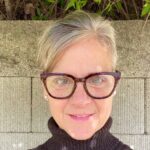 Diana Williams is program manager for Smart Growth California, an initiative of The Funders Network. Based in Sacramento, Diana has a background in journalism, nonprofit leadership and philanthropy. Learn more about Diana and the Smart Growth California team here.
➡️Read more TFN25 Reflections
- Ron Milam, director of Smart Growth California, shares his Top 5 TFN25 Takeaways
- Kerry Hastings of TFN's Urban Water Funders shares her thoughts on Water, Workforce, and Ways Forward: Urban Water Funders at TFN25
Advocacy Spotlight: Families for Safe Streets
TFN's Advocacy Spotlight Series, spearheaded by the network's Mobility and Access Collaborative, lifts up the work of nonprofit grantees making an impact in their communities and beyond. We asked funders to nominate a stellar grantee to be featured in this series. We'll share these Advocacy Spotlights TFN’s Blog and social media platforms as part of our commitment to amplifying community-led sustainability solutions and building the field of philanthropy through shared learning.
Advocacy Spotlight: Families for Safe Streets
Nominated by: Natalie Draisin, Director, North America Office and United Nations Representative, FIA Foundation
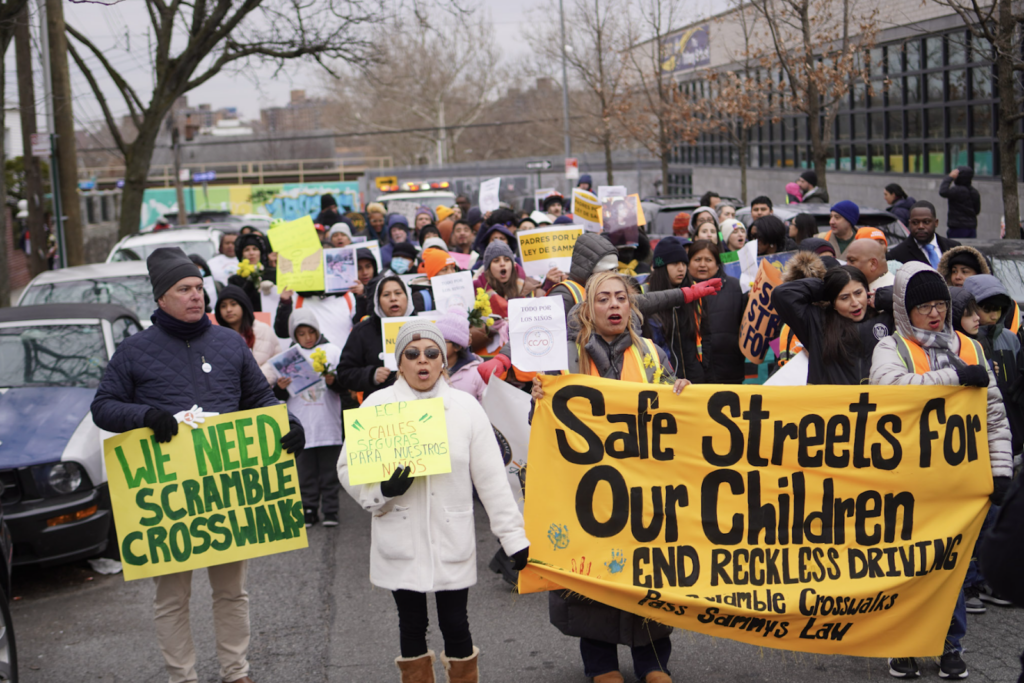
Families for Safe Streets hosted the Queens Children's March Street Safety in March 2024 following a deadly crash that killed a child in the New York City community. The march drew more than 300 participants, most of them families from the school districts in the areas.
About Families for Safe Streets
Families for Safe Streets (FSS) is at the forefront of a movement to reduce traffic fatalities and serious injuries by addressing one of the most significant yet preventable causes of crashes: speeding. Their work is rooted in evidence-based solutions, including advocating for 20mph speed limits and promoting Intelligent Speed Assistance (ISA) technology, both of which are proven to save lives.
FSS is driven by the lived experiences of crash survivors and families who have lost loved ones to traffic violence. Their advocacy is not only personal but also deeply impactful in shaping policy at the local, state, and national levels. In 2024 alone, they successfully passed legislation in New York State to allow 20mph speed limits, played a key role in Washington D.C.’s adoption of ISA for reckless drivers, and helped introduce ISA legislation in six states.
The organization prioritizes equity by focusing on the disproportionate impact of unsafe roadways on marginalized communities. Lower-income neighborhoods and communities of color often face higher rates of traffic violence due to historical underinvestment in safe infrastructure. By advocating for lower speed limits and ISA technology — especially for the most reckless drivers — FSS is actively working to make streets safer for those who need it most. Their coalition-building efforts, which include organizations such as AARP-NY, the United Federation of Teachers, and the National Transportation Safety Board, reflect their commitment to a broad, intersectional approach to roadway safety.
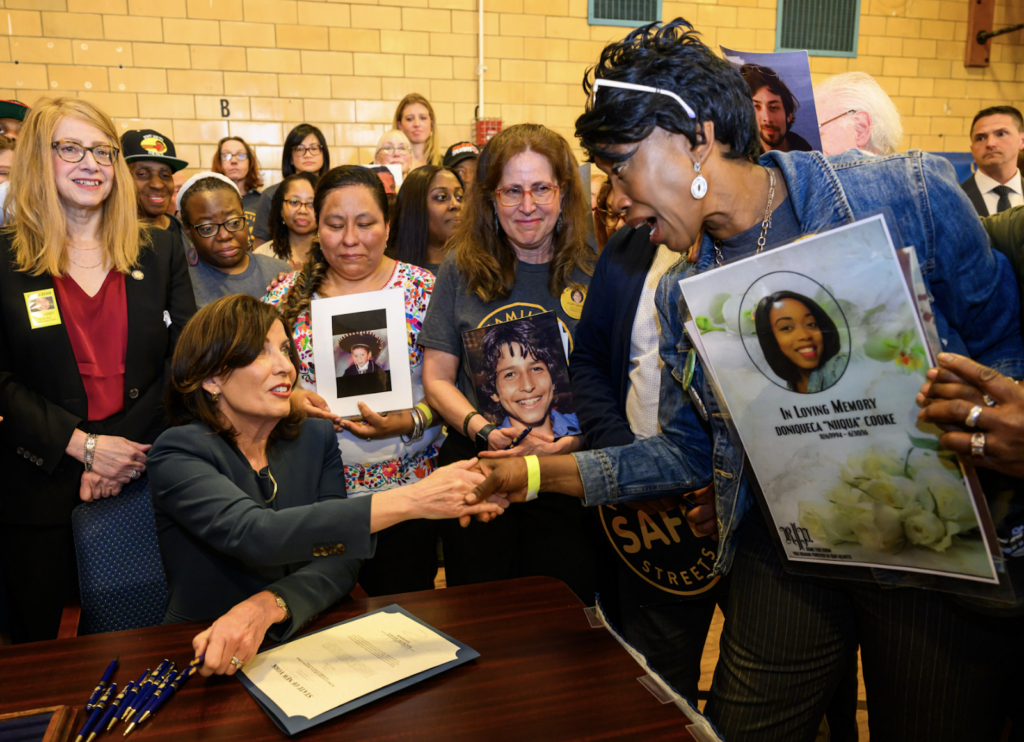
Families for Safe Street members at the official signing ceremony for Sammy's Law with New York Gov. Kathy Hochul in May 2024, following almost five years of campaigning.
About Their Impact
One of Families for Safe Streets’ most significant victories in 2024 was the passage of Sammy's Law, a bill that allows NYC to limit speeds to 20mph, a historic policy change that aligns with global best practices. The implementation of these lower speed limits began in October 2024, with FSS leading efforts to secure community support across New York City through advocacy at local Community Board meetings. Their persistent efforts have made New York City a national model, demonstrating that such policies are achievable even in the most complex urban environments.
In addition to their work on speed limits, FSS has been instrumental in advancing Intelligent Speed Assistance (ISA) legislation. Their advocacy led to the passage of an ISA for Reckless Drivers bill in Washington D.C., and they played a major role in pushing similar legislation in California (SB961). Despite the California governor’s veto following an aggressive lobbying campaign by auto manufacturers, FSS successfully brought national attention to ISA, laying the groundwork for further legislative victories. The latest news of success comes from their state-level ISA push. They have successfully passed bills through three legislatures in the past four months: Virginia, Georgia, and Washington State. They are working on additional bills in New York State, California, Maryland, and Arizona. Their hope is to dramatically expand the number of state-level bills introduced across the country next year.
In December 2024, they co-founded a national ISA coalition, which has already introduced legislation in six states, including Virginia, where a bill is making its way through the legislature. Through strategic advocacy, grassroots organizing, and an unwavering commitment to traffic safety, Families for Safe Streets is proving that bold policy changes can save lives. Their work is not just about changing laws—it’s about shifting cultural norms and ensuring that safe streets are a right, not a privilege.
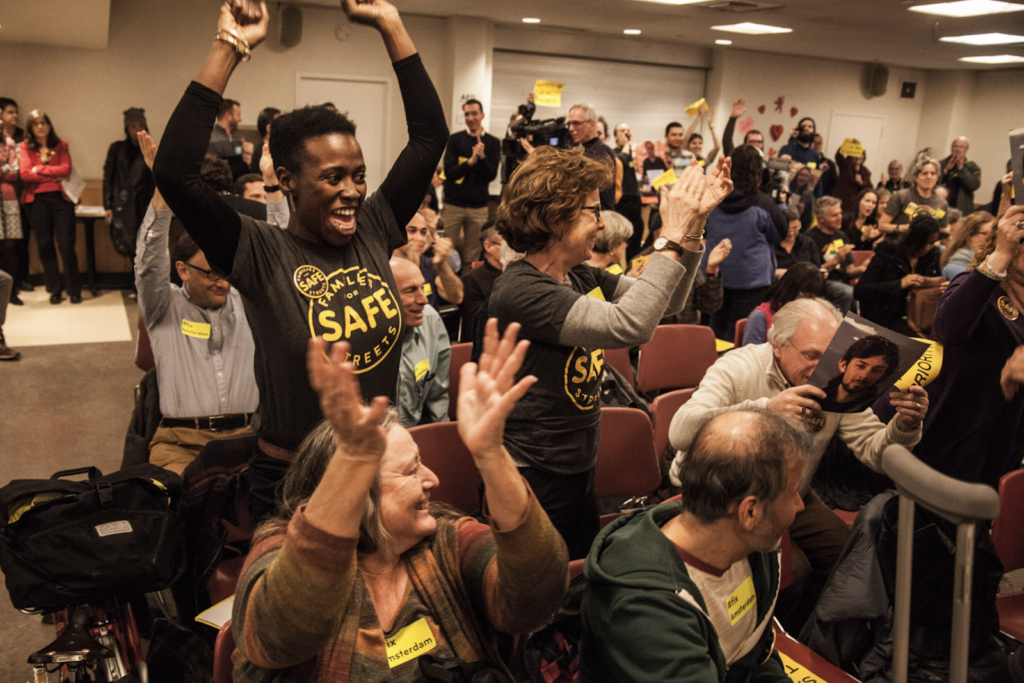
Families for Safe Streets supporters celebrate a successful community board vote to redesign the most dangerous corridor on the Upper West Side of Manhattan in 2016. The campaign took more than three years, and was prompted by a string of particularly horrible crashes in the community.
Learn More
Learn more about Families for Safe Streets work at this upcoming webinar, How Technology Can Stop Super Speeders on Monday, May 7 at 2 p.m. ET.
Featured Image: Following a crash that killed two children in Brooklyn, around 1,000 people participated in the 2018 Brooklyn Children's Rally for Street Safety
Photo Credit: All photos provided by Families for Safe Streets.
About this series: TFN invited funders to nominate a stellar grantee to be featured in the Mobility and Access Collaborative's Advocacy Spotlight series. The stories in this series were submitted by funders and shared with nominees in advance for fact-checking and further clarification when needed. If you have any questions about this series or TFN's Mobility and Access Collaborative, please contact Martha Roskowski martha@fundersnetwork.org
TFN Joins 'Unite in Advance' Solidarity Campaign
The Funders Network is proud to sign on to the Unite in Advance campaign supporting philanthropy’s “freedom to give” in the face of increased threats from governmental attacks.
The campaign launched Wednesday with a piece in Nonprofit Quarterly authored by McKnight Foundation President Tonya Allen, MacArthur Foundation President John Palfrey, and Freedom Together Foundation President Deepak Bhargava.
"It’s no secret: Foundations could be the next American institutions under attack," they write. "Why does this matter? Because millions of people across the nation depend on nonprofits to meet their basic needs — and those nonprofits depend on resources from foundations to deliver important services, support their communities, and pay their workers."
Their piece outlines three steps foundations can take right now to stand with each other and the people and communities we serve:
- Prepare for what's coming, but don't obey in advance.
- Stand in solidarity with each other.
- Step up to provide more support to communities who need us.
➡️ You can read the full piece here.
A Public Statement from Philanthropy
Dozens of foundations and philanthropy serving organizations have already signed on to the Unite in Advance solidarity statement below, including a number of TFN members:
Everyone—wherever we're from or whatever our point of view—wants to live in a nation that upholds the fundamental rights and liberties we all deserve and need to thrive.
As charitable giving organizations – private and family foundations, community foundations, corporate foundations, and more – we contribute to communities in every corner of America. Together, we support new parents and elders, veterans and school children, hospitals and libraries, churches and food kitchens, artists and researchers, throughout rural, suburban, and urban communities in every state and territory. Yet in this moment, we face the threat of governmental attacks on our ability to carry out this vital mission, when the communities, organizations, and individuals we support need it most.
We don’t all share the same beliefs or priorities. Neither do our donors or the communities we serve. But as charitable giving institutions, we are united behind our First Amendment right to give as an expression of our own distinct values. Especially in this time of great need, we must have the freedom to direct our resources to a wide variety of important services, issues, and places, to improve lives today and build a stronger future for our country. The health and safety of the American people, our nation’s economic stability, and the vibrancy of our democracy depend on it.
➡️ To read the full list of signatories, or to submit our own organization to the list, please visit the solidarity statement webpage coordinated by the Council on Foundations.
TFN Board Elections & Updates: Warm Welcome & Fond Farewells
BY Dion Cartwright, TFN President & CEO
The Funders Network's work centers on cultivating courageous philanthropic leaders who are engaged, emboldened and equipped to bring about a just society.
TFN's membership undertakes an important task each year: the election of our Board of Directors, which plays an essential role in ensuring we remain a robust, connected and mission-driven organization.
I’m excited to share several updates about TFN’s Board of Directors, including the addition of a new member to our board: Treye Johnson, a program director at the George Gund Foundation, which is based in Cleveland, Ohio.
Treye leads the foundation’s grantmaking focused on economic justice and community power. He has been involved with TFN’s Inclusive Economies working group, as well as its predecessor, the Restoring Prosperity in Older Industrial Cities working group.
Treye originally joined Gund as a Fellow from 2013 to 2015 before working on program development and community engagement with the Federal Reserve Bank of Cleveland. He re-joined the Gund team in 2022. Treye also previously worked as a program officer at Burton D. Morgan Foundation, which focused on entrepreneurship education on the youth, collegiate and adult levels.
A former high school athletic director with a master's degree in sports administration, he currently serves as athletic director at his son's school.
Our network’s Board of Directors reflects the depth and breadth of our membership, representing a range of grantmaking institutions and a wealth of professional expertise and lived experience.
In addition to Treye, this recent slate of candidates included four returning board members.
The board approved the 2025 – 2027 slate of directors at its January meeting, and the slate was elected by virtual ballot among TFN's organizational membership in March.
Read on to learn more about this year’s slate of candidates, as well as the board officers elected by the Board of Directors at their January meeting. (For more information on TFN's board selection and election criteria, please read our Election FAQ page.)
TFN offers a wealth of volunteer leadership opportunities that not only give you a chance to support TFN and our broader mission, but also expand your own professional networks. If you or a member of your team is looking to deepen your engagement with our community of funders and partners, don’t hesitate to reach out to me directly at dcartwright@fundersnetwork.org.
Second Term
 Isabel Barrios
Director for Disaster Recovery and Resilience
Greater New Orleans Foundation
 Lisa Jacobson
Senior Program Officer, Mobility
Barr Foundation
and TFN PLACES Alum
 Nathaniel Smith
Founder and Chief Equity Officer
Partnership for Southern Equity
Third Term
 Sheena Solomon
Executive Director
The Gifford Foundation
and TFN PLACES Alum
Board Officers
Officers are elected for a one-year term, except the chairperson, who has a two-year term.The current chair is at the mid-point of her two-year term.
Chairperson
(2024-2026)
Sheena Solomon
Executive Director
The Gifford Foundation
and TFN PLACES Alum
 Vice Chairperson
(2025-2026)
Surabhi Pandit
Director, Diversity, Equity and Inclusion & Community Engagement
Community Foundation for Southeast Michigan and TFN PLACES Alum
 Treasurer
(2025-2026)
Karla Twedt-Ball
President & CEO
Greater Cedar Rapids Community Foundation
Secretary
(2025-2026)
Lisa Jacobson
Senior Program Officer, Mobility
Barr Foundation and TFN PLACES Alum
Fond Farewells

 The January meeting of TFN's Board of Directors marked the final board meeting for members Chan Brown of the Kansas Health Foundation and Don Hickman of the Initiative Foundation.
We're grateful to Chan and Don for their dedication to the board and support for TFN's broader mission. Don's time on the board also included serving as board chairperson from 2022-2024.
Thank you, Chan and Don!
With Gratitude
We’d also like to share our appreciation for the sitting board members who were not up for reelection this year:

Jessica Boehland
Kresge Foundation

Nathan Boon
William Penn Foundation

Kaying Hang
The Center at Sierra Health Foundation

Janel M. Hines
Greater Milwaukee Foundation

Elizabeth Love
Jacob and Terese Hershey Foundation
Surabhi Pandit
Community Foundation for Southeast Michigan

Kumar Raj
W. K. Kellogg Foundation

Mark Tran
The California Endowment
Thank you to all of our board members, past and present, for your service!
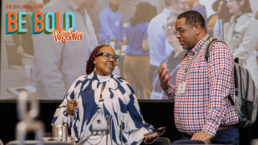
Featured image: TFN Board Chair Sheena Solomon greets Treye Johnson, the newest addition to the board, at TFN's 25th Anniversary Conference in March. Photo credit: Jen Sapienza
How are TFN board members selected? Board of Directors FAQ's
BY TFN STAFF
TFN members recently elected a new slate of candidates to serve on the network’s Board of Directors. An engaged and active board that represents the depth and diversity of our membership is critical to our mission-driven work, which centers on cultivating courageous philanthropic leaders who are engaged, emboldened and equipped to bring about a just society.
Curious to learn more about how candidates for TFN’s Board of Directors are selected and elected?
Below are some frequently asked questions about this process.
How many members are on the full TFN Board of Directors?
The 2025-2027 election brings the total number of board members to 14.
Who gets to vote in TFN Board of Directors elections?
TFN’s Board of Directors met in January 2025 to approve the slate of candidates. TFN member organizations in good standing received electronic ballots to cast their votes, which were due in March. Each member organization is entitled to one vote, with electronic ballots sent to the primary contact listed on TFN’s membership roster.
The board also elects its officers at the January meeting.
How are prospective board members identified and recruited?
The board’s Organizational Development Committee oversees the
nomination process for directors and officers. Their goal is to identify a strong pool of candidates, and ensure the overall board composition reflects a diversity of backgrounds and experiences.
TFN also strives to cultivate a board that is reflective of the types of grantmaking institutions that make up our membership, from institutions with national and regional reach to place-based community foundations.
Factors for consideration include a candidate’s: ctors for consideration include a candidate’s:
- Level of engagement and leadership across TFN, such as participation in the PLACES Fellowship, working groups, or other programs
- Availability and willingness to devote time to board duties
- Issue/content areas of expertise
- Race and ethnicity
- Sexual orientation and gender identity/expression
- Type and asset size of their grantmaking institution
- Geographic location
- Ability to exercise sound judgement
Candidates are selected based on their unique capabilities and perspectives that will enhance the board’s effectiveness as a governing body.
➡️More information about the nomination process and criteria is available in the Election Information Guide.
How can I volunteer for TFN leadership opportunities?
TFN offers a wealth of volunteer leadership opportunities that not only give you a chance to support TFN and our broader mission, but also expand your own professional networks. These opportunities include serving on our board, as well as designing learning sessions, event planning committees and programmatic steering and advisory committees. If you or a member of your team is looking to deepen your engagement with our community of funders and partners, don’t hesitate to reach out to our team at membership@fundersnetwork.org.
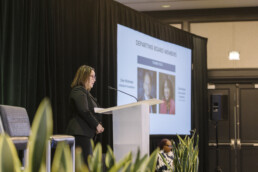
Featured image: TFN Board Member Kaying Hang shares the results of the board elections at TFN’s 25th Anniversary Conference in Baltimore in March. Photo credit: Jen Sapienza
Meet TFN's 2025 PLACES Fellows!
BY Dion Cartwright, President & CEO, and Talissa Lahaliyed, Equity Programs Manager
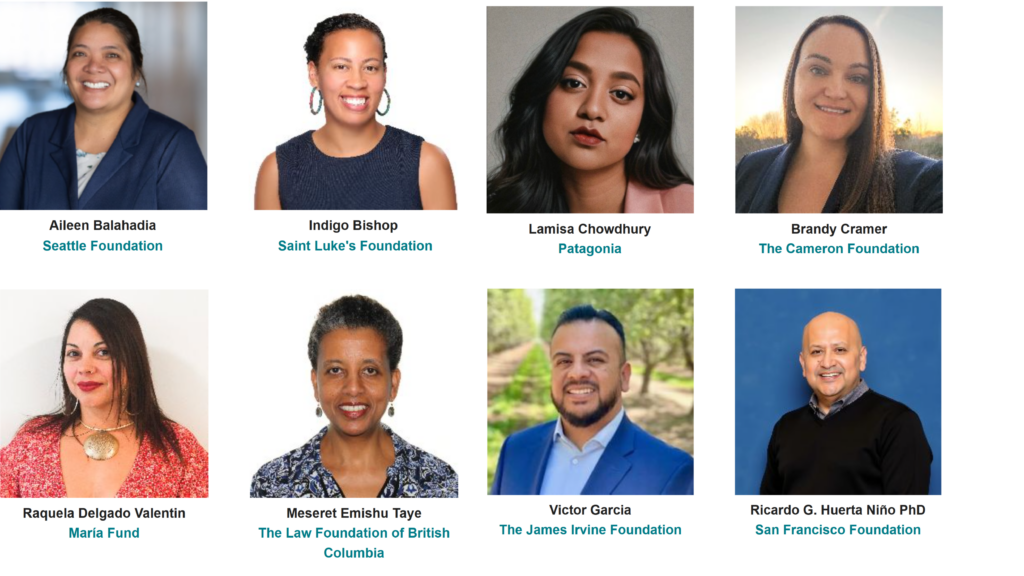
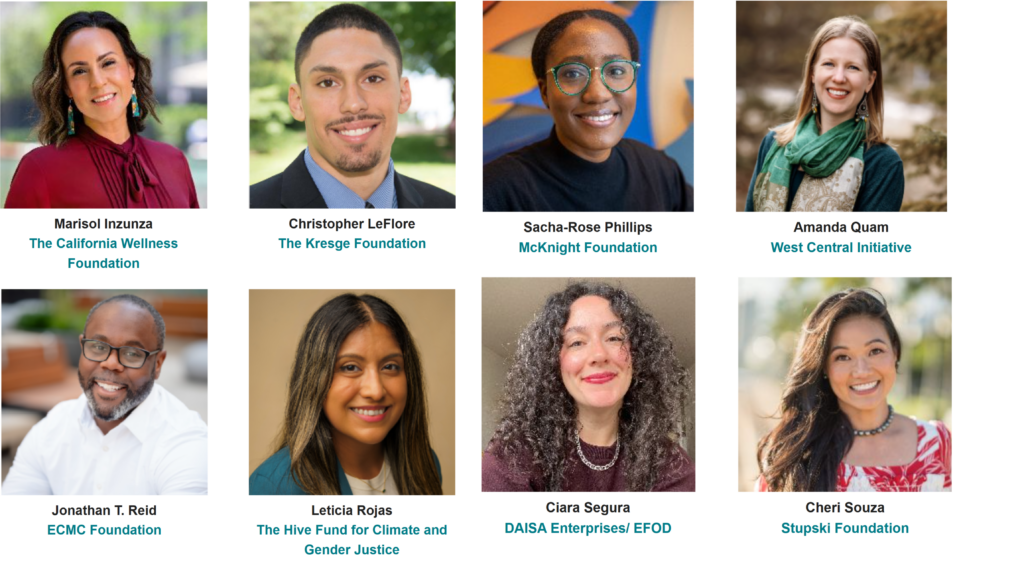
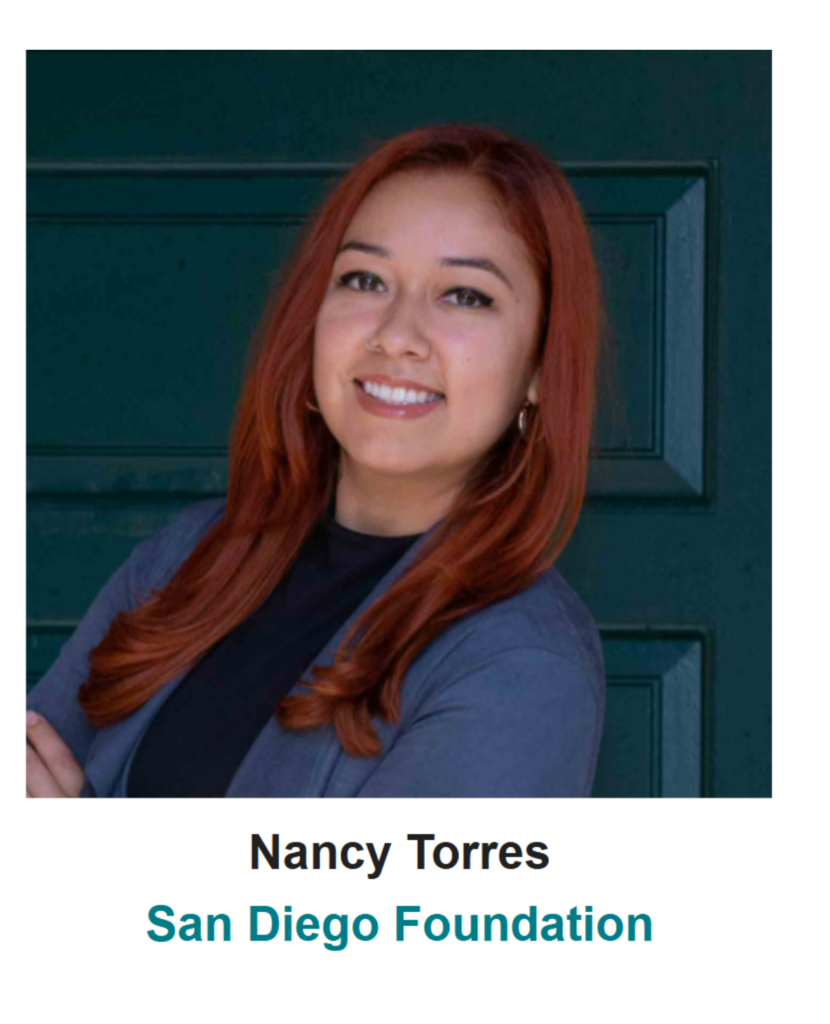
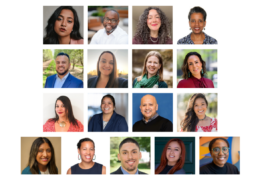
We’re honored to announce the 2025 PLACES Fellowship cohort — a remarkable group of philanthropic leaders who are deeply committed to advancing intersectional equity and driving lasting, positive change in communities across the U.S. and Canada.
As we mark the 15th anniversary of the PLACES Fellowship, we’re filled with both pride and a profound sense of urgency.
Our communities are facing compounding crises, from the enduring impacts of systemic racism and economic inequality to the ongoing threats of climate change and political polarization. Investing in courageous leadership in these challenging and uncertain times is not just important, it is imperative.
Agents of Change
Since its inception, PLACES — which stands for Professionals Learning About Community, Equity and Sustainability — has equipped philanthropic leaders with the knowledge, tools, and relationships needed to confront structural racism and embed equity into their work.
Over the past decade and a half, PLACES has grown into more than a learning experience: It is a powerful network of more than 200 alums who are challenging the status quo, shifting philanthropic practices, and supporting community-led solutions that prioritize those most impacted by environmental, economic and social inequities.
The 2025 PLACES cohort represents the very best of this ongoing work. These funders come from across the continental United States, Puerto Rico, Hawai’i and Canada, and reflect a rich diversity of geographies, cultures, identities, and lived experiences
Their work spans urban and rural communities alike, and they represent a broad spectrum of grantmaking institutions. What unites them is a shared desire to create a more inclusive and just world, whether through their personal journeys or professional endeavors.
Investing in Leadership
We want to extend thanks to the TFN members and investors whose support makes PLACES possible year after year.
We also want to acknowledge institutional support provided by the PLACES Fellows’ organizations, and the investment of time and resources needed to participate in this professional development opportunity.
Their commitment is a reminder that by investing in people, we are investing in the transformative change our communities deserve and our sector needs.
On behalf of the PLACES Leadership Network, the selection committee (comprised entirely of PLACES alums), and the entire TFN community, please join us in congratulating the 2025 PLACES Fellows!