Know Your Network: Q&A with Angela Davis, TFN's PLACES Alum
BY Brooke McPherson, Senior Communications and Engagement Associate, The Funders Network
Welcome back to Know Your Network, TFN’s blog series highlighting the people making an impact across our community of funders, partners and allies — and beyond.
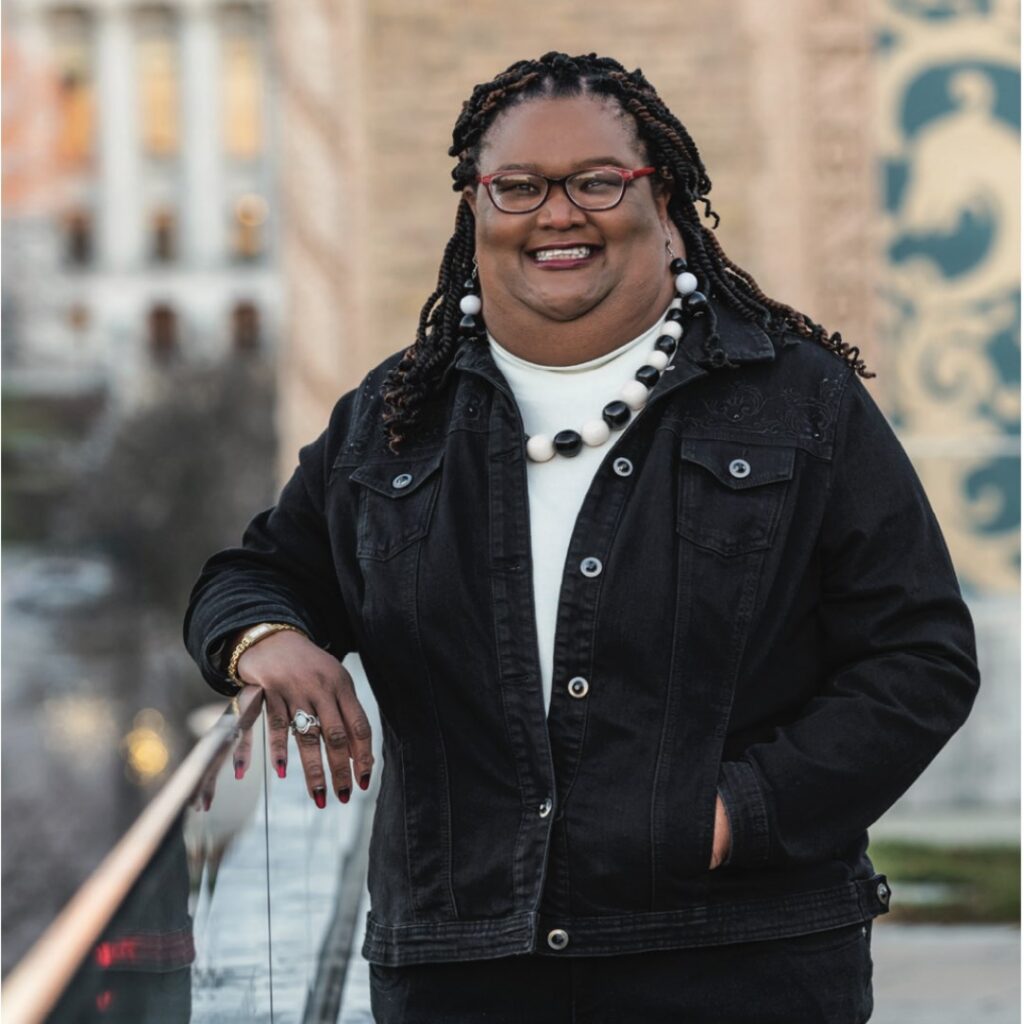
For this latest installment of KYN, we sat down with Angela Davis, director of grantmaking for the Madison Community Foundation, a TFN member organization, and alum of TFN’s 2024 PLACES Fellowship cohort.
Read on to learn more about Angela’s approach to building connections in her Wisconsin community, what advice she’d give to early-career funders and where she’s finding joy in these challenging times.
Q: An interesting thing we’ve noticed about our network is that people come to philanthropy through so many different avenues. So we’re curious: What’s your origin story? Tell us a little bit about your background and how you ended up in the philanthropic sector.
Community service and public service have always been a part of who I am. I have been a member of Delta Sigma Theta Sorority Incorporated for over 30 years.
Giving back to the community is something that's been ingrained in me since I was young.
I'm from Hammond, Indiana, which is 10 minutes from Chicago. I went to school in Terre Haute at Indiana State University. I majored in political science, and minored in history, and I just knew I was going to law school.
But as graduation approached I said, I don't think I want to do that. So I went back home and started working in my local planning and development office as a Community Development Planner. I worked with grassroots organizations — we did a lot of community development block grant programs.
And I worked with one organization that was trying to build a community center. Actually, it was to replace a community center where I went to nursery school and my parents went for various activities as kids.
I became the first director of that community center, The Ophelia Steen Family & Health Services Center. We had food pantries, the WIC program, your normal wraparound services: legal services, mental health, childcare, community rooms — and we were fundraising. I was doing philanthropy and raising money, and I didn't even know I was doing that!
So, that was really cool, but I also realized if I stay in this job, I'm going to be here for 20, 30 years. There was more I needed to do! I said, I know what I'm going to do. I'm going to quit my job and go back to school full-time for my master's in Human Resources Development for Higher Education & Industry at Indiana State.
While working as a graduate assistant in Alumni Affairs, I learned all about development, philanthropy, communications, and that this was really a profession. I got the bug. And I learned that this is something I really like.
Q: We learned a new TFN fact about you today — One of your first bosses at the Madison Community Foundation was Tom Linfield, a PLACES 2015 Alum! Tell us about your role at the community foundation.
I was recruited to Madison Community Foundation (MCF) as development director, working with fundholders, neighboring communities and with our women's fund, A Fund for Women — and that's where my love for philanthropy really grew.
The grant-making side of things, working with the advisory committee on the grant recommendations. I was like, Oh! I think I really like this part of the role.
MCF was creating a new role to expand the community impact team. I was asked if I would be interested. I said, heck yeah, I'm interested. And so now I'm the first Director of Grantmaking at Madison Community Foundation.
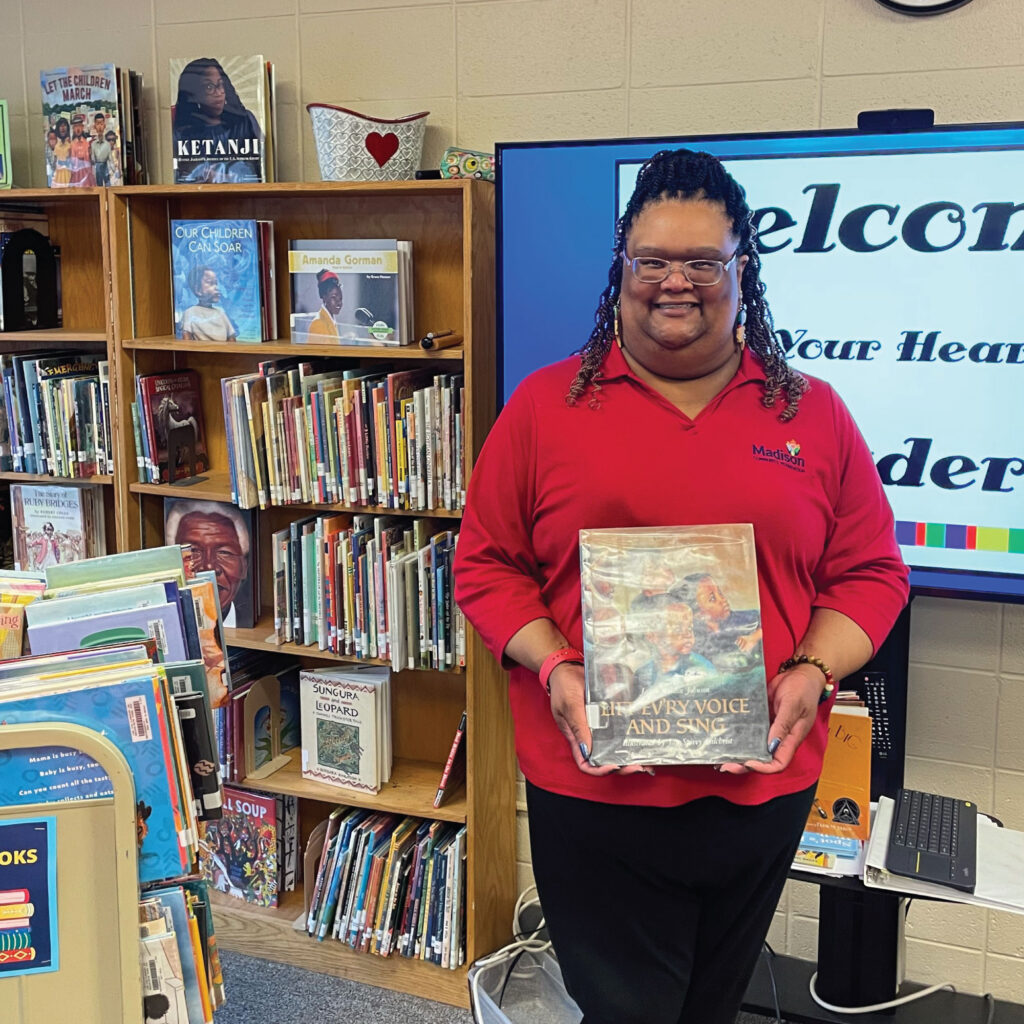
Angela participated in the 12th annual Read Your Heart Out Day at Lake View Community School. This special event invites Black family or community members to read stories to students to model the importance of reading, sharing stories, learning from elders, and uplifting Black voices
Q: We’re seeing so much disruption and uncertainty at the federal level, especially around programs like SNAP that fight food insecurity and the clawing back of funding for environmental programs. How are you navigating this at the community level?
In 2024, we received 89 letters of inquiry (LOIs) with a requested amount of $4.2 million. In 2025, we received 155 LOIs requesting over $8 million.
Our numbers have increased to the point where I couldn't even manage individual meetings because of the sheer number of people that wanted to apply. We started doing Zoom office hours. People can hop on, ask their questions, and connect with other potential grantees.
We’re trying to be more efficient with our time by working on our guidelines to make things clearer and having a more equitable and transparent process. And that's something that we all should be doing. Always evolving and making sure things are as centered as we can for the grantees. We also have finally transitioned away from paper to make things more user-friendly, because we still had people mailing things in.
Philanthropy was not built to replace governmental funding. That's just keeping it 100% real talk. We weren’t set up to replace governmental funding, but what we can do is talk to each other.
We have a Dane County Funders roundtable. We meet with local funders through the Wisconsin Philanthropy Network, and if we have a grant proposal that I may not be able to fund, I pass that on to other funders that I think may be interested. We share ideas and trends, and our hope is to be more collaborative in the future.
Q: Is there anything else you want to add about your approach to or your philosophy around that funder-grantee relationship?
I love being a connector. I’m always listening. When I'm meeting, or even if I'm at an event, even reading the newspaper, watching the news, I'm always listening. Where is that connection at?
I want the work to be centered around the grantee, the partners, the nonprofits — because it's not our program, it's their program.
They're boots on the ground. We're just here trying to support the work, not take over or put ourselves in the middle.
And I try to be mindful of that and always be humble. Because this isn’t about Angela, the person. It’s about Angela, who can make the connection and help get this thing done.
Q: What are some lessons you’ve learned along the way you’d like to share?
I’ve learned that there is a need for more education for our nonprofit leaders. Particularly as we have this transfer of those seasoned nonprofit leaders to younger Black and brown leaders who are now taking the reins.
That’s one of the reasons why we've started our Goodman Nonprofit Center. We’re going to do more engagement in the coming year to offer training open to the entire nonprofit community. We are researching what topics are needed in the sector.
Q: What advice would you give to someone who is just starting out in philanthropy?
Find your people. I was lucky with PLACES. Those are my people. I can call on them anytime.
Professional development is usually one of the first things that's taken out of the budget, and that's so unfortunate. I hate to see that.
We need those connections with your professional peers. If something comes up, or you want to try something new, or bring something new to your organization, but you don't have those professional connections…Who are you going to talk to?
Take advantage of opportunities to be part of a community like The Funders Network. Because it might just be a webinar or a conference that changes your life — or the lives of people in your community.
Q: These challenging times can be very draining. What is keeping you motivated? What is bringing you moments of joy?
Going to an open house, a ribbon cutting, a groundbreaking — knowing that we played a little part in that. Knowing that we've done something in the community that's going to be transformational for years to come. That keeps me motivated.
I love the arts. I love the ballet, plays and the symphony.
I love seeing nature and the four seasons of the lake — the geese and the ducks and all the wildlife that comes through. Seeing people in their canoes in the summertime.
And then in the wintertime, I see people fishing on the lake or even walking on the lake when it freezes over. I'm not doing it! But I like to watch it.
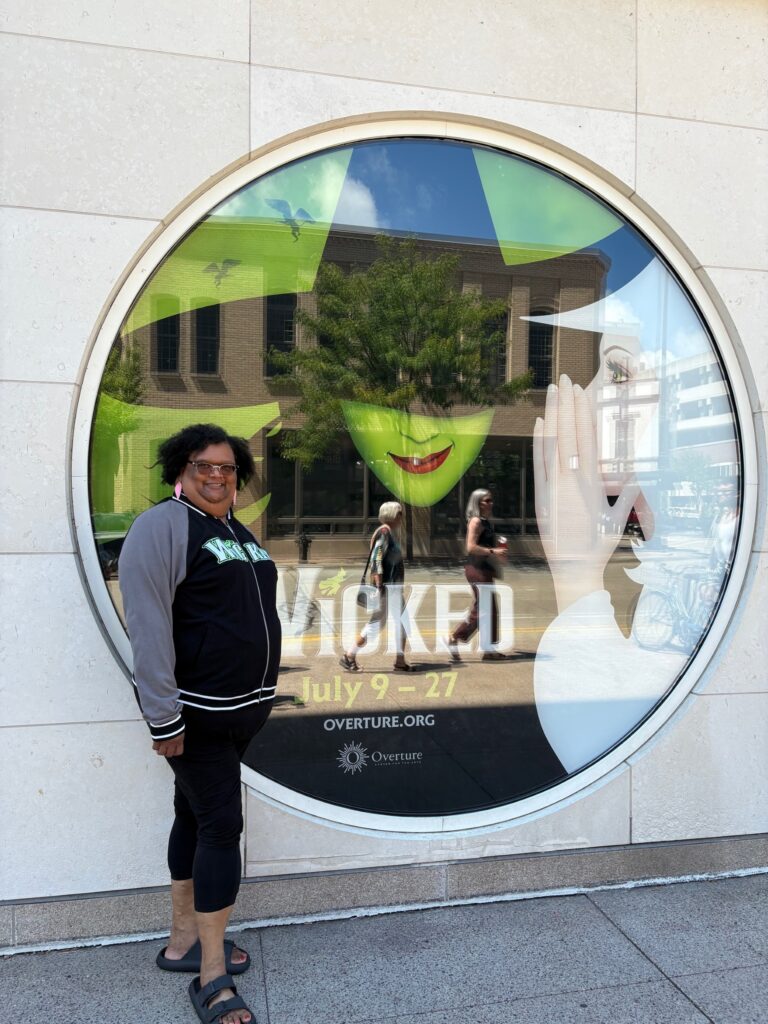
Angela loves musical theater — she has seen Wicked five times!
We're so grateful to Angela for sharing her journey and insights.
Want to see for yourself how the PLACES Fellowship builds connections like Angela’s? Click here to learn more!

Meet the Team: Kriselda Bautista
At TFN, we believe our strength lies in our people, and we take pride in recognizing the expertise and commitment of our team members. This ongoing series — Meet the Team — highlights the talented individuals who power our network.
BY Brooke McPherson, Senior Communications and Engagement Associate, The Funders Network
In this edition of Meet the Team, we’re excited to spotlight our program associate, Kriselda Bautista! She supports general administration, communications and event planning for TFN's Smart Growth California.
TFN: Hey Kriselda! Can you tell us about your role at TFN’s Smart Growth California and what a typical day looks like for you?
Kriselda: Hello! Yes, of course — I’m a Program Associate for Smart Growth California, and I support program communications (working in tandem with our wonderful TFN comms team!), in-person and virtual gatherings, and general member management.
A typical day for me might include a Zoom call or two with my fearless teammates, Ron (Program Director) and Diana (Program Manager), curating our monthly newsletter, updating our website with cool events and webinars happening around the state and coordinating with the wonderful folks who lead our working groups. When there are in-person gatherings around the corner, I’m usually working on logistics, securing vendors and making sure the event goes smoothly.
TFN: What drew you to work in the philanthropic sector, specifically around creating healthy, equitable and sustainable communities?
Kriselda: Since my first sustainability class at UC Irvine, I’ve been passionate about learning how modern society created and exacerbated the climate crisis, and equally passionate about figuring how best to address the many issues that have surfaced as a result of climate change. The scale at which climate threats affect communities is vast and in certain lights can be overwhelming, yet it’s also been encouraging to know that it can be addressed on many different levels.
I spent the first decade of my career working on sustainability initiatives with local governments across California, and in that work I realized how interdependent government agencies, nonprofits and funding agencies are in moving meaningful projects and programs forward that promote healthy, equitable and sustainable communities. Eventually, the opportunity to work with funders at Smart Growth California arose and, after a brief career break during the 2020 COVID-19 pandemic, I was eager to dive into the world of philanthropy and see how funders were addressing environmental and social justice issues.
TFN: What’s a memorable moment you’ve had since joining the Smart Growth California team?
Kriselda: Oh, it would have to be the TFN Staff/Contractor Retreat in Miami, late 2022! I had just started working for TFN earlier that year, so it was my first time meeting my teammates (Ron Milam and Kerry Hastings), as well as the entire TFN team. On top of that, it was my first time in Miami, and the walking tour we did of Coconut Grove and learning about Black Miami was fascinating and eye-opening. Those few days made me feel so much closer to the TFN and Smart Growth California team, and gave me a great appreciation for place-based learning and the work that we do.
Apart from that, Ron and I were recently on a Zoom call where he saw two bald eagles, and that was pretty cool because I felt like I was part of that moment, even though I wasn’t physically there. I guess they’re pretty common up in Washington, but either way, it seemed a good omen!
TFN: We’re so excited for the upcoming 2026 Smart Growth California Funder Summit in Sacramento! What are you most looking forward to about the Summit?
Kriselda: I’m excited to meet the funders! It’s always great to put faces to names and feel grounded in the work I do since we’re all remote and working in our respective areas. I’m stoked to learn about the projects everyone is supporting, and really just be in community with one another, especially given the tumultuous times we’re braving right now.
TFN: What’s something people might be surprised to learn about you?
Kriselda: Back in 2013-14, I lived in Thailand and taught English there for half a year! After my teaching term ended, I backpacked throughout Southeast Asia for a few months. It was a life-changing experience, with moments that were overwhelming, beautiful and deeply memorable. I also had my room in the jungle ransacked by some mischievous monkeys. Never leave bananas out in the open unless you want some visitors!
Thank you, Kriselda, for giving us a behind-the-scenes look at all the meaningful ways you support TFN’s work. We’re so lucky to have you as part of TFN’s team.
Keep an eye out for the next team member spotlight as we continue to celebrate the people who bring bring boldness and joyful purpose to this work!
Going PLACES: Beyond philanthropy: Reflections on our year of sites visits in the PLACES Fellowship cohort through a transformative lens
BY Raquela Delgado-Valentín, María Fund, and Victor García The James Irvine Foundation
At the beginning of 2025 we had every indication that the current challenging chapter across the nation and around the world would deepen to a magnitude we had not experienced before. We knew, however, that in our own lives and as professionals working in philanthropy, we were committed to centering the needs of communities who have always been excluded, othered and kept at the margins of societies.
Because historical moments like the one we are living through also call upon us to find our colleagues who are equally committed to pushing toward greater equity and life opportunities for vulnerable communities, we knew we had to organize ourselves as grantmakers in new ways to meet the moment.
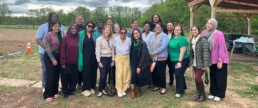
Fortunately, we had learned about the PLACES Fellowship and participated in what turned out to be a transformative life experience for us among a cohort of 16 grantmakers. While each of us lives in and serves communities thousands of miles apart from one another (one of us is in California and the other in Puerto Rico), we recognized as we began our participation in PLACES that the communities we serve face many similar social and economic disparities in our respective regions.
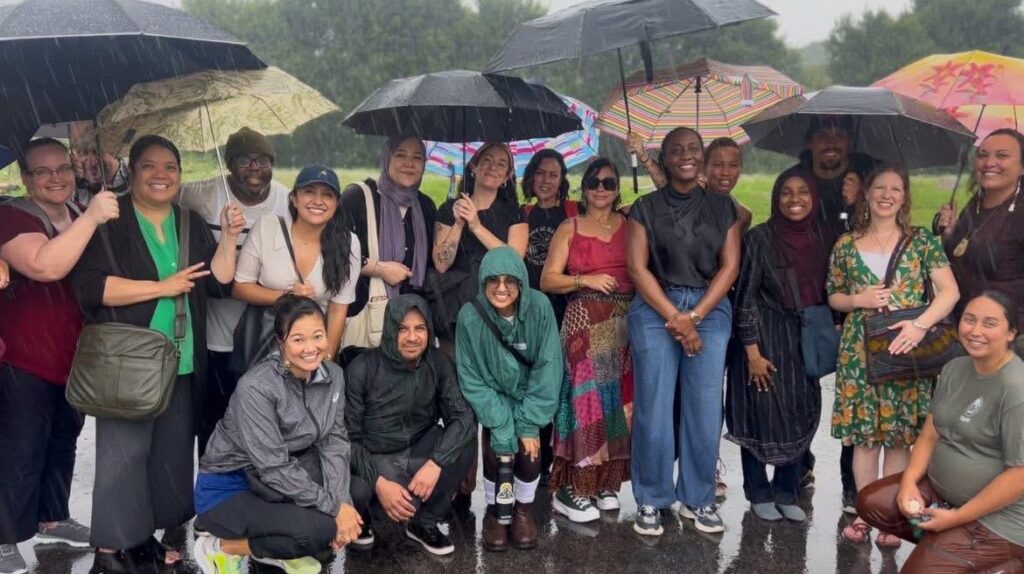
Our cohort in Nashville, TN!
Knowing this, the PLACES Fellowship curriculum invited us to explore the intersections of structural racism, community empowerment and equitable grantmaking practices. Throughout our year-long experience in PLACES, we met fellow grantmakers in Syracuse, NY, Minneapolis/St. Paul, MN, Nashville, TN and Tucson, AZ, who shared how they too are collaborating with and funding community partners to address the impacts of intersecting issues such as economic inequality, the effects of climate change, immigration policy, anti-LGBTQIA+ measures, limited access to housing and land, among other timely issues.
Our final site visit with the Fellowship was in Tucson where we learned from the Community Foundation for Southern Arizona about their Environmental Sustainability Impact Fund. Their work is anchored on preserving, protecting and restoring the local environment while supporting greater awareness and education about our planet. We heard how critically important it is for community initiatives to incorporate the voices of youth as well as indigenous perspectives and practices into program design. We also heard from implementers of the Foundation’s LGBTQ+ Alliance Fund and their grantee partners. Their initiatives benefit the LGBTQ+ community, including elders in the community who for a number of reasons do not always have familial support or access to safety net programs.
Our time in Tucson seemed to go so quickly and made us nostalgic. It felt like that final day of class and we knew it would likely be a long time before we saw our new friends and colleagues in-person again. A “heart-blowing” yoga exercise through somatic release, mindfulness and sound healing helped us to be in the moment and reflect on what a powerful learning experience we had just been through together.
The closeout to the Fellowship began with share-outs about key learnings that had stood out to each of us. Some of us uplifted the importance of standing in solidarity with each other and our communities, as well as the importance of centering our shared humanity. Individual capstone projects took the form of beautiful photo collages, inspiring poems, heartfelt spoken reflections, paintings, multi-media timeline visuals and other innovative forms.
Overall, the PLACES Fellowship experience helped us confirm our resolve to ensure that the local communities we serve can access resources to build power, and secondly to ensure that as practitioners in philanthropy we continue to organize ourselves toward evolving the sector toward an approach that increasingly centers local communities.
The reality is philanthropy is not neutral — it is deeply embedded within systems of oppression and has also been used as a tool for repression. But we can change that. From the past years working in philanthropy, we recognize that there are other ways of doing this work. In these site visits we have reaffirmed that philanthropy must promote inclusive and centered values in the praxis and has to be aligned with liberation — that includes decolonization.
Deep listening and authentic trust-building must be integrated into the principles of philanthropy and resources should be determined by the most impacted people. To do this work we must also center love. Work for social justice is born from a deep love for our communities and for humanity. It is also born from pain, trauma and injustice; feelings that manifest themselves in complex ways.
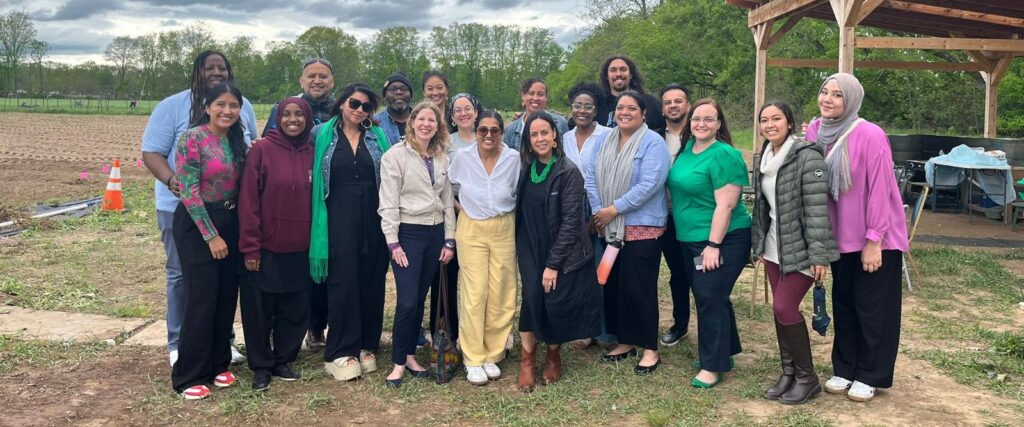
Our cohort in Syracuse, NY!
We know the system is not broken. It works as it was designed to work and keep communities oppressed. But our desire for change allows us to do the impossible for our collective liberation. In this moment and in this sector, we have an opportunity to be changemakers. We share a personal commitment to equity, and we also recognize that if philanthropic institutions do not evolve and center the communities they claim to support, then they will be complicit with that system. We recognize philanthropy as a path to moving resources, centering power on the people, knowing that we can support these processes but are not the ones who lead the transformation that is needed to live in a just society.
All human beings have the right to fair and equal access to the use, control and benefit of the same goods and services in society. We all deserve to “Vivir Sabroso”. That means that Dignity is the central goal in the struggle for a good life. Until dignity becomes the norm.
About the Authors
Raquela Delgado-Valentín (ella/elle) is the Resource Mobilization Director for María Fund, Puerto Rico. She holds a Doctorate in Social Work with a specialization in Administration and Social Policy from the University of Puerto Rico at Río Piedras. Her political awakening began with her first arrest during the struggle to stop the U.S. Navy's bombing of Vieques in 2001. Since then, her commitment defending social justice, equity, inclusion, human rights and freedom, has remained unwavering. She believes in a a free Puerto Rico where we all can live with dignity. She was also a member of TFN’s 2025 PLACES Cohort.
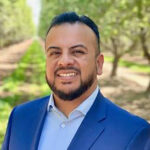 Victor Garcia is Program Officer on the Priority Communities initiative at The James Irvine Foundation, whose singular goal is a California where all low-income workers have the power to advance economically. Victor has more than 20 years of experience in program strategy development and implementation of grantmaking across California. Throughout his career, he has led projects and initiatives to facilitate access to greater life opportunities for first-generation college students, workers who earn low wages, and rural communities. He has also worked to increase the strategic capacity of post-secondary institutions and nonprofits to better serve diverse populations. Victor holds an EdD from the University of Southern California, a Master of Public Administration from CSU Long Beach, and a Bachelor of Arts degree in History from the University of California, Santa Cruz. He was also a member of TFN’s 2025 PLACES Cohort.
In Defense of Humanity: Solidarity and Resources for Minnesota and Elsewhere
BY TFN Staff
The Funders Network stands in solidarity with communities in Minnesota and elsewhere who are organizing in defense of human dignity and demanding accountability in the face of escalating immigration enforcement.
What has unfolded in recent days and weeks — including the fatal shooting of Minneapolis residents by federal agents — is not only heartbreaking. It is a warning. When state power is exercised through fear, militarization and lethal force, the consequences ripple far beyond any single incident. Families are shattered. Communities are destabilized. Trust is broken.
This is not a debate about immigration policy or partisan politics. It is about whether people are allowed to live, work, protest and care for one another without fear of violence. It is about whether public institutions are accountable to the communities they claim to serve.
The aggressive and xenophobic posture we are witnessing represents a dangerous escalation — one that inflicts lasting trauma and tears at the social fabric of entire regions.
At the same time, misinformation and divisive narratives are actively obscuring the truth of what is happening to our families, friends and neighbors.
Support Vital Voices in Minnesota — and Elsewhere
This moment underscores the urgent need for philanthropy to invest in local journalism — reporting that is rooted in community, committed to facts and essential to calling out injustice.
In addition to the resources and statements from the sector we have shared below, we encourage you to register for Thursday’s TFN webinar, Vital Voices: Investing in the Power of Community-Rooted Reporting.
Our panel of funders and journalists includes Tim Murphy of the Minneapolis-based McKnight Foundation and Mukhtar M. Ibrahim, founder of the Sahan Journal, a nonprofit newsroom dedicated to reporting for immigrants and communities of color in Minnesota, who now serves as the Press Forward Minnesota strategy consultant for the Minnesota Council on Foundations.
Support Organizers, Advocates and Allies
The Funders Network remains committed to supporting movements for justice, equity and belonging.
We urge our members to support the grassroots organizers, legal advocates and those providing for and safeguarding the wellbeing of the most vulnerable in our communities, all of whom are in need of increased resources as a result of these disruptive federal actions.
We have curated a list of solidarity statements, opportunities to provide aid, and additional resources from our TFN members, partners and others in the sector in this message and on our TFN blog.
To add your organization’s statement or resources to this list, please reach out to TFN’s Senior Associate for Communications and Engagement Brooke McPherson at brookem@fundersnetwork.org.
Resources & Call to Actions
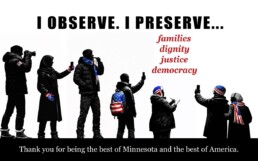
"The Best of America: Minnesotans Show their Heart" — McKnight Foundation Resource Page, which includes:
-
- Shareable images to shine a light on the courage, kindness and true Minnesota spirit shown by folks across the state
- Know-your-rights tips for Minnesotans
- Ways neighbors and friends outside of Minnesota can show their support
The Immigrant Rapid Response Fund (IRRF) is a coalition of philanthropic leaders rooted in communities most impacted by immigration-related harm. IRRF ensures that resources move quickly, responsibly and with community accountability to trusted organizations responding to immigration-related emergencies across Minnesota. As enforcement actions, policy changes, and sudden disruptions continue to impact immigrant and refugee families, IRRF provides rapid, community-informed funding to organizations on the frontlines of response, care and protection.
Stand With Minnesota, a volunteer-led resource page, which includes:
-
- How To Help if You are Outside Minnesota by local Minnesota Author Naomi Kritzer
- Stay Informed About What’s Happening — A list of local Minnesotan news outlets and independent media reporting on the ground
- Testimonies from Minnesotans about what life is like right now
"Standing Together: How to Support Minnesota's Immigrant and Refugee Neighbors" — Saint Paul and Minnesota Foundation
The Minnesota Star Tribune Live Blog
-
- Free from paywall blog featuring local journalists
For foundations looking to invest in legal funds for local organizations directly, here are several recommended by the Minnesota Council on Foundations:
-
- Immigration Hub — coalition of 5 pro bono immigration legal service providers statewide (housed at Immigrant Law Center of Minnesota)
- Contact: Sarah Henely, sarah.henely@ilcm.org
- Immigrant Defense Network (housed at COPAL)
- ISAIAH
- Unidos MN
- Artists Respond: Safety in Neighbors (housed at Springboard for the Arts)
- CAIR-MN
- Local and citizen media: Sahan Journal (immigrant-focused news); Georgia Fort
- Immigration Hub — coalition of 5 pro bono immigration legal service providers statewide (housed at Immigrant Law Center of Minnesota)
- VLN Deportation Preparedness Phone Services
- VLN provides advice to help clients understand what they can do to take care of the family members, personal property, and financial obligations they may leave behind if they get detained or deported. In some cases, attorneys will assist clients in preparing necessary paperwork, as well. Deportation Preparedness Phone Services will assist with issues including the following:
- Resources for People Detained or Worried About Being Detained
Statements from the Network
The McKnight Foundation
-
- Lessons from Minnesota: To Preserve Our Planet, We Must Also Preserve Our Democracy by Ben Passer, director of the Midwest Climate & Energy program at the McKnight Foundation
- Philanthropy Must Stand Up for Minneapolis — and Our Country — Opinion by McKnight Foundation President & CEO Tonya Allen, published in The Chronicle of Philanthropy
- Tonya Allen's statement on the fatal shooting of ICU nurse Alex Pretti
Minneapolis Foundation
Robert Wood Johnson Foundation
-
- President Rich Besser's statement on recent events
- Want to Take Action? Here’s Your Guide to ICE Watch Hotlines and Immigration Resources by Eliana Perozo, Next City
-
This story was produced through Next City's Equitable Cities Reporting Fellow for Anti-Displacement Strategies, which is made possible with funding from the Robert Wood Johnson Foundation.
-
Initiative Foundation
-
- President Brian Voerding's update on the foundation joining a coalition of local and state foundations to issue rapid-response grants to support the Somali community in St. Cloud and Central Minnesota
The California Endowment
-
- "We will not look away. We will not be silent" by President & CEO Brenda Solórzano
Resources, Statements and Social Posts from the Sector
- STAY TOGETHER — Women's Foundation of Minnesota
- The Minnesota Council on Foundations is hosting a funder briefing — Immigrant Rapid Response Fund: A Coordinated Philanthropic Response for Minnesota — on Jan. 28 featuring the McKnight Foundation's Muneer Karcher-Ramos
- GREATER MSP Partnership Open Letter — 60+ Minnesota-based companies came together to speak with one voice to call for an immediate de-escalation of the federal action across Minnesota
- Statement from The James B. McClatchy Foundation
- Statement from Jen Ford Reedy, President of the Bush Foundation
- Statement from Carmen Rojas, President & CEO of the Marguerite Casey Foundation
- Statement from Headwaters Foundation for Justice
- Statement from Maine Community Foundation
- "Worried about supporting ICE through your 401(k)? Here’s What You Can Do." from Just Futures: Public Benefit Corporation
- Statement from Andrew Dayton, Founder & CEO of The Constellation Fund
- Guidance on Minnesota from United in Advance
To add your organization’s statement or resources to our online resource list on TFN's Blog, please reach out to Brooke McPherson at brookem@fundersnetwork.org.
Addressing Low-Attention Disasters: Insights from PPREP’s Annual Gathering in Rapid City
BY Hazel Paguaga, Senior Program Associate, The Funders Network
Each year, the Philanthropic Preparedness, Resiliency and Emergency Partnership (PPREP) cohort gathers in one participant's city to learn from place. This year's gathering in Rapid City, South Dakota — hosted by Black Hills Area Community Foundation and Partnership with Native Americans — was one of our best meetings to date.
PPREP is a group of community foundations and regional foundation associations across ten states along the Missouri River watershed (Arkansas, Oklahoma, Missouri, Kansas, Nebraska, Iowa, Minnesota, South Dakota, North Dakota and Montana). PPREP was created to provide resources and opportunities for community foundations to build up their skills and leadership capacity to be better informed and prepared when a disaster strikes their community. The communities in these regions often experience low attention disasters — events that receive limited national media coverage and often do not receive FEMA Individual Assistance declaration.
Grounded in this context, our gathering kicked off with a site visit to Pine Ridge Reservation, home to the Oglala Sioux Tribe, which spans 1.7 million acres and has been designated as one of the poorest areas in the country.
We had the privilege of being joined by S. Ramona White Plume and Percy White Plume who gave us some context and history on the Oglala Sioux Tribe. Born on the Pine Ridge Reservation, Mr. Percy spoke of his love of horse riding and how that passion motivated him to create the Horse Spirit Society — a horse riding program for both children and adults focused on traditional teachings and the importance of horses in Lakota culture. Mr. Percy is also involved in the 300-mile Chief Big Foot Memorial Ride to honor the lives lost at Wounded Knee Massacre in 1890, which you can learn more about here. After a brief pit stop at Pinky’s convenience store, we reached Wounded Knee Massacre site where Ms. Ramona led us in a prayer to honor and remember. It was a powerful moment to reflect on the history of the land we’re on.
Our next stop was the Oyate Teca Project, a Native nonprofit committed to the well-being of youth and families through programs rooted in culture, education, recreation and health. We heard from Jesse Big Crow, planning and coordinator specialist of the Oglala Sioux Tribe’s emergency management team. Spotty cellphone reception, limited internet access and the enormous scale of land to cover means it can take a long time for responders to assess damage and provide aid. Jesse shared the unique challenges reservations face when it comes to disasters and underscored the importance of keeping the community informed of disaster plans.
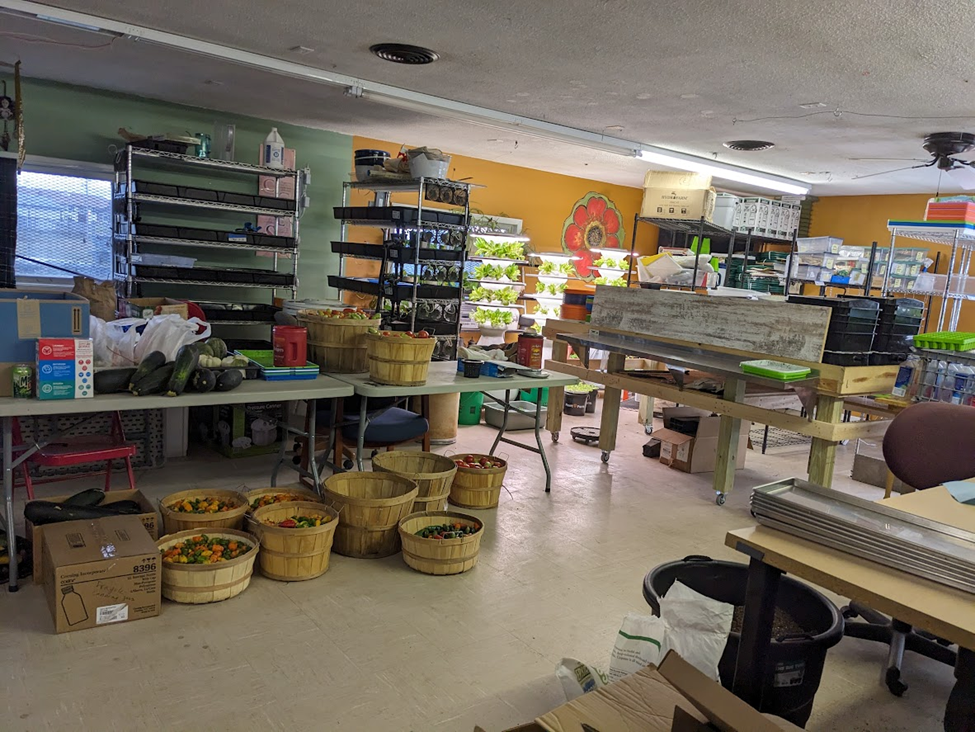
Jesse leads emergency management classes and encourages her participants to share the skills they've learned with their families. "Emergency preparedness work includes food sovereignty," Jesse told us. "Being able to garden, grow and access healthy food all year long while learning traditional and modern methods." These classes go beyond growing food — participants are immersed in everything from food safety to entrepreneurship.
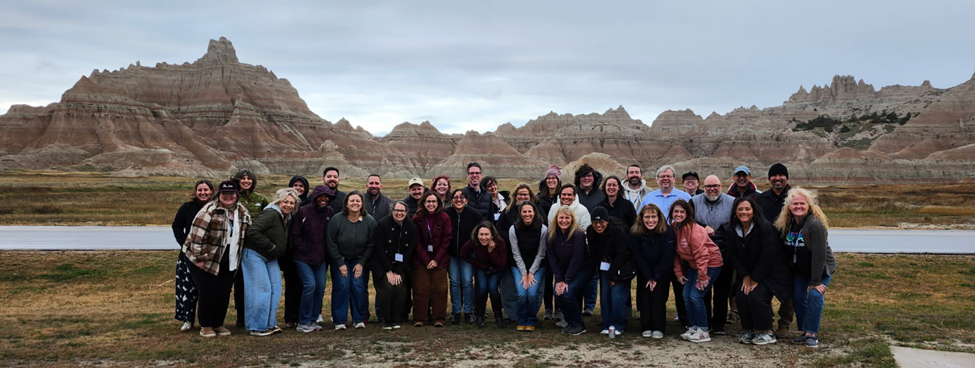
We then toured the Oyate Ta Kola Ku Community Center with program director, Rose Fraser, learning about the wide range of programs offered such as cultural education, food security programs, sports and recreation, financial literacy and sewing and beading classes. After the tour, we headed back to Rapid City — but not before stopping for a group photo at Badlands National Park!
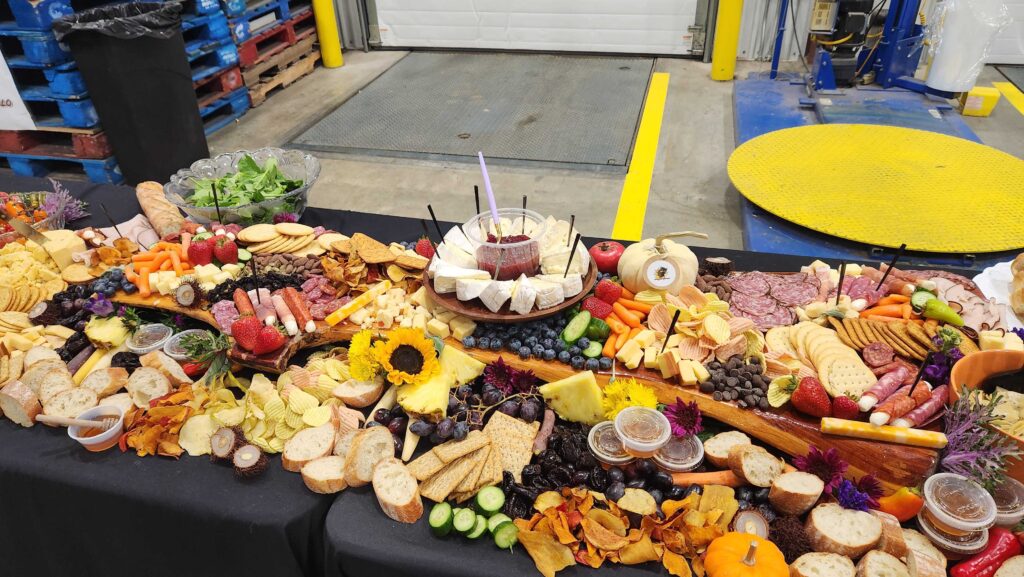
Our last stop of the site visit was PWNA’s warehouse, where we were treated to a beautiful graze board (the longest I’ve seen!). We heard from the PWNA team about the great work they’re doing and how they provide food, water, disaster relief, holiday support and so much more to Native communities. After covering so much ground in a single day, the experience underscored just how challenging it can be to reach Native communities in times of need and why this work is both essential and urgent.
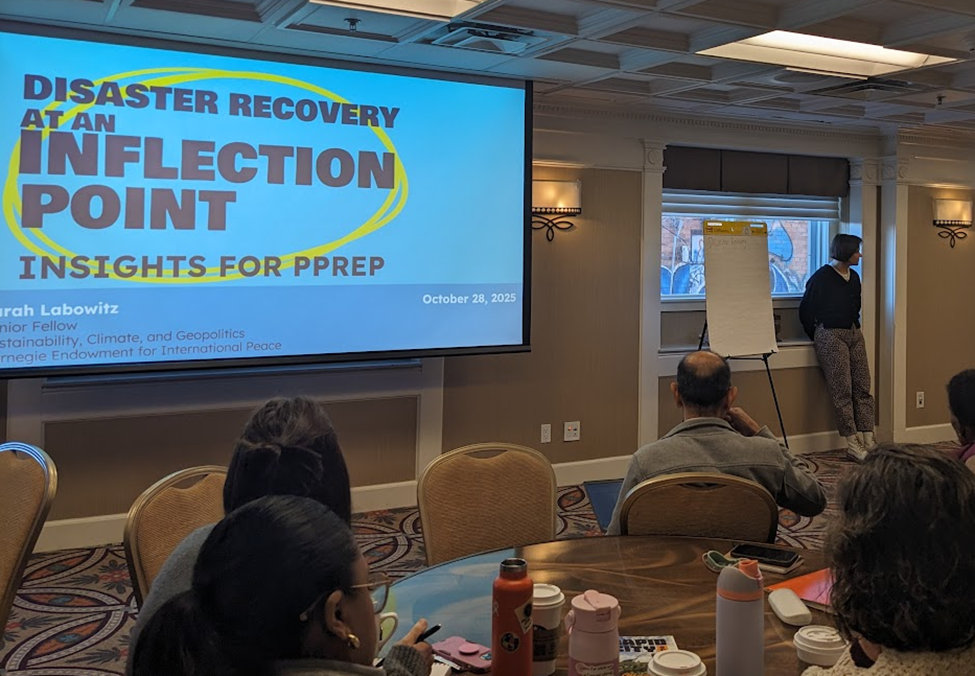
Our second day opened with insights from Sarah Labowitz, Senior Fellow at Carnegie Endowment for International Peace. Sarah introduced the group to the Disaster Dollar Database — a digital tool that tracks the major sources of federal funding for disaster recovery in the United States — and led us through a hands-on exercise to explore specific disaster events that impacted PPREP participants' communities.
We also examined the stark disparities between FEMA individual assistance applications across states. Sarah shared data on the number and types of disasters that have impacted the PPREP region over the past decade and compared those figures with states like Florida, Texas and Louisiana — places that tend to receive far more attention and funding following disasters. This sparked a deeper discussion about recent federal policy shifts and what it means for community foundations' disaster response strategies. If you’re looking for someone who can make sense of disasters and data, call Sarah!
The learning continued into the afternoon with Jolie Wills, a leading psychosocial expert in disaster and disruption and Founder & Executive Director at Hummingly Foundation. Jolie shared practical tools that community foundations can use to help grantees and key community leaders sustain themselves as they sustain others during long term disaster recovery. She emphasized the importance of taking time to pause, reflect and invest in teams to address fatigue and burnout. She introduced us to the Doing Well card deck — a resource designed to help teams and individuals navigate stress, uncertainty and decision-making during challenging times. Jolie left us with a powerful reminder: Don't be the canary in the coal mine — have a plan to prevent burnout before it hits.
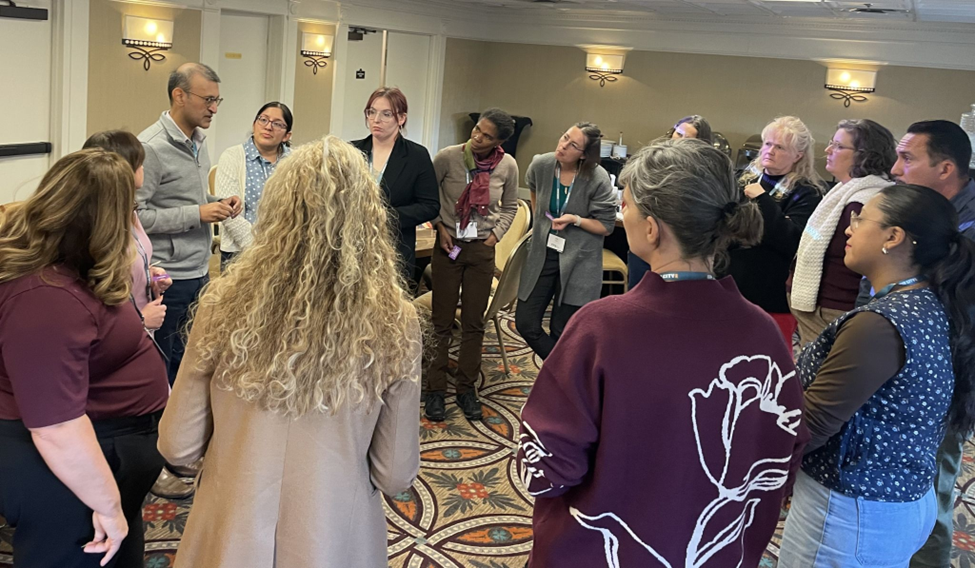
On our final day, we heard from the PPREP members themselves. They shared how they are responding to grantee and community needs in the ever-changing federal, state and local funding environments. One of the greatest strengths of the PPREP cohort is the strong connection among members — the way they share resources, provide feedback and support one another through challenges.
We are deeply grateful to our PPREP cohort members and to our partners at Center for Disaster Philanthropy and Margaret A. Cargill Philanthropies. We’re already excited to see where we’ll gather next year!
About the Author
Hazel Paguaga is the Senior Program Manager at The Funders Network. She handles the programmatic support for TFN's Inclusive Economies, Mobility and Access, and PPREP working groups.
Photos provided by Hazel Paguaga and Brooke McPherson.
TFN PLACES Fellowship: A reflection on my year-long learning experience — Cross-post
The Funders Network is committed to sharing the stories and strategies of our members, partners and others in the philanthropic sector working to create more sustainable, prosperous and equitable communities.
Today, we’re sharing a recent blog post by Madison Community Foundation's Angela Davis, Director of Grantmaking. Angela was a member of TFN's 2024 PLACES Cohort.
BY Angela Davis, Madison Community Foundation
On September 17, 2025, MCF launched the long-awaited Goodman Nonprofit Fellowship Program. The inaugural cohort of executive directors, representing large, small and grassroot nonprofit organizations in our community, went through a competitive application process. The energy and excitement that day were palpable.
As I observed the synergy in the room, it made me reflect on the year-long followship I completed last year with The Funders Network (TFN). TFN’s mission is to leverage philanthropy’s unique potential to help create communities and regions that are sustainable, prosperous, healthy and just for all people. TFN is committed to helping funders understand and address racism, economic inequality and the imbalance of power, while also engendering community-driven solutions and amplifying the expertise and experiences of those communities who are least heard.
The Application Process
Since becoming Director of Grantmaking, I’ve wanted to connect with other funders and really understand the challenges and opportunities they face in their communities. I’d always heard great things about TFN and even had a former colleague who went through the program. I was a little nervous about applying for the TFN PLACES (Professionals Learning About Community, Equity and Sustainability) Fellowship.
Applicants need their organization to commit to budgeting the cost and time allowing them to go on four site visits during the year-long fellowship. The application process includes making a video explaining how and why the applicant will benefit from being a part of the fellowship. It is a competitive and time-consuming program and I know how fortunate I was to receive the support of MCF to apply.
I was one of 15 funders chosen across North America. I was in total shock and very humbled. My cohort included fellow funders from private, family, healthcare and community foundations from Vancouver to St. Louis, California to New Orleans to here in the Midwest.
First Stop: Cleveland
Our first in-person gathering was in Cleveland, OH. I had no idea Cleveland had so much to offer. We learned about the history of the city. Specifically, the Forgotten Triangle and the Kinsman neighborhood in the southeastern part of Cleveland. A once booming industrial and commercial hub that faced decades of disinvestment, the site of illegal dumping and neglect. It was inspiring to hear how the neighborhood stepped up and banded together when people realized no one was coming to save them − they had to save their own communities.
➡️ Read Angela's full blog post.
Meet the Team: Ashley Quintana
At TFN, we believe our strength lies in our people, and we take pride in recognizing the expertise and commitment of our team members. This ongoing series — Meet the Team — highlights the talented individuals who power our network.
BY Brooke McPherson, Senior Communications and Engagement Associate, The Funders Network
In this edition of Meet the Team, we’re excited to spotlight our program manager, Ashley Quintana! She is primarily responsible for program management for the Partners for Places matching grant program and our GREEN and Urban Water Funders working groups.
TFN: Hey Ashley! Can you tell us about your role at TFN?
Ashley: I’m part of the programs team at The Funders Network, where I help manage the Partners for Places matching grant program and support our GREEN and Urban Water Funders working groups. My role centers on connecting people — local governments, foundations and community partners — who are all working toward more equitable and sustainable communities. A big part of what I do is help make those collaborations run smoothly, from coordinating grantmaking to organizing learning opportunities that let people share ideas and lessons across cities.
TFN: Partners for Places brings together local governments, place-based funders and frontline community groups to create more equitable and resilient communities across the country. What’s something about that work that really inspires you?
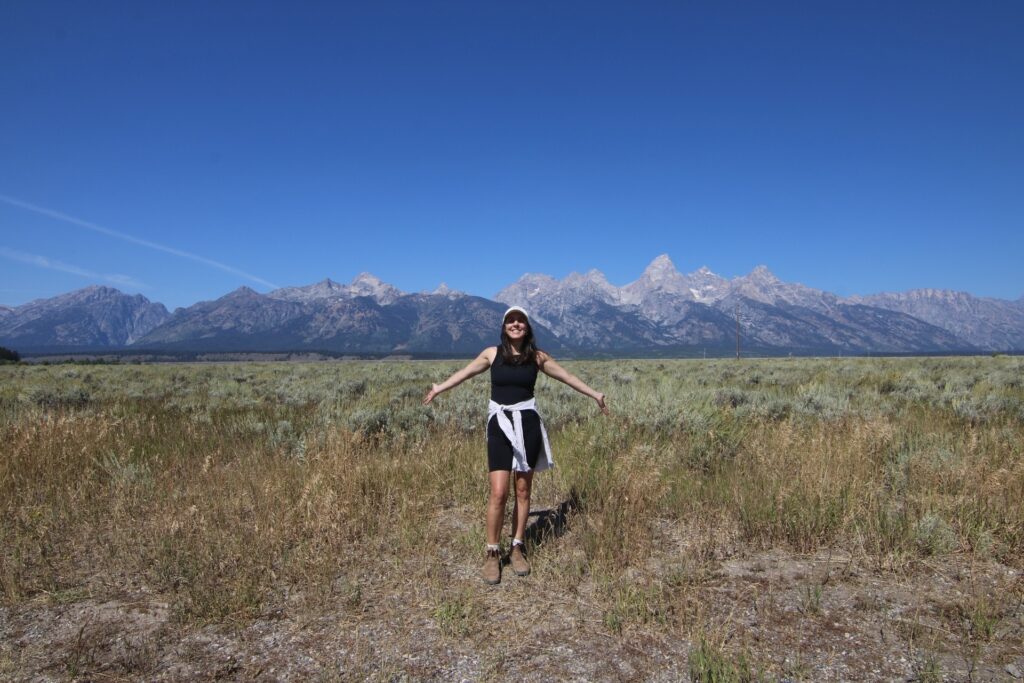
Ashley: I’m constantly inspired by how creative and collaborative our grantees are. Every city has its own story, yet there’s this shared determination to make communities healthier, more connected and more just. Seeing frontline leaders and local governments work side-by-side — not just in name, but in decision-making — is powerful. It reminds me that real change happens when everyone has a seat at the table.
TFN: Can you tell us about your work with the Urban Water Funders working group? What’s exciting about the projects or conversations happening there?
Ashley: Urban Water Funders is such a dynamic space — it brings together funders who care deeply about water equity, infrastructure and climate resilience. What really excites me is the level of dedication among the funders in this group. They’re not just participants; they truly take on leadership roles, helping to shape conversations and drive the group’s direction. It’s inspiring to see how invested they are in the success of the working group and in supporting communities that are tackling complex water challenges across the country.
TFN: Before joining TFN, you worked on environmental projects in both Colorado and Florida. Do you have any lessons or highlights that have stuck with you years later?
Ashley: Definitely. Working in two very different regions taught me that while environmental challenges are often deeply local, the power of community is universal. In Colorado, I learned how collaboration across agencies and nonprofits can turn big ideas into real progress. In Florida, I saw how resilience and creativity thrive even in the face of constant climate threats. Both experiences reinforced the importance of listening first and letting communities lead the way.
TFN: When you’re not busy working on programs and managing grants, how do you like to recharge?
Ashley: I love spending time in my ceramic’s studio — it’s my creative escape. Working with clay keeps me grounded and reminds me to slow down and enjoy the process. I also love traveling, working in the garden and exploring local parks and restaurants with my husband and daughter. Anything that helps me disconnect from screens and reconnect with something hands-on.
TFN: The Funders Network is celebrating 25 years with our theme Be Bold Together. How does boldness show up in your work?
Ashley: For me, boldness often looks like creating space for new voices and perspectives — especially those that have been historically left out of decision-making. It’s about challenging ourselves (and our funder partners) to rethink how we define success and who gets to lead. At TFN, I see boldness in the way we push for collaboration and in how we center equity in everything we do.
Know Your Network: Q&A with Maggie Rwakazina of TFN’s Urban Water Funders
BY Tere Figueras Negrete, TFN Senior Communications Director
Welcome to Know Your Network, TFN’s blog series highlighting the people making an impact across our community of funders, partners and allies — and beyond.
For this installment of KYN, we invited Maggie Rwakazina, co-chair of TFN’s Urban Water Funders working group and until recently a program officer for Spring Point Partners, to share her insights on the importance of advancing water equity, advice for new funders — and where she’s finding moments of joy and purpose in these challenging times.
Q: Maggie, we know you through your very active role with TFN’s Urban Water Funders working group, which explores urban water solutions like green stormwater infrastructure and climate resilient strategies — with a strong focus on water equity and vulnerable communities. But you have a long professional history working on water issues even before becoming a funder. Tell us a little bit about your connection to water? What is it about this issue that has inspired or shaped so much of your career?
A: Water is central to each aspect of our life. I’ve studied water since I was a young girl growing up along a tributary of the Allegheny River, known for its biodiversity and water quality. When I moved to Philadelphia to seek a more metropolitan lifestyle, I found not everyone had access to the high-quality water resources of my childhood. My time at Philadelphia Water Department and other public sector agencies gave me an inside view of water governance systems. Working in philanthropy, I’ve had the opportunity to support the leaders and organizations shifting these governance systems and building trusted partnerships between community organizations across that inside/outside divide.
Q: Most people turn on their taps and don’t think about the many workers behind the scenes who keep our water infrastructure running. At Spring Point Partners, your funding focus included supporting partners working toward equity in water utilities. What are the critical issues facing water utilities at the moment?
Water Utilities are funded almost exclusively by their ratepayers with little to no state and federal funding. Since they are providing our most essential public infrastructure service, they tend to be fairly risk-averse in culture. Most utilities provide the most affordable and highest quality drinking water, some don’t or can’t, and it’s difficult for people to know fully know the safety of their water without testing or some level of trusted relationship.
Given the general breakdown of trust in public institutions, water utilities face many challenges that the sector’s traditional focus on engineering, science and fiscal management is not equipped to solve on its own. Utility leaders are eager to build new skills within their workforce and build deep collaborative partnerships with their community leaders.
This is why my work at Spring Point Partners focused on supporting the next generation of public water leaders who better represent and reflect the communities they serve. This included leadership development training for thousands of utility leaders across the country, peer networks of leaders, amplifying, and recognizing under representative leaders — changing the face of what water leadership looks like today, and supporting the favorable conditions and culture change work happening within municipal water agencies. Investing in leadership is an important lever for systems change, especially at a time when local governments are faced with a massive wave of retirements. This work helps change out the people who make up “the system,” bringing in new voices and elevating those with closest proximity to their community at the decision-making table behind closed doors within our public agencies.
Community non-profit organizations also engage in this work and partner with water utilities, playing a critical role in building trusted partnerships to bridge the trust gap. There are great examples of deep collaborative partnerships that have formed when leaders of community-based organizations and utilities work together to advance water democracy in their communities. Take a look at Junction Coalition in Toledo, Ohio, or the cross-sector collaborative Jersey Water Works. These are examples of the important work required to rebuild the fabric of our society and the institutions managing our critical infrastructure.
At a moment when many issues seem overwhelming, this deep systems change work requires funding leaders who are ready to take action at all levels to advance equity within local public institutions, build the capacity of community based organizations, and support national NGOs to provide technical assistance and frameworks.
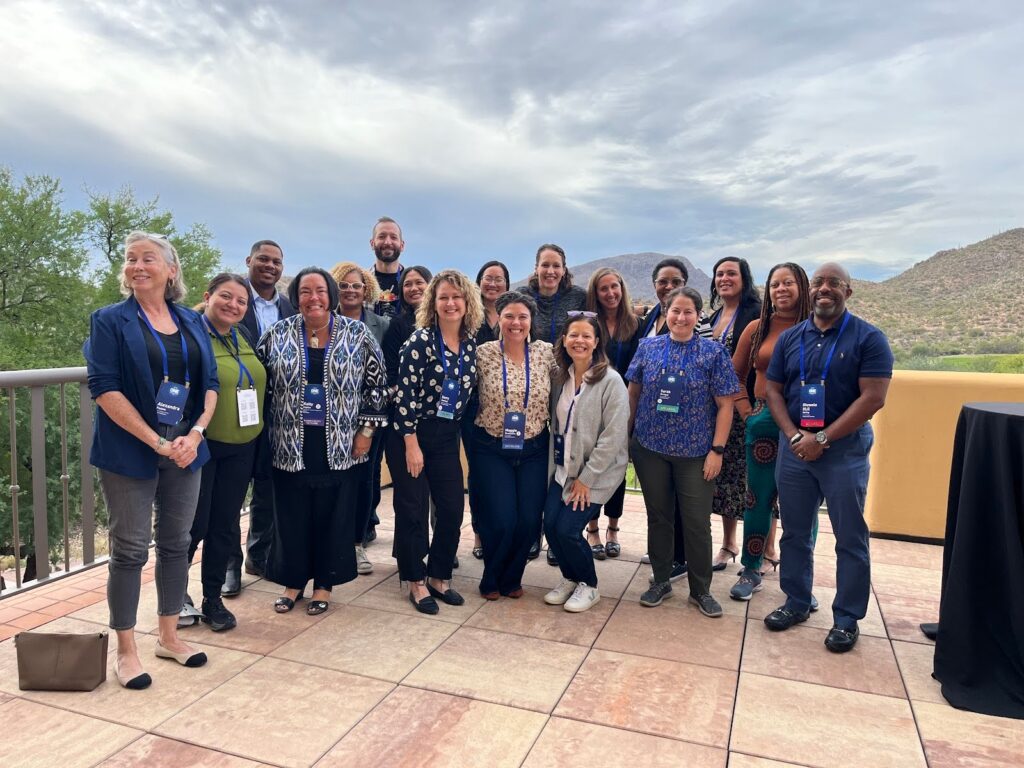
Urban Water Funders and progressive water utility executives at the UWF-WALA breakfast, One Water Summit, November 2023.
Q: How would you describe your relationship with your grantees? Can you share a grantee story or project you’ve found especially impactful?
A: I saw my role as program officer as both a partner and ally to my grantee partners doing the work. When I began my role at Spring Point Partners in March of 2020, it took time to build trust with my partners but I made an effort to meet them literally where they were — on the conference circuit, and to show up for them in any way I could. I believe most came to see me as a true partner in the work during my five years as program officer.
I knew early on that this funding would only be for five years, so I focused most of my energy on community building and creating space for our partners to develop trusted relationships with each other. We gathered virtually and in person to help facilitate peer learning and guidance. In May of 2022 at an in-person gathering, the group really found their collective identity after a short mapping exercise where we provided the space to co-create an image of their individual and collective impact. Using a tree as a symbol, each organization was asked to put their own leaf on as many of the branches (representing parts of the funding strategy). This past July, we gathered for the last time as a group at the One Water Summit where the partners led sessions and invited others into their community supporting water leadership. They even re-created a new 3-D tree, representing their desire to continue this community and work beyond Spring Point Partners funding and convening. I thought that was symbolic of the power of community building!
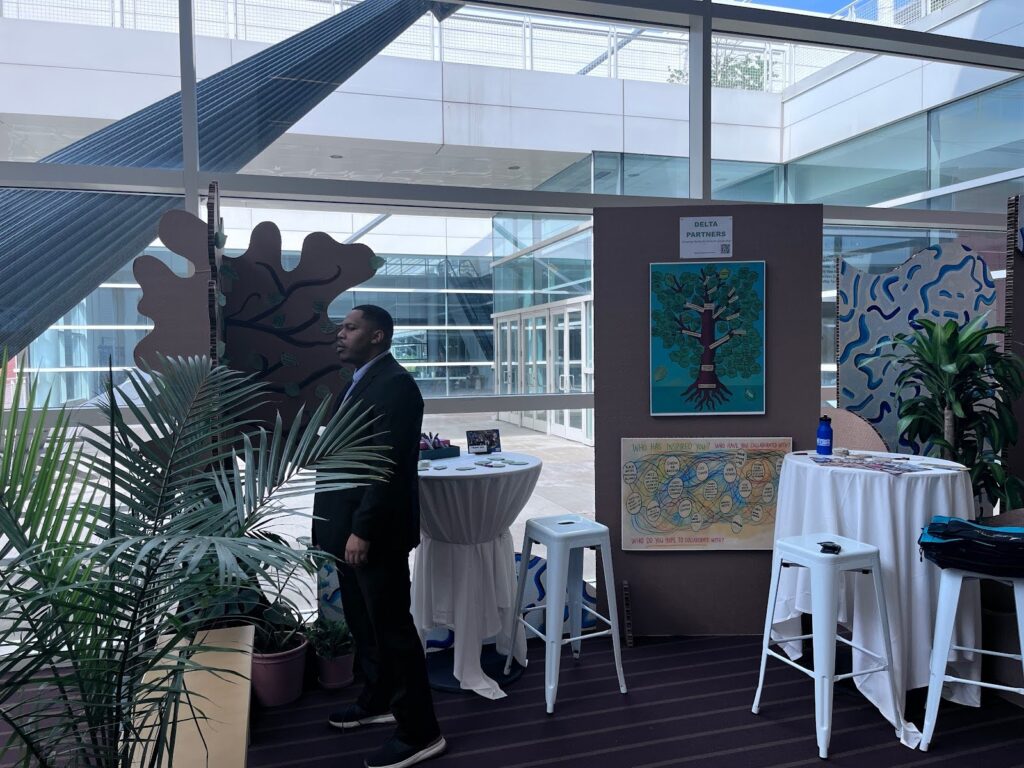
The Delta Community tree at the One Water Summit 2025
Q: You recently moved on from your role at Spring Point at the end of this summer. As you look back on your time as a funder, what advice would you give to someone just starting out as a grantmaker?
A: It’s all about relationships and building trust. Funders often have well thought out impact strategies, but our partners on the ground are constantly pivoting and dealing with the reality of the day to day micro and macro challenges. Don’t try to control the outcomes-just let the work unfold. Progress can be made by building trusted partnership, which requires funders to approach their work with humility, curiosity and a willingness to deploy their own social capital to help amplify the work. If it’s taking a while to build trust, create lots of space for your grantee partners to build community and trust among each other and demonstrate you don’t assume to have all the answers. Trust is earned from there.
Q: At its core, TFN is about building connections and finding opportunities for learning and collaboration. Do you have a favorite moment you found particularly helpful on your professional journey as a funder? Any favorite TFN memories that spark particular joy?
A: There are so many memories that spark joy, especially gathering in person with my fellow Urban Water Funders. From my first TFN convening cramming into an XL Uber in LA to our recent funders breakfast at the One Water Summit, I’ve found long-lasting friends, allies and compatriots in this network. Our convening in Austin, Texas, last year coincided with a special birthday and may or may not have prompted some hilarious dance moves.
I think I’d feel guilty about how much fun we have together if we didn’t use these deep relationships to challenge each other and help hold each other accountable to push each other to use all of our resources to drive the work forward.
When I have a blind spot in my thinking or I’m looking to build courage to try something new, I know I can count on the funders I’ve met through Urban Water Funders to help me advance the work.
Q: Speaking of sparking joy: We are all trying to figure out how to manage our personal and professional lives in these complicated times. Is there anyone or anything that’s bringing you joy in this moment — or at least some measure of sanity?
A: I took the advice shared by TFN early in 2025 to heart. I’ve been focusing on the issue I have some degree of impact on and trying my best to limit my exposure to the rest of the bad news. I try to instead read longer form news or practical advice from activists who’ve been in this work much longer. Having close allies in the funder community has helped in numerous ways. During our Climate and Water Workforce convening in mid-November, I created a 2025 survival playlist featuring lots of throwback and modern protest music (like Janel Money) and a chill vibes playlist (like Leon Bridges) that I use to center myself when I feel overwhelmed. I’ve also taken time off this summer to spend intense quality time with my kids and I have done as much floating on inner tubes in rivers and lakes as possible. This has really refueled me for the next phase of my professional journey.
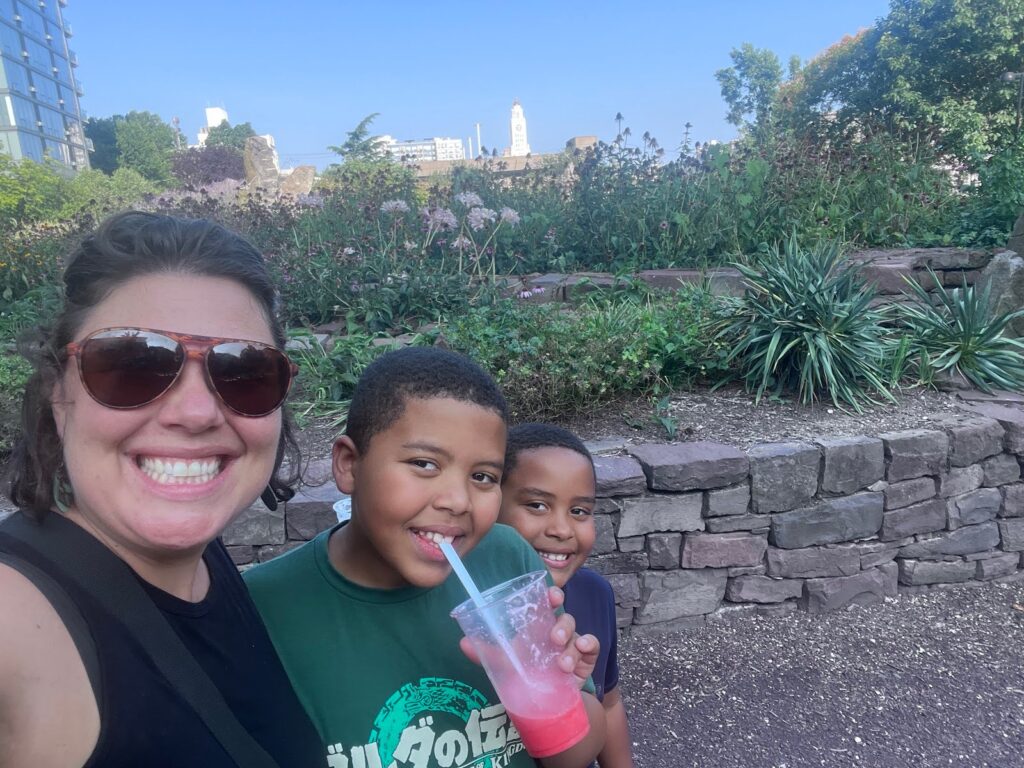
Maggie and her children in Philly this August.
Learn more about Urban Water Funders and sign up for updates on more learning opportunities. Want to connect with TFN’s Urban Water Funders in person? Save the Date for their 2026 Annual Meeting, Feb. 9-11, in Houston!
If you want to further engage Maggie in this conversation, please reach out to her at Maggie@ripplestorise.com.
Featured photo: Urban Water Funders and progressive water utility executives at the UWF-WALA breakfast, One Water Summit, November 2023. Photo courtesy of Maggie Rwakazina.
Going PLACES: The Land Remembers Us: Inherited Wisdoms
BY Cheri Souza, Hawai‘i Postsecondary Success Program Officer, Stupski Foundation, and 2025 PLACES Fellow
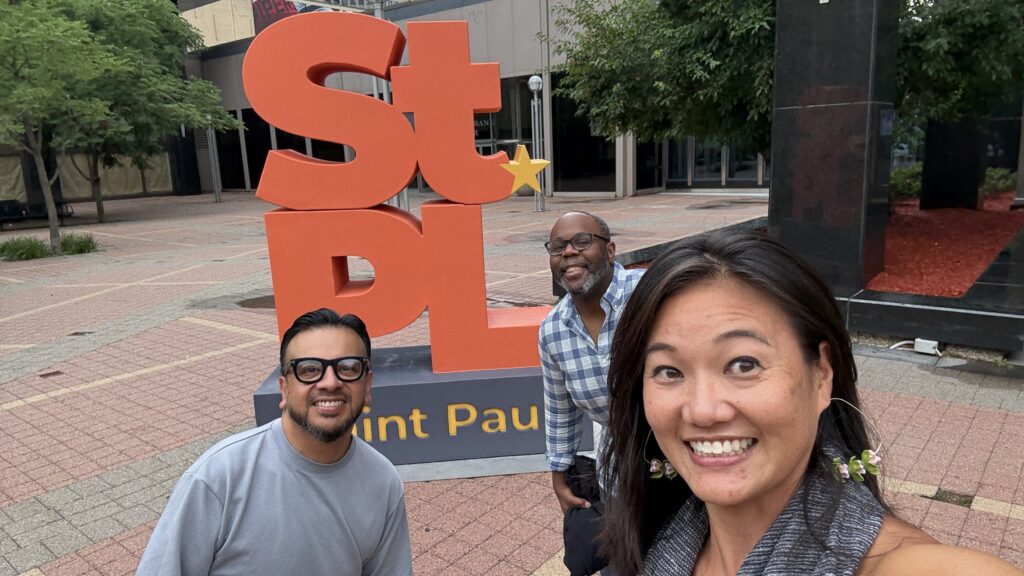
As I left Saint Paul, the message got louder; slow down and listen, the land is speaking.
Growing up in Hawaiʻi, understanding the precious relationship between ʻāina (land) and people was natural. I grew up between the beach and the mountains, and I learned early on that living on an island means caring for our finite resources. The Hawaiian proverb, He aliʻi ka ʻāina, he kauwā ke kanaka (The land is chief, man is her servant), captures this truth.
During our PLACES site visit, the call to listen was sharpened during four exchanges: Waḳan Ṭípi Nature Sanctuary, reclaimed and restored as a sacred Dakota place; the Hmong American Farmers Association (HAFA), building community wealth through land tenure and a food hub; a pilgrimage to George Floyd Square, where grief and resolve are held in public; and a chat with the Rondo Community Land Trust and the West Side Community Organization, where the community is working together to advance reparative actions.
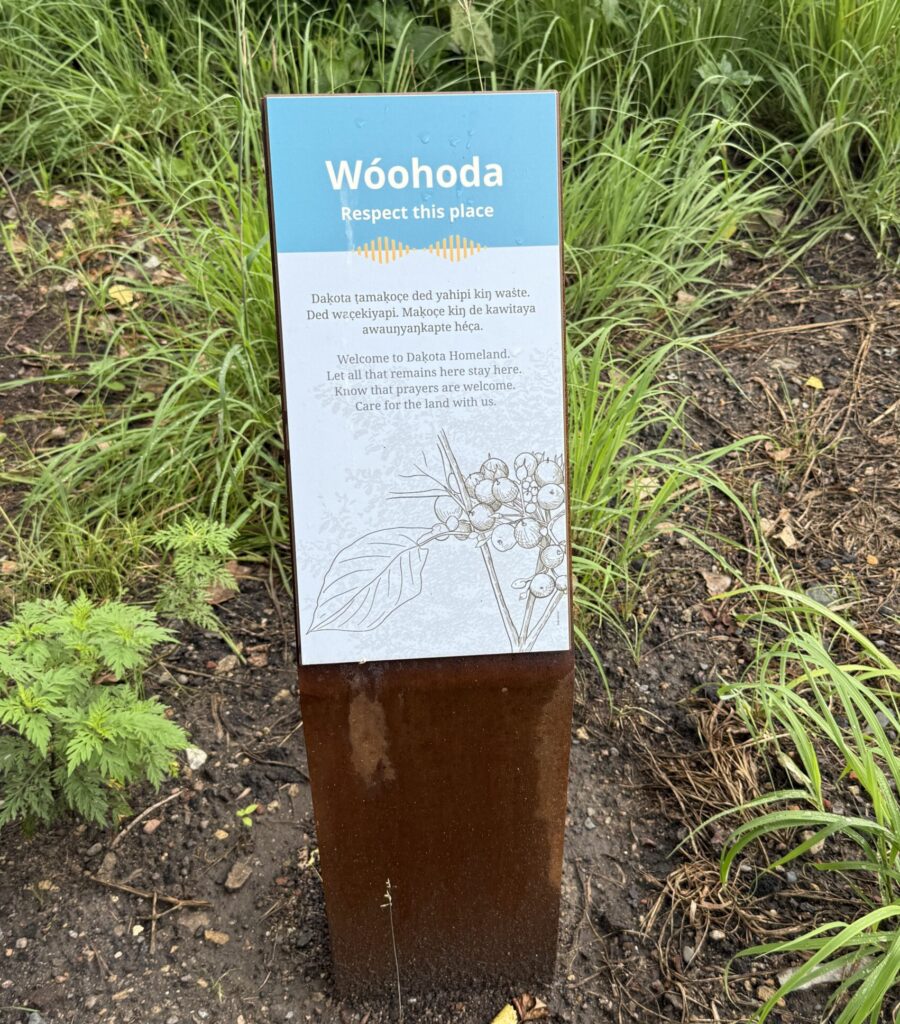
Each visit underscored that land anchors relationships among people and ancestors, supports community wellness, and that philanthropy can either deepen erasure or fund repair.
As we kicked off our time together, we were challenged to examine how our identities granted us proximity to power or exposure to harm as we wrestled with how environmental stewardship without cultural respect could reproduce erasure. We used positionality maps and place-based reflection to see how our race, class, indigeneity/immigrant histories and institutional roles shape who has safety, voice and decision-making power on the land.
We also named how “green” projects that skip language, ceremony or community governance can reenact dispossession, while sharing repair practices like funding Indigenous-led stewardship, sharing board seats, aligning metrics to cultural and ecological indicators and, most importantly, allowing community voice and guidance to lead projects, evaluations and reporting.
Our first stop was the Waḳan Ṭípi Nature Sanctuary, where Maggie Lorenz and Gabbie Menomin shared how they were able to raise more than $10 million over eight years to transform sacred Dakota land known as Imnizaska, that had become a polluted dump site, into a vibrant 27-acre sanctuary that anchors cultural and ecological programming in the urban core, including a soon to be open cultural center. As we toured the site, a heavy rain began to fall and I received it as an ancestral blessing and cleansing and an embodied nudge to consider the physical positionality of the sanctuary nestled next to a railroad and feet from a freeway bridge under construction.
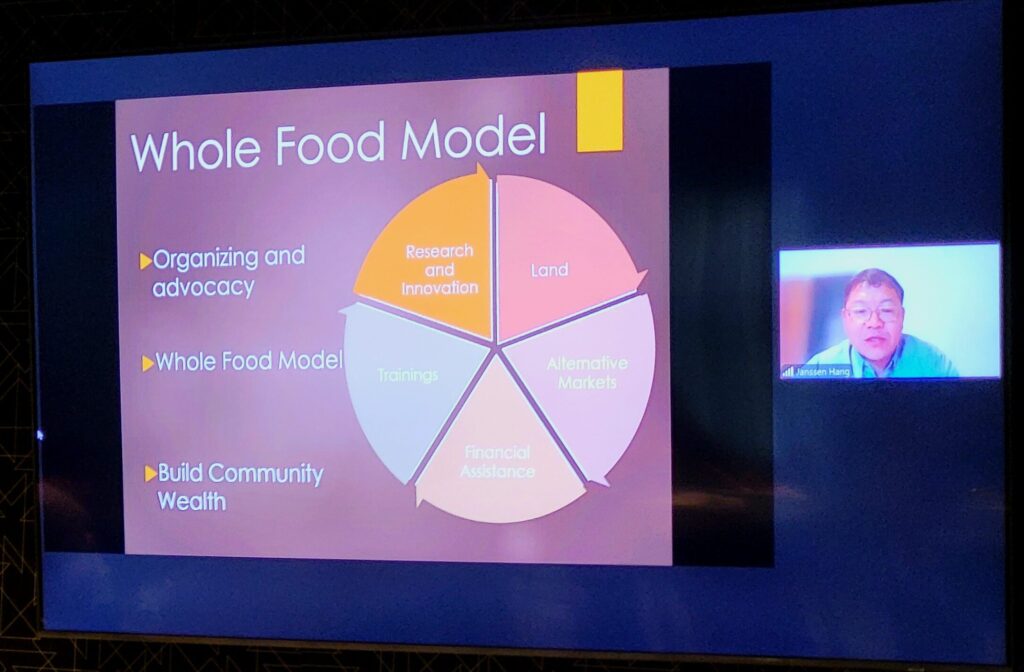
As I listened to Maggie, I heard how reclamation and restoration is wellness. This visit underscored the need to resource indigenous-led organizations, given that they receive only 0.6% of global philanthropic funding. It also urged funders to build budgets inclusive of language revitalization, signage, interpretation and ceremony as core programs (not extras) and ultimately to trust indigenous communities to lead their own projects.
Rain kept us from visiting the HAFA farm in person, so Janssen Yang generously pivoted to a virtual briefing and walked us through HAFA’s model, where land tenure, training and market access have shifted immigrant families from income-earning to asset building. HAFA owns and manages a 155-acre farm and offers members long-term leases, intergenerational business education and a food hub that aggregates and sells members’ produce to Community Supported Agriculture (CSA) shares, schools, retailers and institutions. This integrated approach to social, economic and environmental justice has created real opportunity for many families.
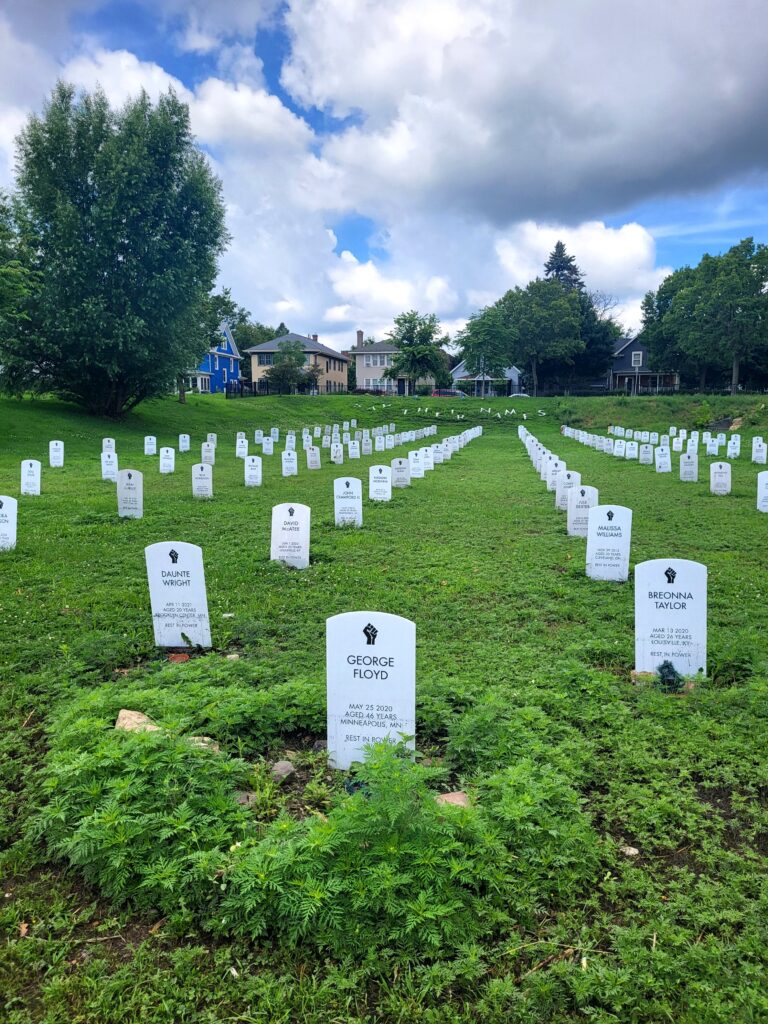
Janssen shared a story of a farmer who once could not imagine passing the farm to his children because of constant uncertainty surrounding land access. However, after securing a long-term lease that stability reshaped his outlook and he now dreams of handing the farm down.
Listening to Janssen was a reminder that stability can heal by rewiring the nervous system, providing security so that people and families can plan for the future. This visit reinforced the need to finance community-owned agricultural infrastructure, multi-year leases, bilingual and intergenerational training and market infrastructure.
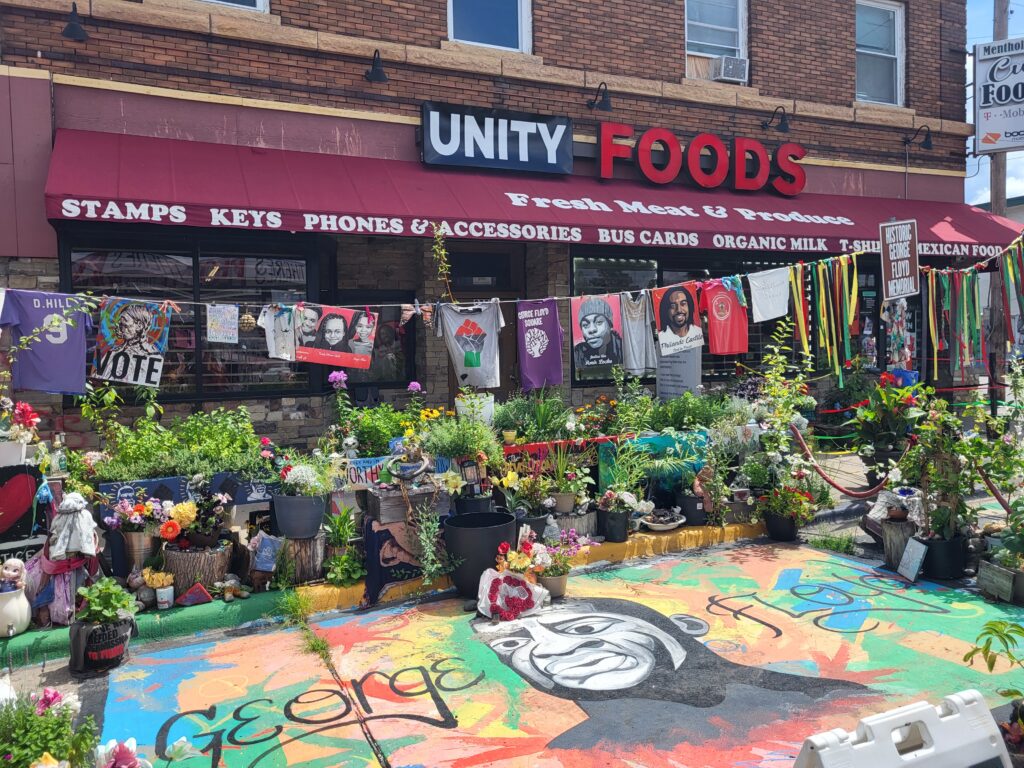
The next day, our group made a pilgrimage to George Floyd Square through Rise & Remember. We were guided by Georgio Wright, a community member who shared life in the Powderhorn neighborhood before and after George Floyd’s murder in 2020. I was unprepared for the grief, sadness and anger that rose as I walked through the Say Their Names Cemetery, reading markers and saying the names of children as young as seven.
At one point, Georgio asked us whether the “system” was broken. When most of us said yes, he replied, “No, it's not broken. It is doing what it was designed to do.” The lesson for philanthropy is clear; name harm in place and let the people who live there lead the repair. Fund the caretaking of memorial spaces, healing-justice workers and organizing that turns story into policy. Prioritize long-term, community-governed work over shiny, temporary projects. When the spotlight moves on, dollars often leave too, and that churn can wound communities as deeply as the original harm.
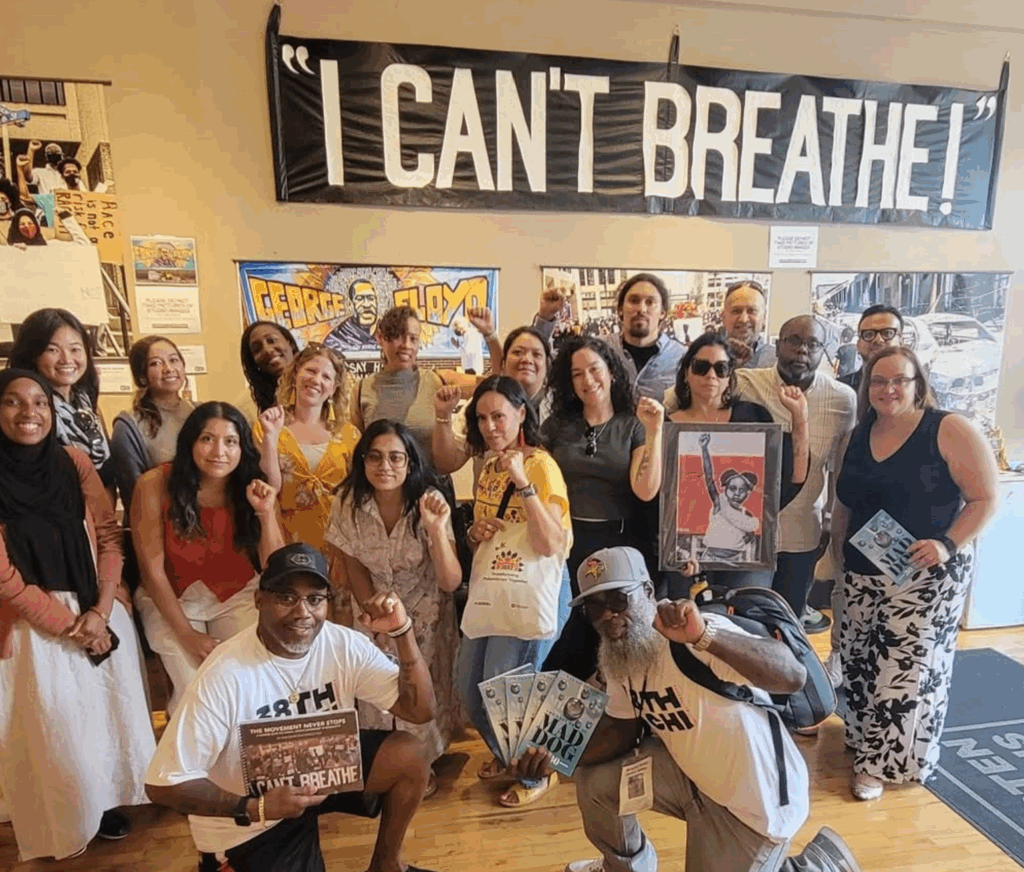 (Photo Credit: KingDemetrius Pendleton)
Our final stop was in the Rondo neighborhood to meet leaders and elders from the Rondo Community Land Trust and the West Side Community Organization, groups formed in response to the economic violence of infrastructure projects and urban renewal.
Here’s why land ownership matters so much in Rondo: In 1956, a highway sliced through this historically Black neighborhood, taking about 700 homes and 300 businesses with it. Across the river on the West Side, a multiracial community with strong Latinx roots lost more than 2,100 families after flooding. With that history, community voice isn’t optional, it’s how these neighborhoods thrive.
Although operating in different communities, their throughline is simple; make everyday life better for the people who call these communities home. For funders, the move is just as simple; back resident-led planning and community ownership, and stick around long enough for power to grow and roots to hold.
In the end, everything circles back to land. Memory anchors health, and when sacred sites, farms and memorials are resourced, they serve as clinics for spirit and social fabric by creating a sense of belonging and engagement.
Governance heals too; who decides matters just as much as what gets done, and community rituals are a source of real medicine. Cultural practices are not separate line items, but should be woven together into a greater system.
Finally, repair runs on its own time, not quarterly reports, which means philanthropy must dig into multi-year commitments that move at the pace of planting, tending and harvesting.
Change canʻt wait, but it also won’t happen overnight. If philanthropy can honor land in the ways our indigenous ancestors did and align with community leadership and rhythms, we can move beyond funding projects and start supporting people and places as they heal together.
Mahalo, miigwech, thank you to the leaders and guides who steward these places and who welcomed us to learn on their homelands.
About the Author
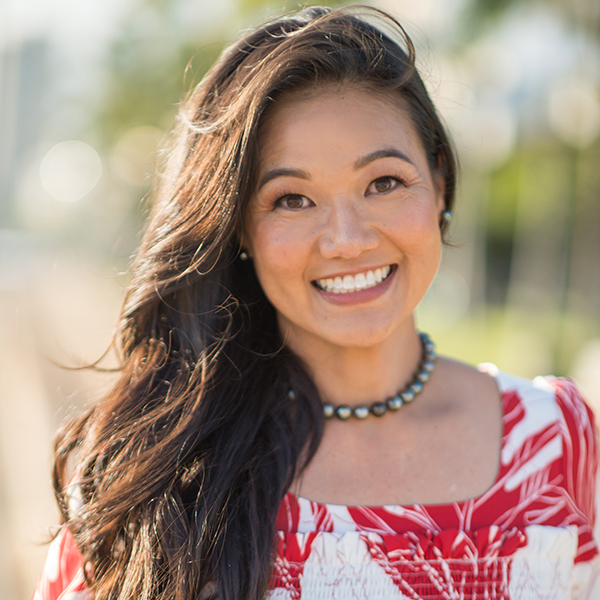 Cheri Souza is the Hawai‘i Postsecondary Success Program Officer at the Stupski Foundation. She leads the Hawai‘i postsecondary success portfolio focused on holistic student support initiatives and work-based learning throughout the islands, with an emphasis on underrepresented students and rural communities. She is also a member of TFN’s 2025 PLACES Cohort.
Photographs provided by Cheri Souza.
Emerging Every Day: Lessons from UPF's 2025 UnConference
BY Brooke McPherson, Communications and Engagement Associate, The Funders Network
As I approach my two-year mark here at TFN, I’ve been reflecting on what it means to keep growing in a sector that’s constantly shifting to meet the needs of the moment.
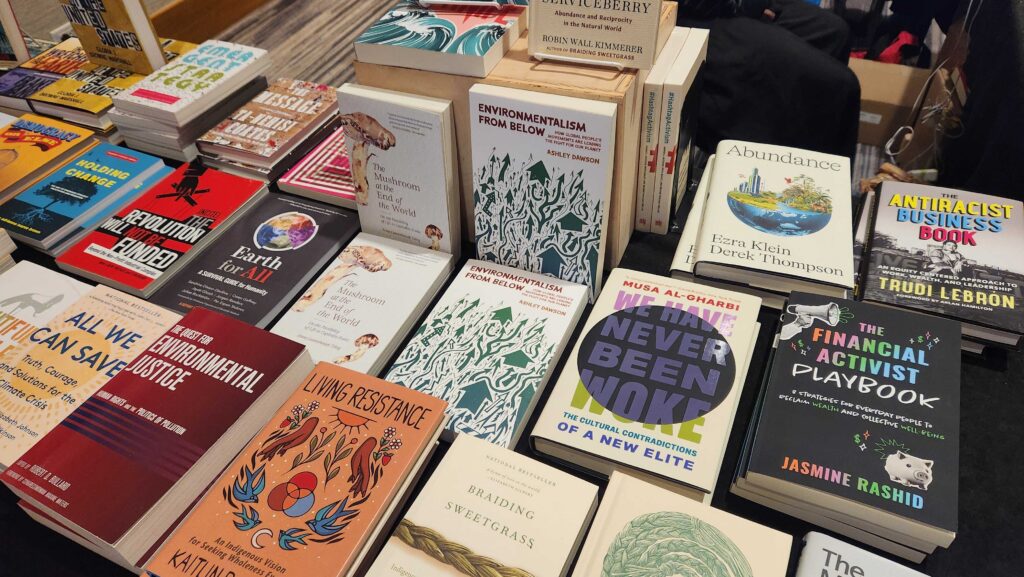
Attending United Philanthropy Forum’s 2025 UnConference in Denver gave me the space to do just that — to pause, reflect, and reconnect with the values and practices that ground me in this work.
Surrounded by new connections and energized by a sense of collective purpose, I found myself scribbling on hotel notepads, underlining phrases that caught my ear, and constantly nodding along – Yes, exactly! – throughout the sessions.
There were so many a-ha! moments that I want to carry forward into my work and into the kind of professional I’m trying (and hoping!) to become.
One of those moments came during a practitioner workshop facilitated by the incredible folks at Emerging Practitioners in Philanthropy (EPIP). The room was full of early-career professionals working across a wide range of issue areas. Though our roles, and especially our questions, felt strikingly familiar.
A phrase that stuck with me:
“I am emerging in my career every single day.”
It’s a reminder that being early in your career doesn’t mean being unsure. It means asking questions. Taking time to absorb the acronyms, collaboratives, working groups. It means letting go of the “fake it til you make it” mindset and embracing something far more honest:
No, I’m not faking. I’m practicing.
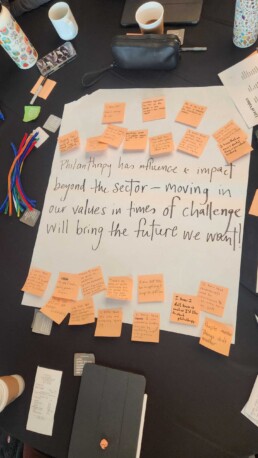
"Philanthropy has influence and impact beyond the sector — moving in our values in times of challenge will bring the future we want!" Group brainstorming session on our values as early career professionals.
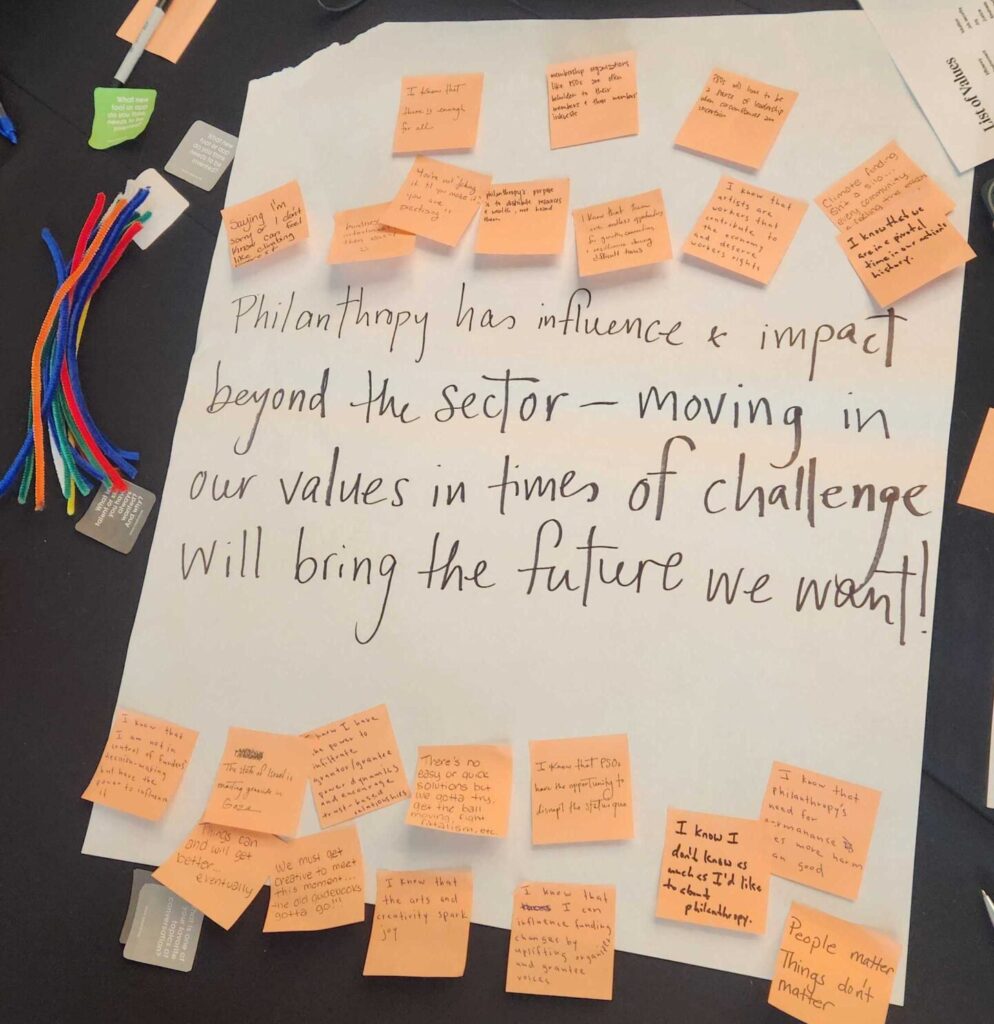
Given the challenges we’re navigating, it can often feel like everything is moving at light speed. But a strong sense of values and purpose helps keep things steady. It reminds me why I’m here – and how I want to show up in my work.
Two years in, I know a lot more than I did. And there’s so much more to learn!
But what UPF25 reminded me is: I’m not alone in this. There’s a whole community of emerging and seasoned professionals alike, trying to navigate the tides of our times with boldness, purpose and care.